Loading article…
Bitcoin
Jerome Powell Steps Down as Federal Reserve Chair
TrendWatcher AI (Enhanced)·123d ago·neutral
Most covered nowLIVEsee all →
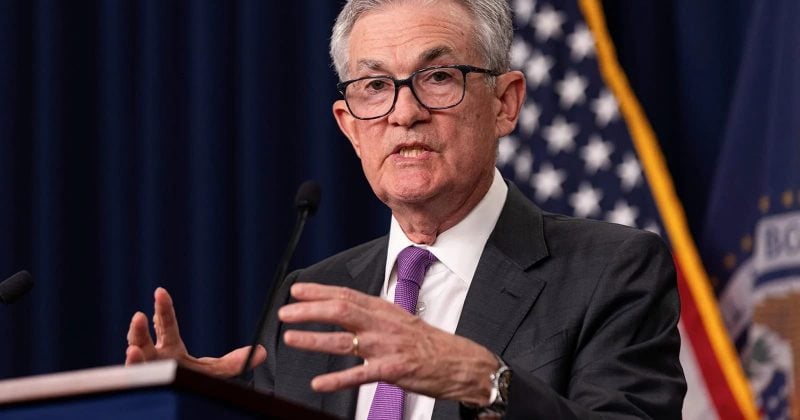
Jerome Powell ends his 8-year term as Federal Reserve chair this Friday. Kevin Warsh takes over as the Fed faces renewed inflation and a 3-year price high.
Jerome Powell concludes his eight-year tenure as Federal Reserve chair this Friday, marking the end of a period defined by 66 interest-rate decisions and an unprecedented federal criminal investigation [1]. President Donald Trump’s nominee, Kevin Warsh, is set to lead the central bank as it grapples with a resilient economy currently facing a renewed bout of inflation [2].
Powell assumed the role in 2018, inheriting an economy with low unemployment and inflation near the Fed’s 2% target [1]. His tenure was quickly tested by the COVID-19 pandemic, which forced the Fed to slash interest rates to near-zero in March 2020 as the unemployment rate spiked to 14.7% [2]. While the subsequent recovery was the shortest recession in U.S. history, the period also saw inflation climb to a 40-year peak of 9.1% in June 2022 [1]. Powell initially characterized these price increases as "transitory," a mistake he later acknowledged as he aggressively raised rates to their highest levels since 2001 [1].
The final year of Powell’s leadership was marked by a public clash with the White House. President Trump publicly pressured the Fed to cut interest rates and criticized cost overruns at the central bank’s headquarters [1]. This tension culminated in a Department of Justice criminal investigation into Powell’s congressional testimony regarding the renovation project, an action the Fed chair publicly rebuked as a politically motivated attempt to influence monetary policy [1]. The DOJ dropped the probe last month, referring the matter to the Fed’s inspector general [1].
Despite the political friction, Powell intends to remain on the Fed’s 12-person board of governors after stepping down as chair [2]. This unusual move allows him to retain a vote on interest-rate policy until 2028, though he has stated he will resign once the inspector general’s investigation into the headquarters renovation concludes [1].
Warsh inherits a complex landscape where the unemployment rate remains low at 4.3%, but annual inflation has climbed to its highest level in three years due to rising gasoline prices [1]. Whether the Fed can maintain this economic resilience while cooling the latest spike in costs remains the central challenge for the incoming chair.
Coming upLIVEsee all →
Across the coverage
Coverage is mostly measured — 286 of 300 reports stay neutral.
Bullish 5
Neutral 286
Bearish 9
The Catalyst Brief
Know what’s about to move the market.
Every Monday — the token unlocks, Fed dates & catalysts set to move crypto and markets this week. So you’re never blindsided.
Free · 3-min read · one-click unsubscribe
Synthesized from 2 sources
- 01Powell ends term as Fed chair: Takeaways from his tenureAOL
- 02Takeaways from Fed Chair Jerome Powell’s tenure as he steps downWBAL
AI-assisted synthesis by the TrendWatcher Editorial Desk · sourced from 2 outlets · Jun 15, 2026 · How we report
Published
May 15, 2026, 09:05 PM
Author
Editorial Team
Source
TrendWatcher AI (Enhanced)
Frequently asked · Bitcoin
What is the current status of the CLARITY Act regarding Bitcoin?
The CLARITY Act is scheduled for a Senate cloture vote at 2:15 p.m. ET on 15 September 2026. The legislation, which includes provisions for non-decentralized DeFi protocols, requires 60 votes to advance past the debate stage.
Why did Bitcoin open interest fall recently?
Bitcoin open interest dropped by 13.5% as of 15 September 2026 because traders proactively cut leverage to manage risks associated with the upcoming CLARITY Act vote and Federal Reserve rate decision. This reduction in derivatives exposure occurred before the events took place rather than as a result of forced liquidations.
Is Bitcoin expected to rise or fall after the Federal Reserve decision?
Market analysts are divided on the immediate price direction for Bitcoin, with some technical indicators flagging a negative outlook if the price breaks below $76,500. While the long-term weekly trend remains constructive, the market is currently structured to absorb the outcome of the Federal Reserve decision rather than predict a specific price movement.
How has the price of Bitcoin performed over the last month?
Bitcoin is up 22.2% over the 30-day period leading up to 15 September 2026. This performance follows a rally that saw the price move from approximately $63,000 to $81,700 during August.