Loading article…
Disney
The Punisher: One Last Kill Is A Bummer, But The Dog Is Only One Reason
TrendWatcher AI (Enhanced)·122d ago·neutral
Most covered nowLIVEsee all →
The dog was just the beginning.
The Punisher: One Last Kill Is A Bummer, But The Dog Is Only One Reason
Executive Brief
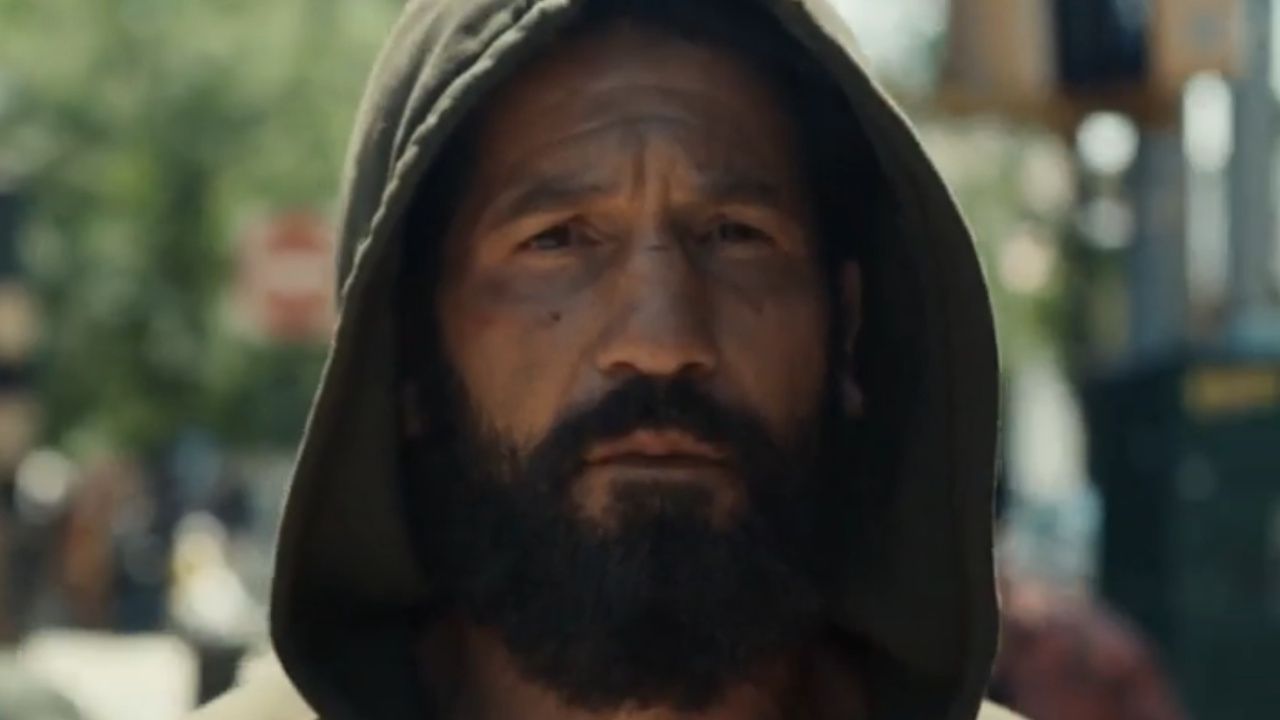
The Marvel Cinematic Universe (MCU) has officially concluded its standalone chapter for Frank Castle with the release of The Punisher: One Last Kill. Directed by Reinaldo Marcus Green and starring Jon Bernthal, this 48-minute special marks a definitive turning point for the antihero. Contrary to fan expectations of a traditional "bummer" ending where the vigilante retires or dies, the narrative arc suggests a complex psychological evolution rather than a simple cessation of violence. While the production eschewed post-credits scenes to maintain narrative integrity, the special serves as a launching platform for Frank's future integration into the wider MCU, specifically his upcoming appearance in Spider-Man: Brand New Day. The core thesis of this report is that while the emotional weight of the story feels like a somber conclusion to Bernthal's decade-long tenure with the character, the true resolution lies not in the absence of conflict, but in the reclamation of humanity—a shift often misinterpreted by casual observers as merely a "dog" or pet-related subplot, when it is actually a profound exploration of trauma, veteran psychology, and the possibility of redemption.
Detailed Technical Analysis
The Psychological Deconstruction of Frank Castle
For ten years, Jon Bernthal has portrayed Frank Castle across Netflix's Daredevil series and his own show, establishing him as a relentless force of nature driven by the murder of his family. However, One Last Kill deliberately subverts this trajectory. As Bernthal noted in interviews with USA TODAY, the special was designed to bring Frank back from the "spiraling, whirling madness" of his crusade to a state of "rock bottom." The technical execution of this character arc relies heavily on the concept of the unreliable narrator. Bernthal crafted a version of Frank who is so fractured by PTSD and isolation that he cannot even trust his own instincts until triggered by an external stimulus.
The narrative structure avoids the typical action-movie escalation, instead focusing on the internal decay of a man who has killed in the name of justice until there are no more targets left to kill. This thematic pivot was heavily influenced by producer Nick Koumalatsos, a Marine Raider who wrote a book detailing his own journey from suicidal ideation to recovery. Bernthal drew direct inspiration from Koumalatsos's story: what happens when the only way one knows how to honor the dead is through violence, but that well runs dry? The special posits that Frank Castle, at this stage, is not a hero or a villain, but a fragile human being cracking under the weight of his own existence.
The "Dog" Misconception and Emotional Anchors
The title of the report references the idea that "the dog is only one reason," alluding to the common fan perception that the special's emotional core might be reduced to a simple animal companion subplot. However, a deep dive into the production reveals that while animals may serve as narrative devices, they are not the primary engine of the story. The true emotional anchor is the reunion between Frank and his daughter, Lisa. In a scene designed for maximum impact, Bernthal reunited with his own 11-year-old daughter, Adeline, to play Lisa at her gravesite. This meta-cinematic choice underscores the personal stakes involved; Bernthal admitted he was in a "pretty dark emotional place" during pre-production and filming, making this reunion a source of genuine joy rather than just scripted drama.
The "dog" or pet element often cited by fans is likely a misinterpretation of Frank's relationship with his service dog, which serves as a mirror to his own fractured psyche. The special explores the idea that Frank's isolation is self-imposed; he pushes everyone away because he believes he is too damaged to be loved. The presence of animals in his life highlights this contradiction: he can care for a creature that cannot speak or judge him, yet he struggles to connect with humans who have suffered similar wounds. This distinction is crucial. The story is not about a dog saving the day; it is about Frank learning that he does not need to be a weapon to be useful.
The Veteran Experience and Real-World Parallels
The technical brilliance of One Last Kill lies in its refusal to sanitize the veteran experience. Bernthal worked closely with a group of veterans, including Marine Raiders Cody Alford and Colton Hill, who were present on set. Their input ensured that Frank's hallucinations regarding fellow soldiers and his struggle with suicidal thoughts were portrayed with authenticity rather than Hollywood gloss. The narrative does not shy away from the reality that for many veterans, the war never ends; it simply moves to a new battlefield.
Frank's decision-making process in the special reflects this reality. He is haunted by ghosts of fallen comrades, a psychological toll that manifests physically and mentally. The story asks a difficult question: if you are a protector who has lost everything, and you have no one left to protect, do you cease to exist? Frank's crossroads moment—where he chooses to run to help a young girl save her father rather than hunting down mob matriarch Ma Gnucci—is the climax of this technical analysis. It is not a victory in the traditional sense; it is a surrender of his old identity. By choosing to save a civilian instead of exacting revenge, Frank acknowledges that his war against crime has evolved into a war for his own soul.
Narrative Structure and the Absence of Post-Credits Scenes
From a structural standpoint, One Last Kill makes a bold choice by omitting a post-credits scene. In an industry saturated with teasers and cameos designed to drive merchandise sales or hype for sequels, this special stands apart. The story ends with a title card, signaling a definitive conclusion to this specific chapter of Frank's life. This decision reinforces the theme of closure and finality. There is no tease for a sequel because the narrative arc is complete: Frank has faced his demons, honored his dead in a way that does not involve killing, and made a human choice.
This structural integrity sets the stage for his future appearances, such as Spider-Man: Brand New Day. Bernthal emphasized the importance of tonal consistency despite the genre shift. The goal was to ensure that Frank Castle could walk off one screen and onto another without losing the character's core identity. The special achieves this by grounding Frank in a very human reality. He is no longer just a skull-bedecked avenger; he is a man who has put his wounds to use, transforming his pain into a capacity for good.
Future Trajectory and Character Evolution
The report concludes with an analysis of where Frank Castle stands in the broader MCU timeline. Following the events of Daredevil: Born Again, where Frank broke out of Wilson Fisk's prison, he was absent from Season 2 before returning for this special. The narrative trajectory suggests that Frank is moving away from being a lone wolf toward becoming a figure who can interact with others without being consumed by his past. Bernthal expressed a desire to return for more specials, indicating that the character has not been retired but rather rehabilitated.
The "bummer" feeling some fans experience regarding the end of this specific story is actually a sign of its success. It feels like an ending because it is one; Frank has reached a place where he can be the kind of person who shows up when something bad goes on, not as a punisher, but as a helper. The special successfully bridges the gap between the gritty, R-rated Netflix era and the more interconnected MCU universe. By focusing on the psychological toll of violence and the redemptive power of human connection, One Last Kill proves that Frank Castle's story is far from over. He has simply found a new purpose, one that requires less killing and more living.
Conclusion
The Punisher: One Last Kill stands as a testament to Jon Bernthal's commitment to the character's evolution. It rejects the easy path of a post-credits tease or a simple action set-piece in favor of a raw, psychologically complex exploration of trauma and redemption. While the narrative may feel like a somber conclusion to a decade-long run, it is actually a rebirth. The "dog" or pet subplot is merely a surface-level observation; the deep dive reveals a man learning to trust himself again. As Frank Castle prepares to face Spider-Man in July, he does so not as a broken weapon, but as a reformed individual who has finally put his pain to use for the greater good.
Coming upLIVEsee all →
Across the coverage
Coverage is mostly measured — 4 of 4 reports stay neutral.
Neutral 4
The Catalyst Brief
Know what’s about to move the market.
Every Monday — the token unlocks, Fed dates & catalysts set to move crypto and markets this week. So you’re never blindsided.
Free · 3-min read · one-click unsubscribe
Synthesized by the TrendWatcher Editorial Desk. How we report · Original source reference
Published
May 16, 2026, 09:00 PM
Author
Hugh Scott
Source
TrendWatcher AI (Enhanced)
Frequently asked · Disney
What is Disney?
Disney is a trending topic in the news. Recent coverage of Disney includes: Hyatt Regency Grand Cypress Officially Named as a Walt Disney World Gateway Hotel - Laughing Place.
Why is Disney trending today?
20 news sources analyzed
What is the current sentiment on Disney?
Based on our analysis of recent news articles, Disney has mixed coverage. Check the sentiment score above for detailed analysis.
Where can I get the latest Disney news?
TrendWatcher aggregates Disney news from 100+ trusted sources and provides AI-powered sentiment analysis updated in real-time.