Loading article…
Disney
Executives Comment on Disney World Park Expansions and the “Ability To Grow Attendance”
TrendWatcher AI (Enhanced)·122d ago·neutral
Most covered nowLIVEsee all →
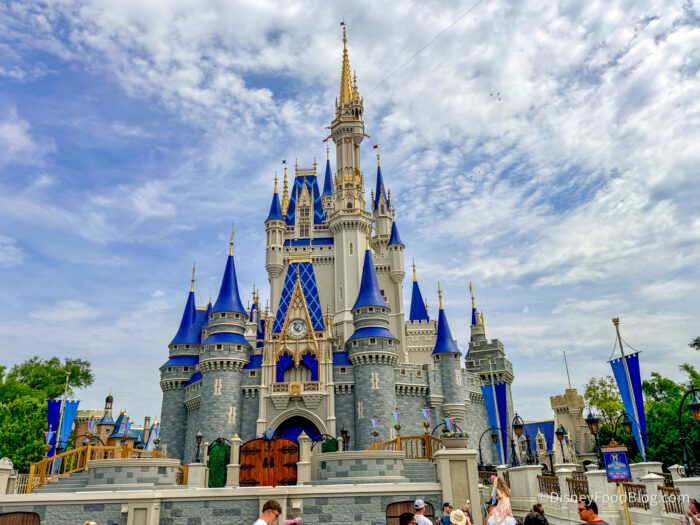
A Disney Executive has just revealed his thoughts about all the park expansions currently hitting Walt Disney World.
Executives Comment on Disney World Park Expansions and the "Ability To Grow Attendance"
Executive Brief
At the 2026 MoffettNathanson Media, Internet & Communications Conference, Disney CFO Hugh Johnston delivered a definitive statement regarding the capacity constraints of Walt Disney World. He asserted that the parks are effectively "filled up," arguing that without significant physical expansion, the company lacks the ability to grow attendance massively. Johnston posited that attempting to force more guests into existing spaces would degrade the guest experience, thereby harming the brand equity. Consequently, he framed the upcoming $60 billion investment in theme park expansions not merely as an option, but as a necessity to unlock future growth potential.
However, a synthesis of current market data, historical corporate messaging patterns, and recent promotional strategies suggests a more complex reality than the CFO's binary assertion. While Johnston correctly identifies that expansion creates the opportunity for growth, the claim that the parks are currently at absolute capacity contradicts observable evidence regarding wait times, discounting behaviors, and pricing strategies. This report analyzes the divergence between executive rhetoric and operational fundamentals, examining whether Disney is accurately describing its constraints or engaging in strategic "pounding of the table" to justify massive capital expenditures and future price hikes.
Detailed Technical Analysis
The Capacity Paradox: Rhetoric vs. Reality
Hugh Johnston’s core argument rests on a specific definition of capacity: the maximum number of guests that can be accommodated while maintaining a baseline level of guest satisfaction. He stated, "Without expansion, we don't necessarily have the ability to grow attendance massively because it's already filled up." This statement is technically accurate in the context of quality capacity but misleading when viewed against absolute capacity.
The CFO acknowledged that they could "jam more people into the park," but dismissed this approach as detrimental to the brand. While true that overcrowding dilutes the Disney experience, the assertion that the parks are currently at their limit ignores the reality of demand suppression. If the parks were truly at maximum efficient capacity, the market would naturally self-correct through price elasticity without the need for aggressive discounting. Yet, the data from 2026 tells a different story.
The Persistence of Discounting as a Capacity Signal
Historically, Disney leadership has touted the "weaning off discounts" strategy since 2010 under Jay Rasulo and Bob Iger. The narrative was that once new attractions opened and capacity expanded, deep discounting would become obsolete, allowing for pure price growth (yield management).
However, this trajectory has not materialized as predicted. Despite the announcement of massive expansions and the expectation of pent-up demand from a post-recession recovery, Walt Disney World has released a "deluge" of discounts in 2026 alone. Specific examples include:
- A Florida resident deal offering admission at $65/day.
- The return of the 4-Park, 4-Day Magic Ticket.
- Up to 40% off resort stays for Florida residents and Annual Passholders.
- "Stay Longer & Save More" promotions offering up to 30% off room rates.
These aggressive pricing mechanisms are not merely marketing fluff; they are direct indicators of supply-demand imbalances. If the parks were truly "filled up" to the point where no more guests could be added without degrading experience, these discounts would be unnecessary and financially inefficient. The continued reliance on deep discounts suggests that while the physical infrastructure may be expanding, the effective capacity—driven by consumer willingness to pay full rack rates—is not yet saturated.
The Role of New Attractions in Yield Management
Johnston argued that adding capacity allows for a surge in demand for new attractions, citing Paris as a precedent where yield did not decline despite increased attendance. He noted, "When you put in a big new attraction, you actually see a surge in demand for it as well."
This observation highlights the critical role of innovation in Disney's growth model. The company has not opened a new attraction with mainstream marketability to national audiences since TRON Lightcycle Run. This gap in the pipeline is likely the primary driver behind the current discounting strategy. Without fresh, high-demand content to draw in new demographics or entice repeat visitors at full price, Disney must incentivize attendance through deals.
The CFO's projection that "pricing and attendance growth" will occur over a 3-to-4-year timeframe is contingent on the successful integration of these expansions. However, the current market behavior suggests that the "ability to grow attendance" is currently capped not by physical space, but by the lack of compelling new content and the economic reality of the American consumer. The discounts serve as a bridge, allowing Disney to fill seats while waiting for the next wave of marketable additions to open in 2028 and 2029.
Strategic Messaging: Pounding the Table
The disconnect between Johnston's comments and the operational data can be understood through the lens of corporate communications strategy. As noted in historical analysis, Disney often "pounds the table" on metrics that make the company look valuable to shareholders while simultaneously spinning those actions as positives for consumers.
By stating the parks are "filled up," Disney reinforces the narrative that their $60 billion expansion is non-negotiable and essential for survival. This messaging serves a dual purpose:
- Investor Confidence: It assures Wall Street that the capital expenditure is justified by a hard constraint on growth, preventing analysts from questioning why attendance isn't growing faster without new rides.
- Brand Protection: It frames any future price increases not as greed, but as a natural consequence of scarcity and brand value preservation.
However, this messaging risks alienating consumers who perceive the discounts as evidence that the parks are not full, but rather that they are struggling to convert demand into revenue at full price. The "spirit" of the message is to convince investors that expansion is necessary; the "facts" on the ground suggest that expansion is also necessary because current attractions are insufficient to drive yield without subsidies.
The Future of Yield and Attendance
Johnston emphasized that "it's ultimately the combination of yield and attendance that matters the most." This is the crux of Disney's financial model. To increase revenue, they must either raise prices (yield) or bring in more people (attendance).
If the parks are truly full, raising prices is the only logical path. Yet, the presence of aggressive discounts indicates that raising prices to full rack rates would result in a drop in attendance that outweighs the yield gain. Therefore, the current strategy is a hybrid: maintain high rack rates for the core fan base while using deep discounts to capture price-sensitive segments and fill capacity gaps caused by a lack of new content.
The CFO's expectation that discounts will scale back in 2028 and 2029 aligns with the opening of the next wave of attractions. Until then, the "ability to grow attendance" is artificially constrained by the need to offer deals. The parks are not physically full; they are economically capped until new content can justify higher price points or until consumer sentiment shifts sufficiently to absorb full-price admission without incentives.
Conclusion
Hugh Johnston's assertion that Walt Disney World cannot increase attendance because the parks are "filled up" is a strategic simplification rather than an operational absolute. While the company correctly identifies that over-crowding harms the brand, the data from 2026—specifically the aggressive discounting and the absence of new mainstream attractions since TRON—suggests that the primary constraint is content-driven demand elasticity, not physical space.
The $60 billion expansion remains vital, but not solely to accommodate more bodies; it is required to reset the yield curve by introducing new value propositions that allow Disney to eventually "wean guests off discounts." Until then, the parks will remain in a state of managed scarcity, where attendance growth is possible only through strategic pricing rather than organic demand saturation. The executive team's messaging serves to validate their expansion plans to shareholders, even as the operational reality requires continued reliance on deals to maintain momentum.
Coming upLIVEsee all →
Across the coverage
Coverage is mostly measured — 4 of 4 reports stay neutral.
Neutral 4
The Catalyst Brief
Know what’s about to move the market.
Every Monday — the token unlocks, Fed dates & catalysts set to move crypto and markets this week. So you’re never blindsided.
Free · 3-min read · one-click unsubscribe
Synthesized by the TrendWatcher Editorial Desk. How we report · Original source reference
Published
May 16, 2026, 09:11 PM
Author
Natalie Culleton
Source
TrendWatcher AI (Enhanced)
Frequently asked · Disney
What is Disney?
Disney is a trending topic in the news. Recent coverage of Disney includes: Hyatt Regency Grand Cypress Officially Named as a Walt Disney World Gateway Hotel - Laughing Place.
Why is Disney trending today?
20 news sources analyzed
What is the current sentiment on Disney?
Based on our analysis of recent news articles, Disney has mixed coverage. Check the sentiment score above for detailed analysis.
Where can I get the latest Disney news?
TrendWatcher aggregates Disney news from 100+ trusted sources and provides AI-powered sentiment analysis updated in real-time.