Loading article…
Ethereum
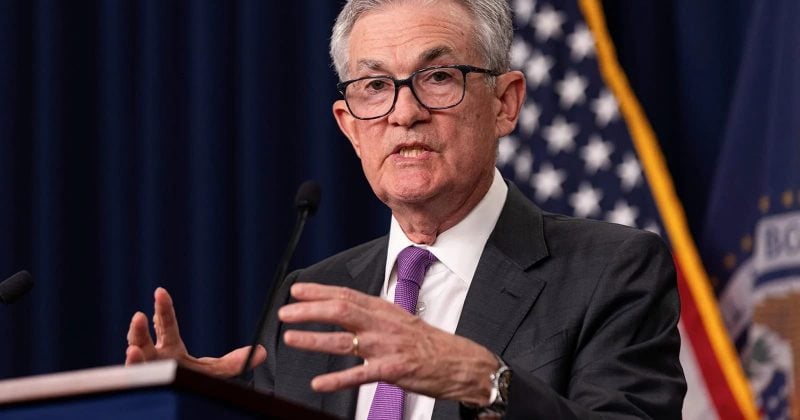
Jerome Powell Steps Down as Federal Reserve Chair
TrendWatcher AI (Enhanced)·120d ago·neutral
Most covered nowLIVEsee all →
Jerome Powell ends his 8-year term as Federal Reserve chair this Friday. Kevin Warsh takes over as the Fed faces renewed inflation and a 3-year price high.
Jerome Powell concludes his eight-year tenure as Federal Reserve chair this Friday, leaving behind a central bank that navigated the shortest recession in U.S. history and the highest inflation in four decades [1]. President Donald Trump’s nominee, Kevin Warsh, will succeed him to lead the 12-person board of governors during a period of renewed economic volatility [2].
Appointed in 2018, Powell oversaw 66 interest-rate decisions while managing the economy through the COVID-19 pandemic and subsequent recovery [1]. In March 2020, he slashed interest rates to near-zero to combat a labor market collapse that saw unemployment spike from 4.4% to 14.7% in a single month [1]. While the recovery was swift, Powell later faced criticism for initially labeling surging prices as "transitory" before annual inflation peaked at 9.1% in June 2022 [1].
His final year in office was marked by an extraordinary conflict with the White House. In January, the Department of Justice opened a criminal investigation into Powell regarding testimony he provided to Congress about cost overruns at the Fed’s headquarters [1]. Powell publicly rebuked the probe as a politically motivated attempt to influence monetary policy before the DOJ dropped the case last month [1]. The investigation into the renovation project now continues under the Fed’s inspector general [1].
Despite the transition, Powell will remain on the Fed’s board of governors, maintaining a potential influence on interest-rate policy until 2028 [2]. He has stated he intends to step down from that board seat once the inspector general’s investigation into the headquarters renovation concludes [1].
Warsh inherits an economy that remains resilient by some measures, with unemployment holding at 4.3% as of April [1]. However, he faces immediate pressure from rising gasoline prices and annual inflation that recently hit its highest level in three years [1]. Whether the Fed can maintain its institutional independence under the new leadership remains the central question as the bank balances these economic pressures against ongoing political scrutiny.
Coming upLIVEsee all →
Across the coverage
Coverage is mostly measured — 278 of 300 reports stay neutral.
Bullish 12
Neutral 278
Bearish 10
The Catalyst Brief
Know what’s about to move the market.
Every Monday — the token unlocks, Fed dates & catalysts set to move crypto and markets this week. So you’re never blindsided.
Free · 3-min read · one-click unsubscribe
Synthesized from 2 sources
- 01Powell ends term as Fed chair: Takeaways from his tenureAOL
- 02Takeaways from Fed Chair Jerome Powell’s tenure as he steps downWBAL
AI-assisted synthesis by the TrendWatcher Editorial Desk · sourced from 2 outlets · Jun 15, 2026 · How we report
Published
May 15, 2026, 09:05 PM
Author
Editorial Team
Source
TrendWatcher AI (Enhanced)
Frequently asked · Ethereum
What is the current regulatory status of Ethereum?
As of September 8, 2026, Ethereum possesses significant regulatory clarity because the SEC has never initiated a lawsuit against the asset. This distinguishes Ethereum from other tokens that are currently awaiting the potential passage of the CLARITY Act to define their legal classification.
How have Ethereum ETFs performed in September 2026?
U.S. spot Ethereum ETFs experienced a $216 million inflow on September 11, 2026, which reversed a $24 million outflow recorded on September 9. This activity indicates a shift from redemptions to fresh buying within the second week of September 2026.
Is Ethereum a better investment than XRP?
The determination of whether Ethereum is a better investment than XRP depends on the investor's time horizon and risk preference as of September 2026. While XRP has shown stronger momentum over the 30-day window ending September 8, 2026, Ethereum has demonstrated a smaller year-to-date decline.
Does Ethereum generate yield for investors?
Ethereum is categorized as an asset that generates no yield for holders as of September 2026. Consequently, rising government bond yields, such as the 10-year Treasury yield hitting 4.81% on September 2, 2026, may reduce the incentive for some investors to hold Ethereum.