Loading article…
Nvidia Ai Chips
Nvidia, Intel and Qualcomm Unveil New Chips at Computex 2026
TrendWatcher AI (Enhanced)·58d ago·neutral
Most covered nowLIVEsee all →
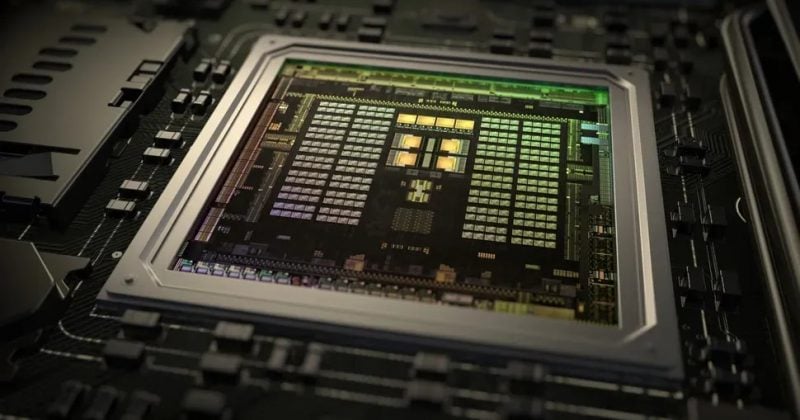
Nvidia debuts the N1X laptop chip, while Intel and Qualcomm launch new processors for gaming handhelds and budget Windows laptops at Computex 2026.
Major technology firms have converged on Taipei for Computex 2026, unveiling a new generation of processors that aim to reshape the landscape for Windows laptops, gaming handhelds, and entry-level computing [1]. Nvidia, Microsoft, and Arm have coordinated to introduce the N1X, Nvidia's first system-on-chip designed specifically for Windows laptops [1].
Key takeaways
- Nvidia’s N1X chip pairs a 20-core ARM CPU with a graphics processor featuring 6,144 CUDA cores [1].
- Intel introduced the Arc G3 and Arc G3 Extreme, its first chips built specifically for gaming handhelds [1].
- Qualcomm’s new Snapdragon C platform targets the $300-and-up Windows laptop market to compete with entry-level Apple devices [1].
- AMD announced that its sixth-generation EPYC Venice server processor is the first to enter production on TSMC’s 2-nanometer process [1].
- The N1X chip is expected to appear in devices from manufacturers including Dell, Lenovo, Asus, and MSI before the 2026 holiday season [1].
Nvidia’s N1X and the New Era of Windows on ARM
The N1X represents a significant shift for Nvidia, moving its technology from data center racks into consumer laptops [1]. The chip utilizes a 20-core ARM central processing unit manufactured on TSMC’s 3-nanometer process, connected to its graphics processor via Nvidia’s NVLink interconnect at 300 gigabytes per second [1]. By bringing the full CUDA software stack to a laptop form factor, Nvidia aims to provide discrete-class GPU performance for mobile users [1]. While Nvidia refers to this product as the N1X [1], other reports identify this new family of consumer PC chips as "RTX Spark" [2].
Competition in Handhelds and Budget Computing
Intel is challenging AMD’s dominance in the gaming handheld market with the launch of the Arc G3 and Arc G3 Extreme [1]. These chips are manufactured on Intel’s 18A process and feature a 14-core CPU alongside an Arc B390 graphics processor [1]. To address historical software challenges, Intel is implementing Day-0 game driver support and Precompiled Shader Distribution to improve frame-rate stability [1]. Meanwhile, Qualcomm is targeting the budget segment with its Snapdragon C platform [1]. Unlike the premium Snapdragon X series, the Snapdragon C uses Kryo cores on a 6-nanometer process, meaning it does not meet the requirements for Microsoft’s Copilot+ PC certification [1].
Why it matters
The announcements at Computex 2026 provide a glimpse into the hardware market's trajectory for the next 18 months [1]. The industry faces significant economic headwinds, as Gartner projects a 17 percent increase in average PC prices in 2026 due to rising DRAM and SSD costs [1]. This environment creates a difficult path for entry-level devices, with analysts warning that the sub-$500 PC segment could potentially disappear by 2028 [1]. As manufacturers integrate these new chips, the market will determine if these platforms can deliver on their promises of performance and efficiency despite the broader pressure on component pricing [1].
Coming upLIVEsee all →
Across the coverage
Coverage is mostly measured — 23 of 29 reports stay neutral.
Bullish 4
Neutral 23
Bearish 2
The Catalyst Brief
Know what’s about to move the market.
Every Monday — the token unlocks, Fed dates & catalysts set to move crypto and markets this week. So you’re never blindsided.
Free · 3-min read · one-click unsubscribe
Synthesized from 2 sources
- 01Computex 2026: Jensen Huang Keynote, N1X Reveal, Arc G3, Snapdragon C All Land This WeekTech Times
- 02Computex 2026: All the news and announcementsThe Verge
AI-assisted synthesis by the TrendWatcher Editorial Desk · sourced from 2 outlets · Jun 2, 2026 · How we report
Published
May 29, 2026, 11:08 PM
Author
Editorial Team
Source
TrendWatcher AI (Enhanced)
Frequently asked · Nvidia Ai Chips
What is the RTX Spark chip?
The RTX Spark is a system-on-chip (SoC) developed by Nvidia and MediaTek that combines a Blackwell GPU and an Arm-based CPU to run AI models locally on PCs.
Which companies are partnering with Nvidia for the new PC chips?
Nvidia is partnering with MediaTek for chip design and with Microsoft, Dell, HP, ASUS, Lenovo, and MSI to integrate the chips into upcoming Windows PCs.
Why is Nvidia moving into the PC market?
Nvidia is seeking to expand its AI footprint to the 'edge,' allowing advanced AI agents to run locally on consumer devices without needing constant cloud connectivity.
How does the RTX Spark chip improve AI performance?
The chip uses unified memory, which allows the CPU and GPU to access the same memory pool, eliminating bottlenecks and enabling the execution of larger AI models.