Loading article…
Foreign Policy
Trump and Xi Hold Beijing Summit Amid Shifting Global Priorities
TrendWatcher AI (Enhanced)·64d ago·neutral
Most covered nowLIVEsee all →
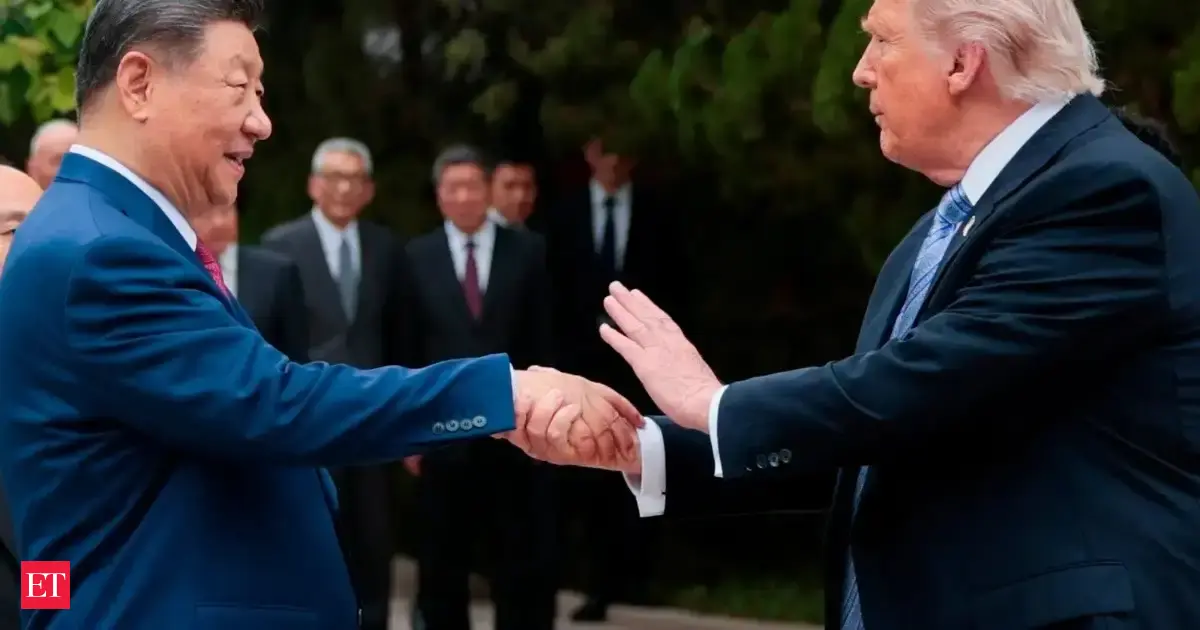
President Donald Trump met with Chinese leader Xi Jinping in Beijing for a historic summit focused on trade, technology, and geopolitical tensions.
President Donald Trump and Chinese leader Xi Jinping met in Beijing this week for a high-level summit, marking their seventh face-to-face encounter and their first meeting in China since 2017 [3]. The discussions, which included top U.S. cabinet officials and technology executives, signaled a shift in bilateral priorities toward trade, technology, and the ongoing conflict in Iran [1].
Key takeaways
- The summit agenda focused on a new "four Ts" framework: tariffs, technology, Taiwan, and Tehran [1].
- President Xi told American CEOs that China’s door to business will "open wider," encouraging further investment [2].
- Treasury Secretary Scott Bessent and other cabinet members accompanied President Trump to the Great Hall of the People [3].
- Both nations agreed to collaborate on safety protocols for artificial intelligence to prevent access by non-state actors [2].
Trade and Technology at the Forefront
During the visit, President Trump was accompanied by prominent U.S. business leaders, including Elon Musk of Tesla and SpaceX, Nvidia CEO Jensen Huang, and Apple CEO Tim Cook [2]. In a meeting with these executives, President Xi stated that China welcomes American cooperation and that the country’s market will remain open to foreign investment [2]. The White House expressed a similar sentiment on social media, noting that the two sides discussed expanding market access for American firms and increasing Chinese investment in the United States [2].
The summit also addressed the rapid development of artificial intelligence in both countries. While the U.S. has previously implemented export controls on advanced technology, including Nvidia chips, to limit China’s AI progress, the two leaders discussed establishing safety protocols for AI models [2]. Treasury Secretary Scott Bessent noted that the goal of this cooperation is to ensure that non-state actors cannot obtain these powerful technologies [2]. Despite these discussions, China has continued to prioritize its domestic semiconductor supply chain, with local firms working to fill gaps left by U.S. export restrictions [2].
Why it matters
The summit reflects a transformed geopolitical landscape where economic and trade concerns have largely superseded the values-based human rights issues that dominated previous decades of U.S.-China relations [1]. As the U.S. remains engaged in the Middle East, China has leveraged its control over global rare earth supplies and its pivot to green energy to maintain bargaining power [1]. While the two leaders appear focused on "deliverables" such as agricultural purchases and trade councils ahead of U.S. mid-term elections, structural trade disagreements remain unresolved [1]. Looking ahead, Xi is widely expected to secure a fourth term at the Communist Party’s national congress in the fall of 2027, ensuring that his top-down approach to economic and military policy will continue to shape the bilateral relationship for years to come [1].
Coming upLIVEsee all →
Across the coverage
Coverage is mostly measured — 38 of 45 reports stay neutral.
Bullish 2
Neutral 38
Bearish 5
The Catalyst Brief
Know what’s about to move the market.
Every Monday — the token unlocks, Fed dates & catalysts set to move crypto and markets this week. So you’re never blindsided.
Free · 3-min read · one-click unsubscribe
Synthesized from 3 sources
- 01Xi’s long game with Trump: What I’ve learned after covering 30 years of US-China tiesCNN
- 02Xi tells Musk, Tim Cook and other CEOs on Trump's trip: China will 'open wider'CNBC
- 03Trump greets Xi in Beijing to kick off historic China summit with grand welcome ceremonyNew York Post
AI-assisted synthesis by the TrendWatcher Editorial Desk · sourced from 3 outlets · Jun 1, 2026 · How we report
Published
May 30, 2026, 04:11 AM
Author
AP
Source
TrendWatcher AI (Enhanced)
Frequently asked · Foreign Policy
What is Foreign Policy?
Foreign Policy is a trending topic in the news. Recent coverage of Foreign Policy includes: What Hegseth’s comments at Shangri-La Dialogue say about US foreign policy - Al Jazeera.
Why is Foreign Policy trending today?
10 news sources analyzed
What is the current sentiment on Foreign Policy?
Based on our analysis of recent news articles, Foreign Policy has mixed coverage. Check the sentiment score above for detailed analysis.
Where can I get the latest Foreign Policy news?
TrendWatcher aggregates Foreign Policy news from 100+ trusted sources and provides AI-powered sentiment analysis updated in real-time.