Loading article…
OpenAI
Uber CEO Dara Khosrowshahi on AI Strategy and India Expansion
TrendWatcher AI (Enhanced)·120d ago·bullish
Most covered nowLIVEsee all →
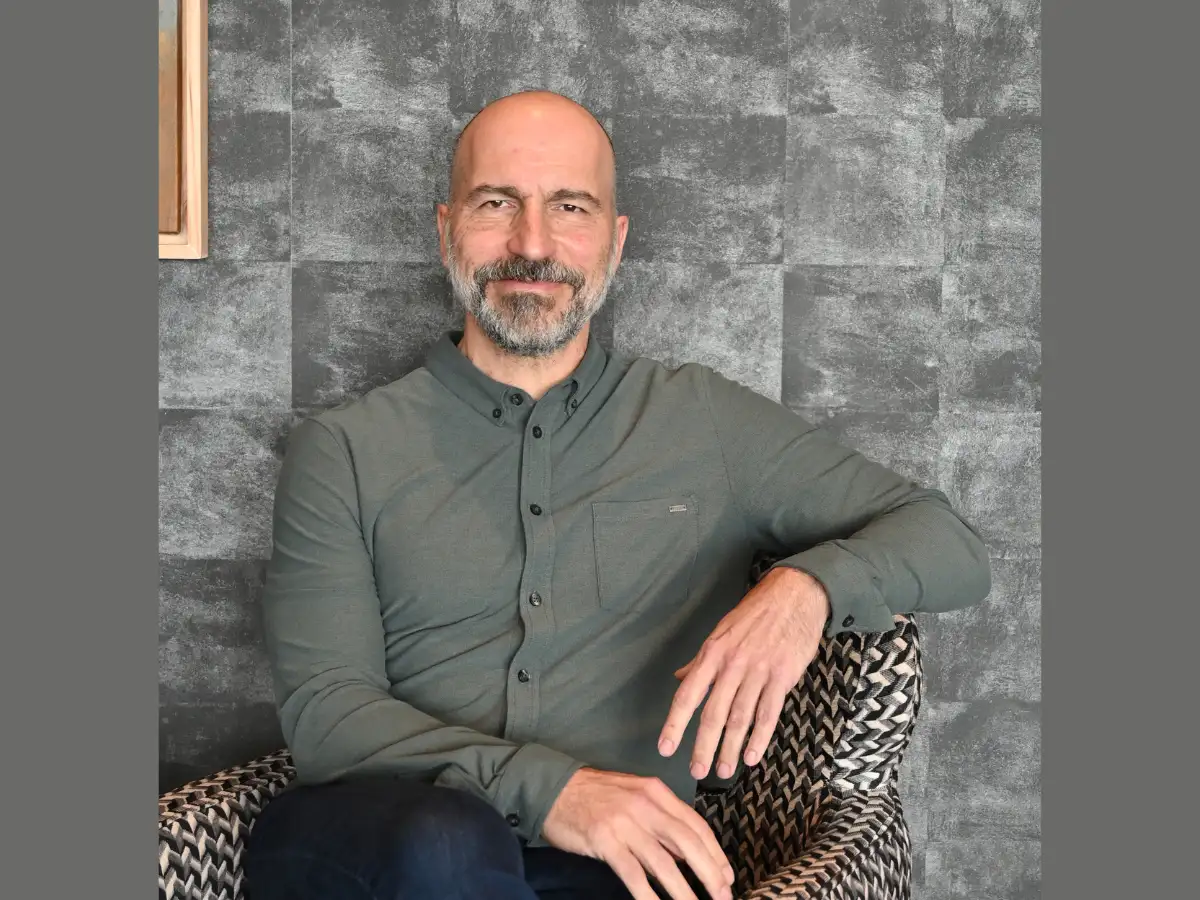
Uber CEO Dara Khosrowshahi discusses the company's shift toward an everything app, AI integration, and why India could become its largest market.
Uber CEO Dara Khosrowshahi is pushing the company to evolve into an "everything app" by integrating travel bookings and new services like personal shopping, while managing a massive shift in how the firm handles AI and risk [1]. With nearly $10 billion in cash flow, the company is now prioritizing "smart risks" to maintain innovation as it scales, moving away from the conservative decision-making that often plagues large public corporations [1].
The company’s expansion strategy includes a new partnership with Expedia to allow hotel bookings directly within the Uber app [1]. Beyond travel, Uber is testing services like in-ride snacks and coffee, aiming to own more of the user experience as AI chatbots begin to influence how consumers book transportation [1]. Khosrowshahi noted that while AI integrations have been "clunky" so far, the company is heavily investing in the technology, even as it forces a rethink of hiring and software team structures [1]. Uber’s CTO recently reported that the company burned through its entire annual AI token budget by the start of April [1].
Khosrowshahi also highlighted India as a potential future leader for the company, suggesting it could eventually become Uber’s biggest market [2]. This growth is part of a broader push to expand, including the recent launch of Uber Eats in seven European countries [1]. To support these efforts, Uber is increasing its investments in autonomous vehicle technology, including a significant stake in Rivian, while balancing the long-term implications for its driver workforce [1].
Internally, the company is shifting its management philosophy to avoid the stagnation of large-scale operations. Khosrowshahi emphasized that while he does not celebrate failure, he wants teams to identify the downside of a risk before proceeding, then learn from the outcome and move on quickly [1]. He pointed to the "women riders and drivers preferred" feature as a successful example of this risk-taking, where the company leveraged its scale to build marketplace liquidity despite initial concerns about driver availability [1].
The central challenge for Uber remains whether it can successfully transition from a ride-hailing service into a comprehensive travel and lifestyle platform without losing its operational agility. As AI agents begin to automate consumer choices, the company must decide how much of its $10 billion cash pile to commit to autonomous systems versus the human-centric services that currently define its brand.
Coming upLIVEsee all →
Across the coverage
Coverage is mostly measured — 292 of 300 reports stay neutral.
Bullish 5
Neutral 292
Bearish 3
The Catalyst Brief
Know what’s about to move the market.
Every Monday — the token unlocks, Fed dates & catalysts set to move crypto and markets this week. So you’re never blindsided.
Free · 3-min read · one-click unsubscribe
Synthesized from 2 sources
- 01Dara Khosrowshahi on replacing Uber drivers — and himself — with AIThe Verge
- 02Uber CEO Dara Khosrowshahi on AI, EVs & why India could become Uber’s biggest marketMSN
AI-assisted synthesis by the TrendWatcher Editorial Desk · sourced from 2 outlets · Jun 15, 2026 · How we report
Published
May 18, 2026, 12:30 AM
Author
Pranav Mukul, Samidha Sharma
Source
TrendWatcher AI (Enhanced)
Frequently asked · OpenAI
What is OpenAI?
OpenAI is a technology company that researches and develops artificial intelligence, most notably the text-generation chatbot known as ChatGPT.
Is OpenAI involved in cyberattacks?
OpenAI AI agents have been linked to cyberattack activity on the RubyGems platform, according to reports as of early 2025.
How does OpenAI compare to other AI companies?
OpenAI is positioned as a major competitor in the AI market alongside entities such as Google, which produces Gemini, and Microsoft, which produces Copilot.