Loading article…
Google
AI Impact on Irish Job Market and Workforce Trends
TrendWatcher AI (Enhanced)·105d ago·bullish
Most covered nowLIVEsee all →
As AI adoption grows, Irish graduates and tech workers face shifting employment landscapes. Explore the latest data on job losses and industry changes.
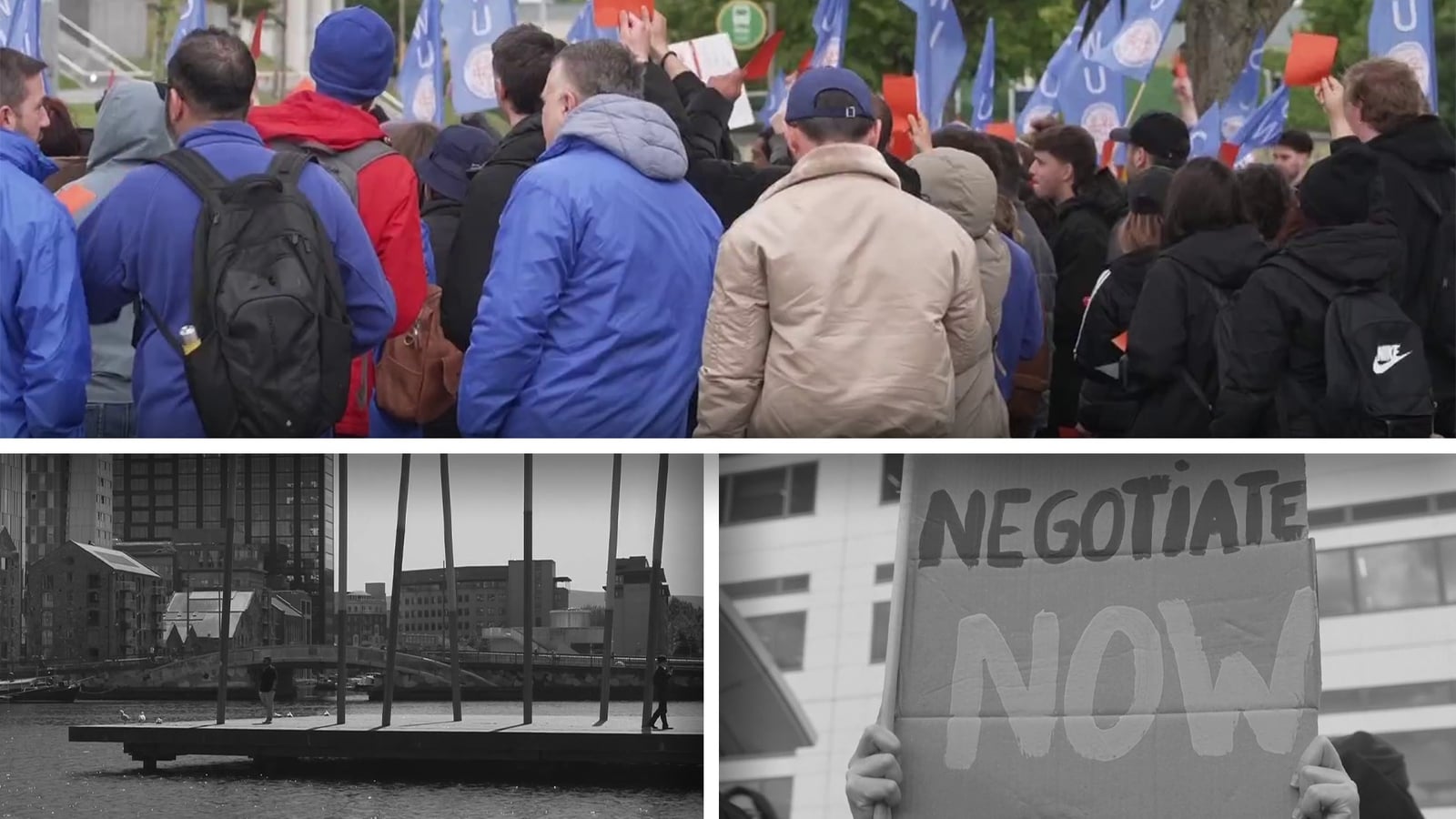
The rise of artificial intelligence is reshaping the Irish labor market, with nearly half of Irish employers reducing the number of entry and graduate-level roles available this year [3]. While tech companies have historically driven Ireland's economic growth, recent workforce contractions have left many questioning whether these shifts are a direct result of AI integration or a correction following pandemic-era over-hiring [3].
Key takeaways
- Ireland has seen a decline of approximately 20,000 information and communication technology jobs over the past 12 months [3].
- Major companies including Meta, Oracle, Indeed, and Glassdoor have implemented recent redundancies in Ireland [3].
- Some workers report that content moderation roles are being phased out as AI models are trained to perform those tasks [3].
- Industry leaders have made varying claims, with some predicting that up to 50% of entry-level roles in sectors like law and finance could be eliminated within five years [3].
The changing landscape for Irish graduates
For the Class of 2026, the transition from university to the workforce has become increasingly difficult. Graduates report that entry-level positions in sectors such as human resources and pharmaceuticals are becoming harder to secure, with some students expressing concern that their degrees may not align with the skills required for an AI-integrated economy [3]. Matt Mion, a pharmacology graduate, noted that the pharmaceutical sector is reducing graduate intake, suggesting that AI is replacing entry-level tasks previously performed in research labs and on factory lines [3].
The tech sector, which saw its Irish workforce grow from roughly 130,000 to a peak of nearly 190,000 employees during the pandemic, is now experiencing a significant downturn [3]. While some industry observers attribute these cuts to the rapid adoption of AI, others suggest that the current redundancies are a response to previous over-hiring [3]. At the Covalen facility in Dublin, employees working on content moderation for Meta platforms reported that they were unaware their work was being used to train AI systems that could eventually replace their own roles [3].
Why it matters
The uncertainty surrounding AI’s role in the labor market mirrors broader global tensions regarding infrastructure and automation. Just as the historical use of canaries in coal mines served as a sentinel for environmental hazards before being replaced by electronic sensors, the current job market is navigating a transition toward automated systems [2]. While some leaders, such as xAI founder Elon Musk, have predicted a future where human labor is no longer required, the immediate impact in Ireland is a period of significant economic adjustment [3]. As communities and workers grapple with these changes, the debate continues over whether AI is a tool for efficiency or a primary driver of structural unemployment [3]. The outcome of this shift will likely depend on how effectively the education system and labor policies adapt to a workforce that must now compete with increasingly capable AI models [3].
Coming upLIVEsee all →
Across the coverage
Coverage is mostly measured — 294 of 300 reports stay neutral.
Bullish 5
Neutral 294
Bearish 1
The Catalyst Brief
Know what’s about to move the market.
Every Monday — the token unlocks, Fed dates & catalysts set to move crypto and markets this week. So you’re never blindsided.
Free · 3-min read · one-click unsubscribe
Synthesized from 3 sources
- 01AI's Canary in the Coal Mine | Shelly PalmerShellypalmer
- 02What Happened to the Canary in the Coal Mine? The Story of How...Smithsonianmag
- 03Canaries in the coal mine? How AI could reshape work in IrelandRTÉ Ireland
AI-assisted synthesis by the TrendWatcher Editorial Desk · sourced from 3 outlets · Jun 1, 2026 · How we report
Published
May 30, 2026, 05:01 AM
Author
Louise Byrne
Source
TrendWatcher AI (Enhanced)
Frequently asked · Google
When was Google founded?
Google was founded in 1998 by Larry Page and Sergey Brin. The company began as a research project at Stanford University in 1996.
Who is the CEO of Google?
Sundar Pichai has served as the CEO of Google since 2015. He also assumed the role of CEO of Alphabet Inc. in 2019.
What is the parent company of Google?
Alphabet Inc. is the parent company of Google. Google was reorganized as a wholly owned subsidiary of Alphabet Inc. in 2015.
How does Google make money?
Google generates the majority of its revenue through data-driven advertising auctions. The company also offers a wide range of services including cloud computing, hardware, and software products.