Loading article…
Google Ai
Google Launches Screenless Fitbit Air to Challenge Whoop
TrendWatcher AI (Enhanced)·105d ago·neutral
Most covered nowLIVEsee all →
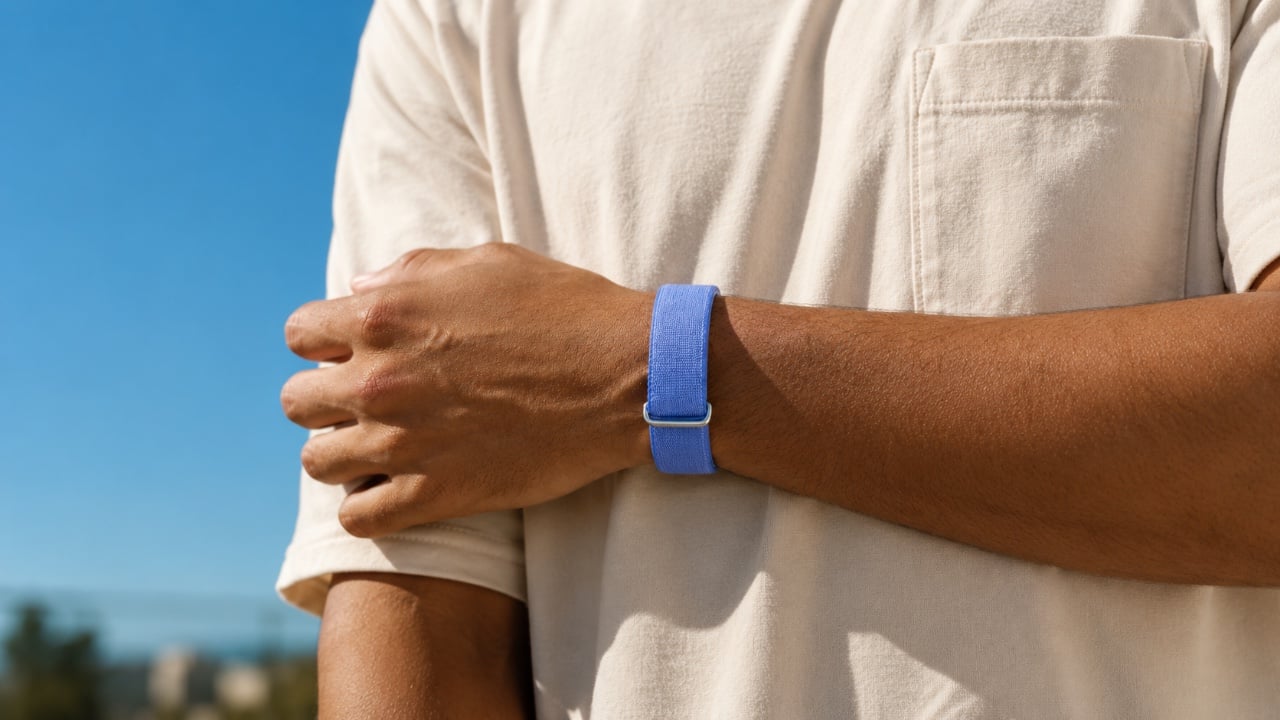
Google has unveiled the $99 screenless Fitbit Air, a wearable device that focuses on health tracking and AI-powered coaching to compete with Whoop.
Google has officially entered the screenless fitness tracker market with the Fitbit Air, a $99 device designed to provide continuous health monitoring without the distraction of notifications [1, 3]. The launch marks a strategic shift for the company, which is simultaneously rebranding its Fitbit software to Google Health and positioning its Gemini-powered AI as a central tool for interpreting biometric data [1, 3].
Key takeaways
- The Fitbit Air is a screenless tracker that monitors heart rate, SpO2, sleep stages, and activity, with a battery life of approximately one week [3].
- Google’s new Google Health Premium subscription costs $9.99 per month and includes an AI health coach that generates personalized workout plans and interprets health trends [3].
- Whoop responded to the launch by announcing on-demand video consultations with licensed clinicians, creating a direct philosophical split in how the two companies handle health data [3].
- The Fitbit Air is available for pre-order now and is scheduled to begin shipping on May 26 [1].
A Philosophical Split in Wearable Health
The competition between Google and Whoop highlights a fundamental disagreement over the role of technology in personal wellness. Google is betting that artificial intelligence can effectively process and explain complex health metrics to users [3]. By integrating its Gemini-powered AI coach into the Google Health app, the company aims to provide actionable insights at a lower price point than many competitors [3]. The Fitbit Air serves as an entry point for this ecosystem, with Google planning to expand its AI health services to support other devices, including the Apple Watch, Oura, and Garmin, later this year [3].
In contrast, Whoop is doubling down on human expertise. One day after Google’s announcement, Whoop revealed plans to offer video consultations with licensed clinicians who can review a user’s biometric data and medical history [3]. While Google’s approach focuses on scaling AI-driven guidance, Whoop argues that human professionals are necessary to provide context and accountability that a chatbot cannot replicate [3]. This divergence is further reflected in their pricing models: a year of Fitbit Air and the associated premium subscription costs less than Whoop’s entry-level annual plan, though Whoop has not yet announced the additional costs for its new clinician consultations [3].
Why it matters
The wearable industry is currently navigating a period of regulatory change, as the FDA recently relaxed oversight for both consumer wellness devices and AI-enabled health tools [3]. This shift has cleared the path for companies to experiment with different models of health guidance, ranging from automated AI coaching to professional medical integration [3]. As major tech platforms like Microsoft, Amazon, and OpenAI also introduce health-focused AI tools, the market is moving toward a future where the value of a wearable is defined less by its hardware and more by the intelligence used to interpret the data it collects [3]. Whether consumers prefer the accessibility of AI-driven insights or the professional oversight of human clinicians remains to be seen, as neither model has yet been tested at a massive scale [3].
Coming upLIVEsee all →
Across the coverage
Coverage is mostly measured — 248 of 260 reports stay neutral.
Bullish 10
Neutral 248
Bearish 2
The Catalyst Brief
Know what’s about to move the market.
Every Monday — the token unlocks, Fed dates & catalysts set to move crypto and markets this week. So you’re never blindsided.
Free · 3-min read · one-click unsubscribe
Synthesized from 3 sources
- 01Google Fitbit Air ColorsAndroid
- 02Google Finally Made the Fitness Tracker Apple and Whoop Wouldn’tgearpatrol
- 03Google built a 99 dollar AI health coach. Whoop responded with real doctors.The Next Web
AI-assisted synthesis by the TrendWatcher Editorial Desk · sourced from 3 outlets · Jun 1, 2026 · How we report
Published
May 30, 2026, 05:00 AM
Author
Roland Hutchinson
Source
TrendWatcher AI (Enhanced)
Frequently asked · Google Ai
How can a business improve its visibility in Google AI Overviews?
As of September 2026, businesses can improve Google AI Overview visibility by implementing structured content like FAQPage schema and maintaining strong Google Business Profile signals. Key signals include having more than 40 reviews, ensuring primary category accuracy, and uploading new photos within the prior 90 days.
What new voice features are available in Google AI subscriptions?
As of September 2026, Google AI subscriptions include voice capabilities for Gmail, Docs, and Keep that allow for conversational inbox searches, hands-free document writing, and the conversion of spoken input into structured lists. These features are available to various tiers of Google AI Plus, Pro, and Ultra subscribers.
What does the Google AI Sheets canvas tool do?
Google AI Sheets canvas is a tool that turns spreadsheet data into interactive, no-code mini-apps based on natural language prompts. As of August 2026, it allows users to create dynamic, read-write layers over spreadsheet data that update in real time.