Loading article…
Bitcoin
Gundlach says Fed cannot cut rates as two‑year yield outpaces funds
TrendWatcher AI (Enhanced)·121d ago·neutral
Most covered nowLIVEsee all →
Jeff Gundlach warns no Fed rate cut at next meeting, citing two‑year Treasury 50 bps above funds rate and rising inflation from oil price spikes.
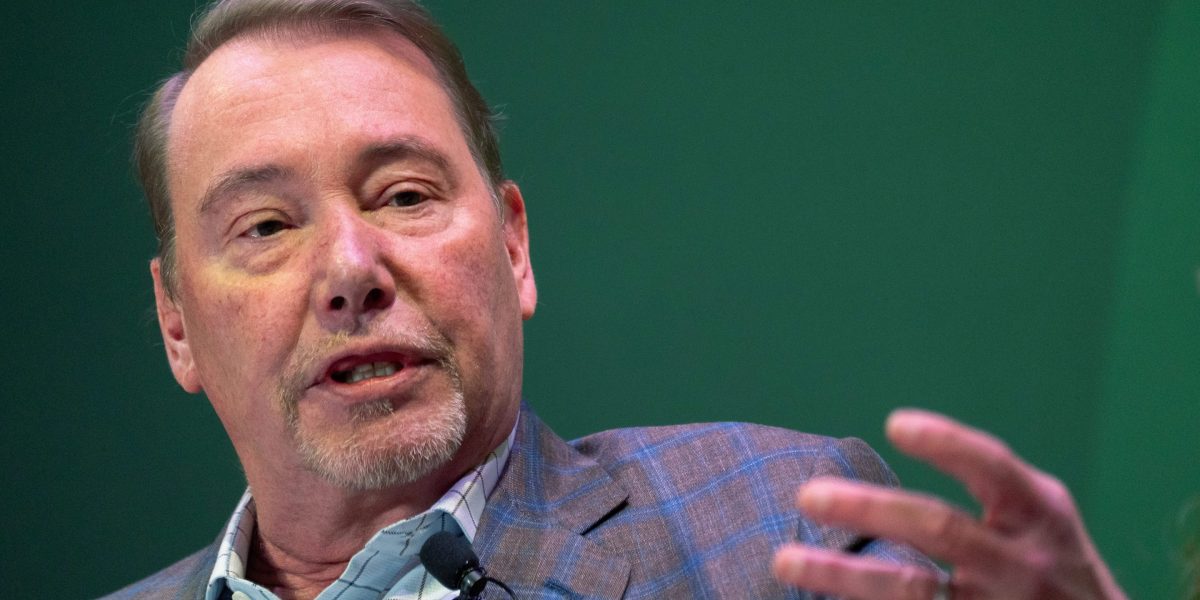
Jeffrey Gundlach, chief executive of DoubleLine Capital, told Fox News’ Sunday Morning Futures that a Fed rate cut at the upcoming policy meeting is “just not possible” because the two‑year Treasury yield sits roughly 50 basis points higher than the federal funds rate【1】.
He said investors had been hoping for two cuts this year, but “the inflation market has simply not cooperated.” The backdrop is a surge in oil prices driven by the Iran war, which fed into a 3.8% consumer‑price index rise in April—the fastest increase since May 2023【1】. Gundlach’s own models project the next headline CPI print will begin with a “four,” indicating further inflation pressure【1】.
Despite the stubborn price environment, the equity market has remained “remarkably strong,” a dynamic Gundlach attributes to the Fed’s inaction on inflation. “When the Fed isn’t doing anything about the inflation problem, the stock market goes on a tear,” he said, noting that earnings continue to outpace expectations even as valuations become “very expensive” and “very speculative”【1】.
Gundlach also warned that the private‑credit sector is vulnerable, describing it as a market that “always needs new investors” and suggesting sponsor greed may be driving asset accumulation【1】. His broader view is that the Fed’s tightening cycle has left rates too high for too long, and even a 50‑basis‑point cut—if it occurs—would be “out of touch” with the inflation reality【2】.
The implication for investors is a continued environment of high yields and limited policy relief, with equities buoyed by earnings but priced at riskier levels. As the Fed’s next decision approaches, market participants will watch whether the central bank’s stance shifts or remains constrained by the inflation‑driven yield curve.
Coming upLIVEsee all →
Across the coverage
Coverage is mostly measured — 286 of 300 reports stay neutral.
Bullish 5
Neutral 286
Bearish 9
The Catalyst Brief
Know what’s about to move the market.
Every Monday — the token unlocks, Fed dates & catalysts set to move crypto and markets this week. So you’re never blindsided.
Free · 3-min read · one-click unsubscribe
Synthesized from 4 sources
- 01Gundlach says it’s 'just not possible’ for the Fed toFortune
- 02Gundlach Says It’s ‘Just Not Possible’ for the Fed to CutThewealthadvisor
- 03According To Jeff Gundlach Fed Cuts Are Too Little Too Late |Thewealthadvisor
- 04Why The Fed Could Cut By 50bps & Why It Won’t MatterIfttt
AI-assisted synthesis by the TrendWatcher Editorial Desk · sourced from 4 outlets · Jun 15, 2026 · How we report
Published
May 17, 2026, 08:37 PM
Author
Jordan Fitzgerald, Sam Kim, Bloomberg
Source
TrendWatcher AI (Enhanced)
Frequently asked · Bitcoin
What is the current status of the CLARITY Act regarding Bitcoin?
The CLARITY Act is scheduled for a Senate cloture vote at 2:15 p.m. ET on 15 September 2026. The legislation, which includes provisions for non-decentralized DeFi protocols, requires 60 votes to advance past the debate stage.
Why did Bitcoin open interest fall recently?
Bitcoin open interest dropped by 13.5% as of 15 September 2026 because traders proactively cut leverage to manage risks associated with the upcoming CLARITY Act vote and Federal Reserve rate decision. This reduction in derivatives exposure occurred before the events took place rather than as a result of forced liquidations.
Is Bitcoin expected to rise or fall after the Federal Reserve decision?
Market analysts are divided on the immediate price direction for Bitcoin, with some technical indicators flagging a negative outlook if the price breaks below $76,500. While the long-term weekly trend remains constructive, the market is currently structured to absorb the outcome of the Federal Reserve decision rather than predict a specific price movement.
How has the price of Bitcoin performed over the last month?
Bitcoin is up 22.2% over the 30-day period leading up to 15 September 2026. This performance follows a rally that saw the price move from approximately $63,000 to $81,700 during August.