Loading article…
Coinbase
JPMorgan CEO attacks Coinbase over CLARITY Act stablecoin rewards
TrendWatcher AI (Enhanced)·105d ago·neutral
Most covered nowLIVEsee all →
JPMorgan’s Jamie Dimon clashes with Coinbase’s Brian Armstrong over the CLARITY Act, warning that stablecoin yield programs could “blow up” and sparking a
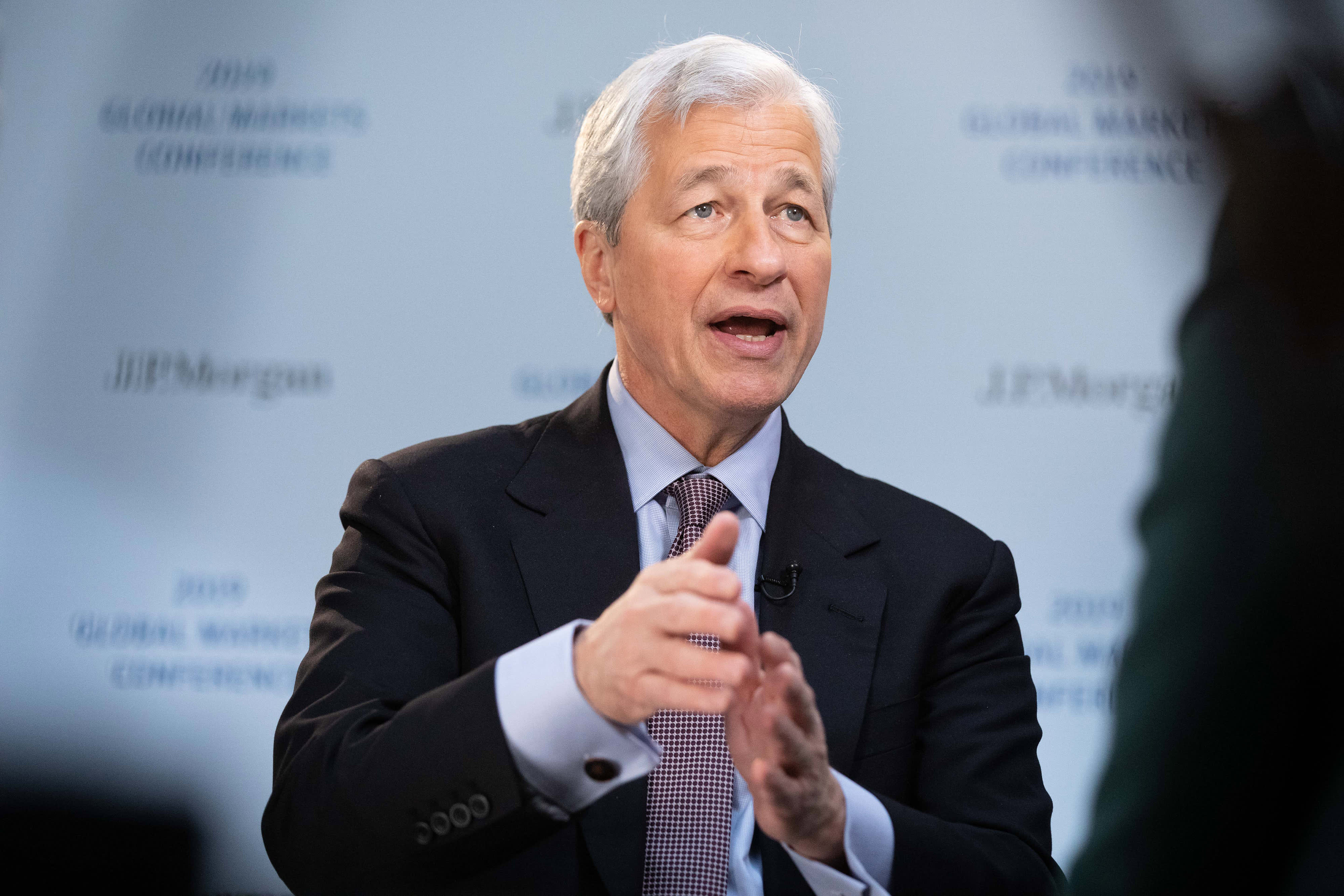
JPMorgan Chase chief Jamie Dimon publicly denounced Coinbase CEO Brian Armstrong’s stance on the Digital Asset Market Clarity Act, arguing that the bill would let stablecoin issuers pay interest without bank‑style safeguards and could ultimately fail [2]. Armstrong answered with a hockey‑themed meme that quickly went viral, prompting a swift rally of support from leading figures in the crypto sector [1].
Key takeaways
- Dimon warned that allowing stablecoin issuers to offer interest‑bearing rewards “without protection” would cause the system to “eventually blow up” [2].
- Armstrong’s meme portraying Dimon as a traditionalist sparked a coordinated defense of the CLARITY Act from industry leaders [1].
- The Senate Banking Committee approved the Digital Asset Market Clarity Act in a 15‑9 vote on May 14, and a full‑Senate vote is expected in June [1].
- Crypto executives, including Mike Novogratz and Peter Van Valkenburgh, argue that banks are using regulatory concerns to protect incumbent margins rather than consumer safety [1].
- The dispute centers on whether stablecoin reward programs should be regulated like bank deposits, a point that has stalled legislative progress [2].
Dimon’s Broadside and the Stablecoin Debate
In a Fox Business interview, Dimon criticized the current draft of the CLARITY Act, saying it would let stablecoin issuers “effectively pay interest on deposits… without protection that they should have,” and warned that “the banks will not accept it” [2]. He framed the issue as a matter of anti‑money‑laundering (AML) and Bank Secrecy Act (BSA) compliance, insisting that any entity moving money must be subject to the same scrutiny as traditional banks [1]. Dimon’s remarks echoed a broader banking narrative that stablecoin yield products resemble bank deposits and therefore require comparable oversight.
Armstrong’s response was a meme that placed Dimon at “#2” for tradition and himself at “#1” for economic freedom, a visual that spread rapidly across crypto social channels [1]. The meme amplified industry arguments that the banks’ opposition is driven by protectionism. Mike Novogratz of Galaxy Digital contended that elected lawmakers, not banks, should craft financial regulations, while Coin Center’s Peter Van Valkenburgh highlighted that roughly $3 trillion was laundered through banks in 2025, calling Dimon’s AML framing “nonsense” [1]. Critics also pointed to JPMorgan’s history of regulatory fines totaling tens of billions as evidence of a self‑interested stance.
Legislative Progress and Industry Unity
The Digital Asset Market Clarity Act, which seeks to formalize how federal securities and commodities regulators oversee crypto, cleared the Senate Banking Committee on May 14 with a 15‑9 vote [1]. The bill now requires 60 votes on the Senate floor before moving to the House, with a full‑Senate vote anticipated in June [1]. As the markup process unfolds, crypto leaders have rallied behind the legislation, portraying it as a safeguard for innovation against “incumbent protectionism” [1].
The clash has highlighted a fundamental regulatory question: should stablecoin issuers offering yield‑bearing products be subject to the same AML, BSA, and Know‑Your‑Customer (KYC) rules that govern banks? Dimon argues that without such parity, the system could “blow up,” while crypto advocates maintain that existing frameworks already impose Bank Secrecy Act obligations on exchanges [1].
Why it matters
The dispute between JPMorgan and Coinbase underscores the broader struggle to define the regulatory perimeter for digital assets. If the CLARITY Act advances, it could set a precedent for how stablecoin rewards are treated, potentially opening the door for broader crypto‑based financial services that compete with traditional banking products. Conversely, continued opposition from major banks may stall the bill, leaving the market in regulatory limbo. The upcoming Senate vote will be a key indicator of whether Congress leans toward integrating crypto innovations within existing financial safeguards or maintaining a stricter, bank‑centric regime.
Coming upLIVEsee all →
Across the coverage
Coverage is mostly measured — 219 of 229 reports stay neutral.
Bullish 5
Neutral 219
Bearish 5
The Catalyst Brief
Know what’s about to move the market.
Every Monday — the token unlocks, Fed dates & catalysts set to move crypto and markets this week. So you’re never blindsided.
Free · 3-min read · one-click unsubscribe
Synthesized from 2 sources
- 01Coinbase vs. JPMorgan Feud Escalates Over the CLARITY ActBeInCrypto
- 02‘The banks will not accept it’: Dimon escalates battle over stablecoin rewards in CLARITY Act debateCoinDesk
AI-assisted synthesis by the TrendWatcher Editorial Desk · sourced from 2 outlets · Jun 3, 2026 · How we report
Published
May 29, 2026, 08:00 PM
Author
Ronaldo Marquez
Source
TrendWatcher AI (Enhanced)
Frequently asked · Coinbase
Why is Coinbase rebranding the Base App?
Coinbase is rebranding the Base App back to Coinbase Wallet to better reflect a strategic shift toward multichain trading and away from a social-first 'everything app' model. As of September 2026, the company intends to use the wallet as a test environment for new trading experiences across various blockchain networks.
Does Coinbase still support the Base blockchain?
Yes, Coinbase remains committed to the Base blockchain despite the rebranding of the Base App. Coinbase Wallet will continue to distribute the network's assets, communities, and features to its users.
What is the role of the Coinbase Wallet in the company's strategy?
Coinbase Wallet serves as a 'test kitchen' where the company introduces new assets and trading experiences that are not yet available on the flagship Coinbase retail exchange. The platform aims to provide users with the ability to trade assets across multiple chains, including Solana and Hyperliquid, as part of an 'everything exchange' strategy.