Loading article…
Series Macs
Apple Studio Display XDR review: bright 5K monitor with 120 Hz refresh
TrendWatcher AI (Enhanced)·60d ago·neutral
Most covered nowLIVEsee all →
Apple’s new 27‑inch Studio Display XDR offers 5K resolution, 2,000 nits HDR brightness, 120 Hz Adaptive Sync and built‑in camera, priced from $3,299.
Apple’s Studio Display XDR replaces the Pro Display XDR with a smaller, brighter 27‑inch 5K monitor that adds a 120 Hz refresh rate and integrated camera and speakers [1]. The new model targets professional creators, but its $3,299 price places it beyond the reach of most casual Mac users [1].
Key takeaways
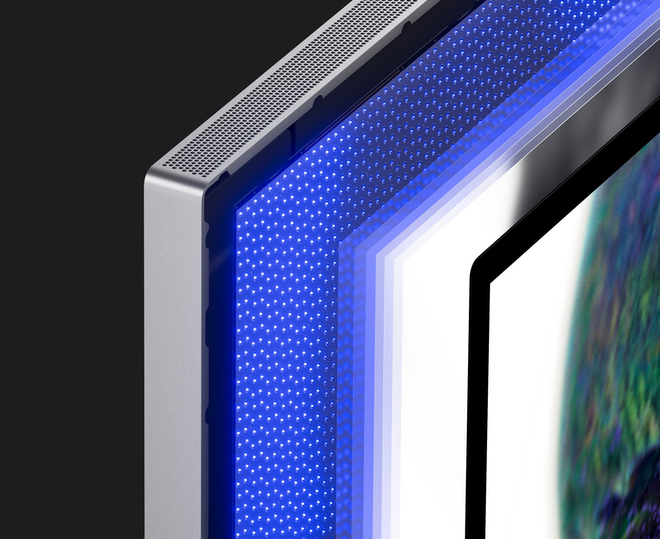
- 27‑inch 5K mini‑LED panel with 2,304 local dimming zones, up from 576 on the Pro Display XDR [1].
- Peak HDR brightness of 2,000 nits and SDR brightness of 1,000 nits; contrast ratio 1,000,000:1 [2].
- Variable refresh rate 47 Hz–120 Hz (Adaptive Sync) for smoother gaming and scrolling [1].
- Built‑in 12 MP Center Stage camera, six‑speaker audio system, and two Thunderbolt 5 ports (upstream and downstream) [1][2].
- Starts at $3,299, with optional nano‑texture glass and a height‑adjustable stand included [3].
Design and display performance
The Studio Display XDR keeps the same 27‑inch footprint as the standard Studio Display but swaps the older Pro Display XDR’s 32‑inch 6K panel for a 5K mini‑LED screen [1]. Apple increased the number of local dimming zones to 2,304, which, together with the higher peak brightness, delivers deeper blacks and stronger HDR performance than its predecessor [1]. The display can output 2,000 nits of HDR brightness and 1,000 nits in SDR, achieving a 1,000,000:1 contrast ratio and covering 80 % of the Rec.2020 color space [2]. Apple markets the panel as “the world’s best pro display” for HDR video editing and medical imaging [2].
Beyond the panel, the XDR adds a 12‑megapixel Center Stage camera with Desk View, a six‑speaker system with Spatial Audio, and a height‑adjustable stand that raises the screen up to 105 mm [2][3]. Connectivity relies on two Thunderbolt 5 ports and two USB‑C ports; the monitor can charge a connected MacBook at up to 140 W, making it a functional hub for a Mac‑centric workspace [1][2].
How it compares to the Pro Display XDR
While the Pro Display XDR offered a larger 32‑inch 6K panel, its 576 local dimming zones and 1,600 nits peak HDR brightness fall short of the Studio Display XDR’s specifications [1]. The newer model’s 120 Hz Adaptive Sync, absent on the Pro version, improves responsiveness for gaming and fast scrolling, though the effect is less pronounced on a 27‑inch screen [1]. The Pro Display XDR lacked built‑in camera and speakers, whereas the XDR includes both, adding convenience for video calls and media consumption [1].
However, the reduction in size may deter users who prefer a single large monitor for professional workflows. Apple’s decision to replace the 32‑inch model with a smaller, more affordable unit reflects a shift toward multi‑display setups, as the 27‑inch size fits better in dual‑monitor arrangements [1].
Why it matters
The Studio Display XDR demonstrates Apple’s effort to bring high‑end mini‑LED technology to a broader professional audience while trimming price and size. Its combination of 5K resolution, high HDR brightness, and 120 Hz refresh rate positions it as a competitive option for creators who need accurate color and dynamic range but do not require a 6K panel. The inclusion of Thunderbolt 5 daisy‑chaining and substantial charging power further integrates the monitor into Apple’s ecosystem, reinforcing the company’s strategy of offering turnkey hardware solutions. Future updates may address the lack of swivel functionality and the still‑high price point, which remain barriers for wider adoption.
Coming upLIVEsee all →
Across the coverage
Coverage is mostly measured — 37 of 41 reports stay neutral.
Bullish 2
Neutral 37
Bearish 2
The Catalyst Brief
Know what’s about to move the market.
Every Monday — the token unlocks, Fed dates & catalysts set to move crypto and markets this week. So you’re never blindsided.
Free · 3-min read · one-click unsubscribe
Synthesized from 3 sources
- 01Apple Studio Display XDR Hands-On: Better Than the Pro Display XDR in Almost Every WayMacRumors
- 02Apple reveals its new 5K mini-LED Studio Display XDREngadget
- 03Apple Studio Display XDR Review: It Looks So Good, I Wish It Were an iMacGizmodo
AI-assisted synthesis by the TrendWatcher Editorial Desk · sourced from 3 outlets · Jun 3, 2026 · How we report
Published
May 28, 2026, 04:00 PM
Author
MacDailyNews
Source
TrendWatcher AI (Enhanced)
Frequently asked · Series Macs
How many displays can an M-series Mac support?
Support ranges from a single 6K display on base models to triple 6K displays on M5 Pro or Max configurations.
Are Thunderbolt 5 docks compatible with older Macs?
Yes, Thunderbolt 5 is backwards compatible with USB-C, allowing it to function with most older Mac models.
Does the Satechi CubeDock include built-in HDMI ports?
No, the CubeDock relies on its Thunderbolt 5 ports for display output, requiring adapter cables for HDMI or DisplayPort monitors.