Loading article…
Oil
Norway’s Oil‑Gas Push Highlights Economic Dependence and Climate
TrendWatcher AI (Enhanced)·105d ago·bullish
Most covered nowLIVEsee all →
Norway ramps up oil and gas output to aid Europe, while domestic debate intensifies over climate goals and the need to diversify its economy.
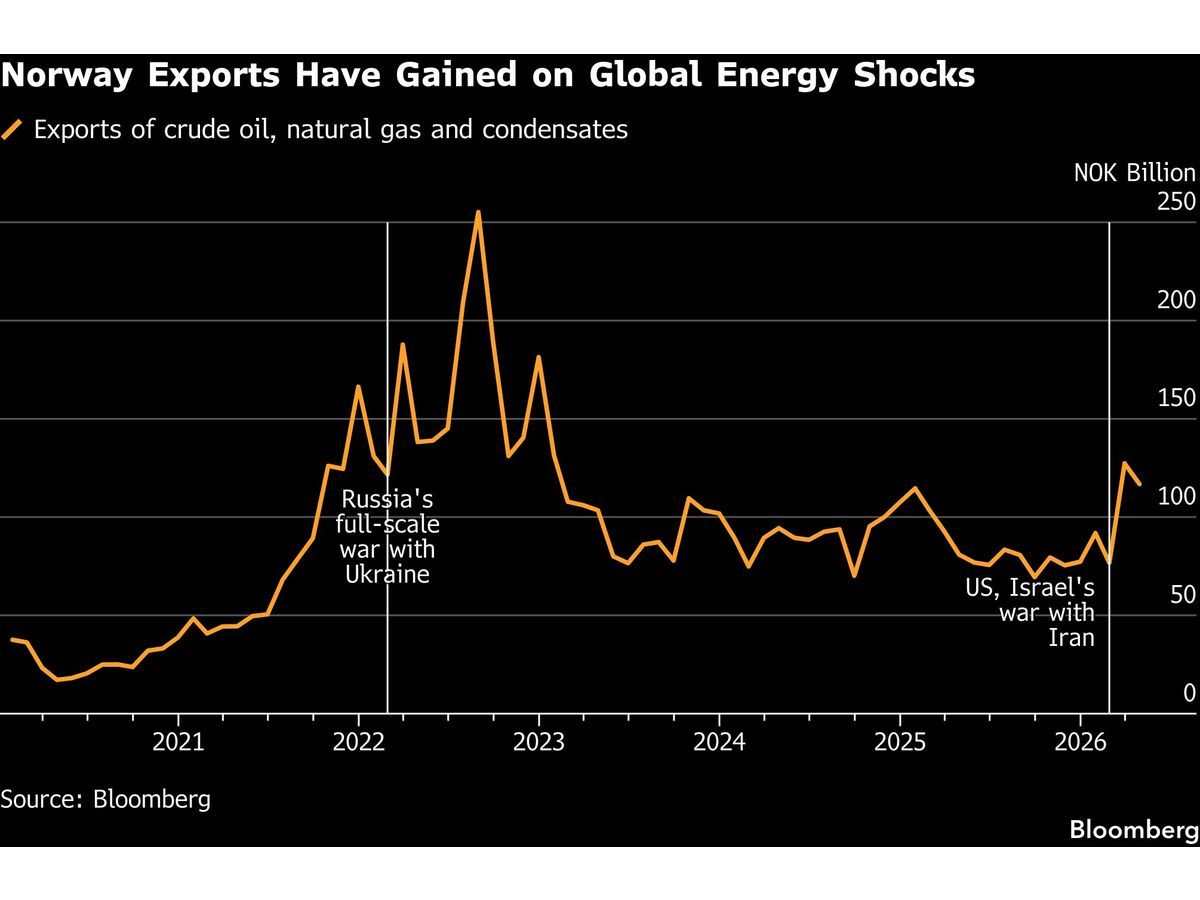
Norway has increased fossil‑fuel production to help Europe cope with supply disruptions, a move that underscores the country’s reliance on oil and gas revenues even as climate advocates call for a faster transition [1]. The surge comes amid political pressure at home, where parties clash over whether to maintain the sector that funds the welfare state or to accelerate a green shift.
Key takeaways
- Norway’s oil and gas sector accounts for about 14 % of GDP and 40 % of exports, supporting roughly 160,000 jobs [2].
- Recent projects such as the Eirin gas field have been fast‑tracked to deliver low‑emission gas to Europe, extending platform life to 2036 [3].
- The Green Party urges an end to oil prospecting by 2035, while the Conservatives and Labour parties resist a rapid exit [2].
- Norway is lobbying the EU to relax the Arctic drilling moratorium, reflecting its strategic push to keep offshore opportunities open [4].
Balancing Revenue and Climate Commitments
Norway’s oil wealth has built the world’s largest sovereign wealth fund, now worth over 12 trillion kroner, and financed generous social programs and incentives for electric vehicles [2]. Yet the sector’s future is contested. The Green Party, which could be pivotal for a centre‑left coalition, demands an immediate halt to new oil exploration and a production phase‑out by 2035 [2]. Meanwhile, the Conservative and Labour parties, which have traditionally defended the industry, argue that a sudden stop would be “painful” for the economy [2].
Industry leaders counter that Norwegian crude emits relatively low greenhouse gases at the drilling stage, and that shutting down production could shift demand to more polluting sources elsewhere [2]. They also point to the expertise and capital needed for emerging technologies such as offshore wind, hydrogen, and carbon capture and storage [2].
New Gas Projects Show Speed Over Scale
In response to the geopolitical shock of Russia’s invasion of Ukraine, Equinor revived the long‑idle Eirin field, bringing gas online within three years of a rapid investment decision [3]. The project, with recoverable resources of about 27.6 million barrels of oil equivalent, ties into existing infrastructure, extending the Gina Krog platform’s life to 2036 and preserving offshore jobs [3]. Its low emissions intensity—around 3 kg CO₂ per barrel of oil equivalent—offers political cover in Europe, where demand for reliable gas remains high despite climate ambitions [3].
Norway’s lobbying effort in Brussels seeks to ease the EU’s Arctic drilling ban, aiming to keep future offshore prospects viable as the country leans on its status as Europe’s top gas supplier [4].
Why it matters
The latest production boost highlights Norway’s structural dependence on fossil‑fuel revenues while exposing the political fault line between economic security and climate responsibility. As Europe continues to rely on Norwegian gas for stability, the country’s internal debate and external lobbying will shape how quickly it can diversify away from oil and gas. Future policy choices—whether to honor Green Party calls for a 2035 phase‑out or to maintain the status quo—will determine the pace of Norway’s transition and its role in Europe’s broader energy landscape.
Coming upLIVEsee all →
Across the coverage
Coverage is mostly measured — 124 of 164 reports stay neutral.
Bullish 17
Neutral 124
Bearish 23
The Catalyst Brief
Know what’s about to move the market.
Every Monday — the token unlocks, Fed dates & catalysts set to move crypto and markets this week. So you’re never blindsided.
Free · 3-min read · one-click unsubscribe
Synthesized from 4 sources
- 01Norway Doubles Down on Oil and Gas as Europe Scrambles for SupplyPrometheus
- 02Turn off the oil taps? Norway torn between climate and cashPhys
- 03Norway Just Switched on Another Gas Lifeline for EuropeCrude Oil Prices
- 04Norway Lobbies To Persuade EU To Drop Arctic Drilling... | ZeroHedgeZerohedge
AI-assisted synthesis by the TrendWatcher Editorial Desk · sourced from 4 outlets · Jun 1, 2026 · How we report
Published
May 30, 2026, 07:18 AM
Author
Bloomberg News
Source
TrendWatcher AI (Enhanced)
Frequently asked · Oil
What is Oil?
Oil is a trending topic in the news. Recent coverage of Oil includes: May rewired global energy markets - Yahoo Finance.
Why is Oil trending today?
10 news sources analyzed
What is the current sentiment on Oil?
Based on our analysis of recent news articles, Oil has mixed coverage. Check the sentiment score above for detailed analysis.
Where can I get the latest Oil news?
TrendWatcher aggregates Oil news from 100+ trusted sources and provides AI-powered sentiment analysis updated in real-time.