Loading article…
Series Macs
Apple Silicon Macs Gain Official eGPU Support for AI Workloads
TrendWatcher AI (Enhanced)·107d ago·neutral
Most covered nowLIVEsee all →
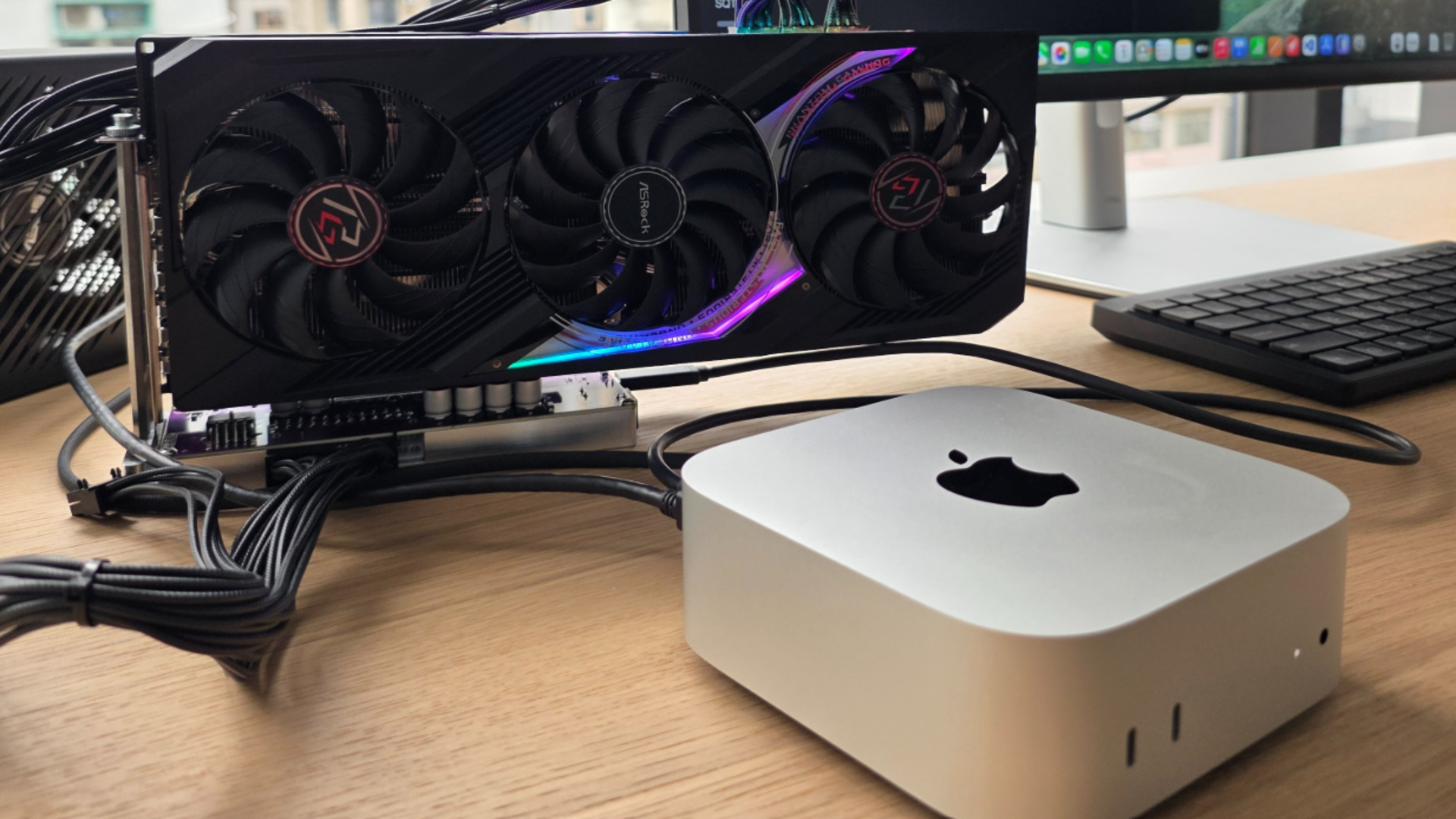
Apple has officially approved the TinyGPU driver, allowing Mac users to utilize external GPUs for AI tasks without needing to bypass system protections.
Apple has officially approved the TinyGPU driver, enabling Mac Mini and other Apple Silicon users to utilize external graphics cards as AI accelerators [1]. This development allows users to leverage high-performance AMD and Nvidia hardware for complex AI computations without the need to bypass system protections like System Integrity Protection (SIP) [1].
Key takeaways
- The TinyGPU driver is officially approved by Apple for use with macOS 12.1 and later [1].
- Users can connect AMD and Nvidia GPUs via Thunderbolt or USB4 ports to run AI models directly on Apple Silicon devices [1].
- Nvidia GPU support requires a Docker Desktop setup to execute computations via NVCC, while AMD workloads run natively [1].
- The driver is designed specifically for AI acceleration rather than traditional graphics output, supporting models like Qwen 2.5 27B [1].
Unlocking AI performance on Apple Silicon
For years, Apple Silicon Macs have been recognized for their hardware-software integration, yet they have remained limited regarding external GPU (eGPU) utility for high-end computing [1]. The introduction of the TinyGPU driver changes this by providing a streamlined interface for AI tasks [1]. According to TinyCorp, the driver supports AMD GPUs from the RDNA3 generation onward and Nvidia cards from the Ampere series [1]. By using the tinygrad framework, users can now run demanding AI models directly on their machines, a process TinyCorp describes as accessible enough that "a Qwen could do it" [1].
This shift arrives as Apple has moved away from traditional modular workstation hardware, exemplified by the permanent discontinuation of the Mac Pro [1]. With no new Mac Pro hardware planned and rumors of an M4 Ultra variant failing to materialize, the ecosystem has lacked a modular high-end desktop alternative [1]. The ability to integrate eGPUs provides a new path for professionals and enthusiasts who require significant AI performance beyond what is natively available on standard Apple Silicon configurations [1].
Why it matters
The approval of TinyGPU represents a significant change in how Apple Silicon users can scale their hardware for specialized workloads. By officially supporting eGPUs for AI, Apple has provided a viable route for users to turn modest devices like the Mac Mini into powerful AI-capable systems [1]. This development offers a level of flexibility that was previously impossible, effectively filling a gap in the market for users who need to run complex models locally without relying on integrated hardware alone [1]. As the industry continues to prioritize AI integration, this official support ensures that Mac users can maintain competitive computational power through modular hardware upgrades [1].
Coming upLIVEsee all →
Across the coverage
Coverage is mostly measured — 37 of 41 reports stay neutral.
Bullish 2
Neutral 37
Bearish 2
The Catalyst Brief
Know what’s about to move the market.
Every Monday — the token unlocks, Fed dates & catalysts set to move crypto and markets this week. So you’re never blindsided.
Free · 3-min read · one-click unsubscribe
Synthesized from 3 sources
- 01Apple finally lets Mac Mini users unleash full AI power using...
- 02Final Cut Pro 12.2 for MacOS Free Download - FileCR
- 03How to connect multiple monitors to MacBooks... | Macworld
AI-assisted synthesis by the TrendWatcher Editorial Desk · sourced from 3 outlets · Jun 2, 2026 · How we report
Published
Apr 11, 2026, 12:00 AM
Source
TrendWatcher AI (Enhanced)
Frequently asked · Series Macs
How many displays can an M-series Mac support?
Support ranges from a single 6K display on base models to triple 6K displays on M5 Pro or Max configurations.
Are Thunderbolt 5 docks compatible with older Macs?
Yes, Thunderbolt 5 is backwards compatible with USB-C, allowing it to function with most older Mac models.
Does the Satechi CubeDock include built-in HDMI ports?
No, the CubeDock relies on its Thunderbolt 5 ports for display output, requiring adapter cables for HDMI or DisplayPort monitors.