Loading article…
Series Macs
Apple Expected to Launch 15 New Hardware Products in 2026
TrendWatcher AI (Enhanced)·119d ago·neutral
Most covered nowLIVEsee all →
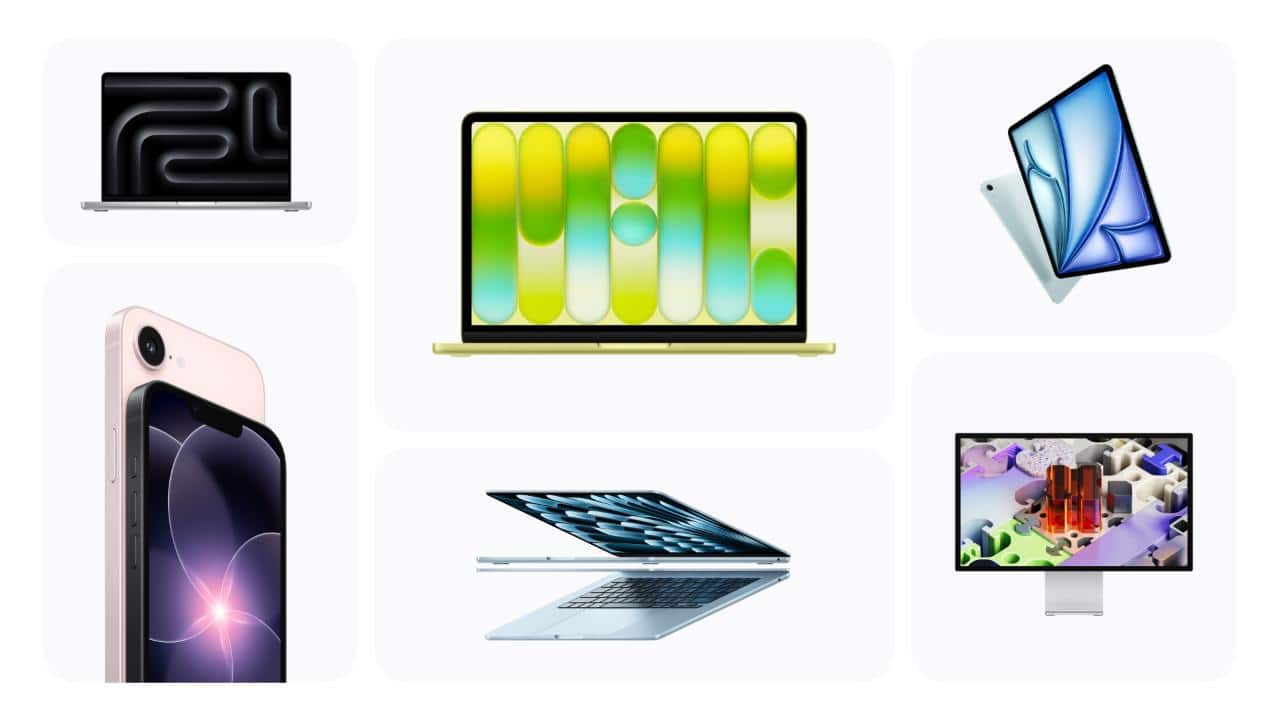
Apple is reportedly planning to release over 15 new hardware products this year, including new iPhones, Mac models, iPads, and smart home devices.
Apple is preparing for a busy year of hardware releases, with reports indicating that the company intends to launch more than 15 new products throughout 2026 [3]. The upcoming lineup spans across the company's existing smartphone, tablet, and computer categories, while also marking an expansion into new smart home hardware [3].
Key takeaways
- The expected product list includes the iPhone 18 Pro, iPhone 18 Pro Max, and a rumored foldable iPhone [3].
- Apple plans to update its tablet lineup with a new base-model iPad and an OLED-equipped iPad mini [1].
- The Mac portfolio is slated for upgrades, including new M5-series chips for the Mac Studio, Mac mini, and iMac, alongside a redesigned MacBook Pro [3].
- New smart home offerings are expected, such as a dedicated smart home hub with a display, updated HomePods, and a new Apple TV [3].
- These launches follow a major leadership transition, as CEO Tim Cook is set to step down on September 1, handing over the role to John Ternus [2].
Expanding the Hardware Ecosystem
The rumored 2026 product slate focuses heavily on performance improvements through in-house silicon and design refinements. For the iPhone, Apple is expected to introduce the iPhone 18 Pro and Pro Max, which may feature an A20 Pro chip and camera upgrades like variable aperture [3]. Additionally, a foldable iPhone is anticipated, featuring a 7.7-inch inner display and multitasking capabilities powered by iOS 27 [3].
Apple’s tablet strategy includes an upgraded base-model iPad, which is expected to gain an A18 chip to support Apple Intelligence features [1]. The iPad mini is also slated for a significant refresh, with reports suggesting the inclusion of an OLED display, a more powerful Pro-series chip, and a water-resistant design [3]. Meanwhile, the Mac lineup will see a transition to M5-series processors for the Mac Studio, Mac mini, and iMac, while a redesigned MacBook Pro is expected to feature an OLED display and touch support [3].
Smart Home and Wearable Strategy
Beyond core computing devices, Apple is reportedly looking to strengthen its presence in the smart home market. The company is expected to launch a new smart home hub equipped with a display, FaceTime support, and Apple Intelligence capabilities [3]. This expansion is complemented by plans for a refreshed full-sized HomePod, a new HomePod mini, and an updated Apple TV with improved connectivity [3]. The wearable category will also see updates, with the Apple Watch Series 12 and Apple Watch Ultra 4 expected to receive chip upgrades and enhanced biometric features [3].
Why it matters
These upcoming product launches represent a continuation of Apple’s focus on software-led features and tighter ecosystem integration under the leadership of incoming CEO John Ternus [3]. The company remains committed to its transition to in-house silicon, which has historically provided higher performance and power efficiency across its devices [2]. While these product timelines remain subject to change, the strategy highlights Apple's effort to maintain its position as a global tech powerhouse following a period of significant financial growth that saw the company reach a $4 trillion valuation [2]. As Apple continues to integrate Apple Intelligence into its hardware, the success of these new devices will be central to the company's ongoing efforts to compete in the evolving AI landscape [2].
Coming upLIVEsee all →
Across the coverage
Coverage is mostly measured — 37 of 41 reports stay neutral.
Bullish 2
Neutral 37
Bearish 2
The Catalyst Brief
Know what’s about to move the market.
Every Monday — the token unlocks, Fed dates & catalysts set to move crypto and markets this week. So you’re never blindsided.
Free · 3-min read · one-click unsubscribe
Synthesized from 3 sources
- 01New iPads will launch later this year, here’s what rumors say is coming9to5Mac
- 02Tim Cook is stepping down as CEO of Apple: Here's a look at his 15-year legacy, from new products and services to China expansionTechCrunch
- 03Apple set to launch 15 new products this year: Here’s a complete listMoneycontrol.com
AI-assisted synthesis by the TrendWatcher Editorial Desk · sourced from 3 outlets · Jun 2, 2026 · How we report
Published
Mar 30, 2026, 12:00 AM
Source
TrendWatcher AI (Enhanced)
Frequently asked · Series Macs
How many displays can an M-series Mac support?
Support ranges from a single 6K display on base models to triple 6K displays on M5 Pro or Max configurations.
Are Thunderbolt 5 docks compatible with older Macs?
Yes, Thunderbolt 5 is backwards compatible with USB-C, allowing it to function with most older Mac models.
Does the Satechi CubeDock include built-in HDMI ports?
No, the CubeDock relies on its Thunderbolt 5 ports for display output, requiring adapter cables for HDMI or DisplayPort monitors.