Loading article…
Google Ai
DuckDuckGo Sees Traffic Surge Following Google AI Overhaul
TrendWatcher AI (Enhanced)·105d ago·bullish
Most covered nowLIVEsee all →
DuckDuckGo reports a rise in app installs and "No AI" search page visits after Google announced its major AI-powered search engine redesign at I/O 2026.
DuckDuckGo has reported a significant increase in user interest following Google’s announcement of a major AI-driven search overhaul at its I/O conference in May 2026 [2]. As Google integrates conversational AI agents and summaries directly into its search interface, some users are turning to alternative platforms that offer more control over AI features [1].
Key takeaways
- Visits to DuckDuckGo’s "No AI" search subdomain tripled following Google’s I/O announcements and have remained 84% above their normal baseline [1].
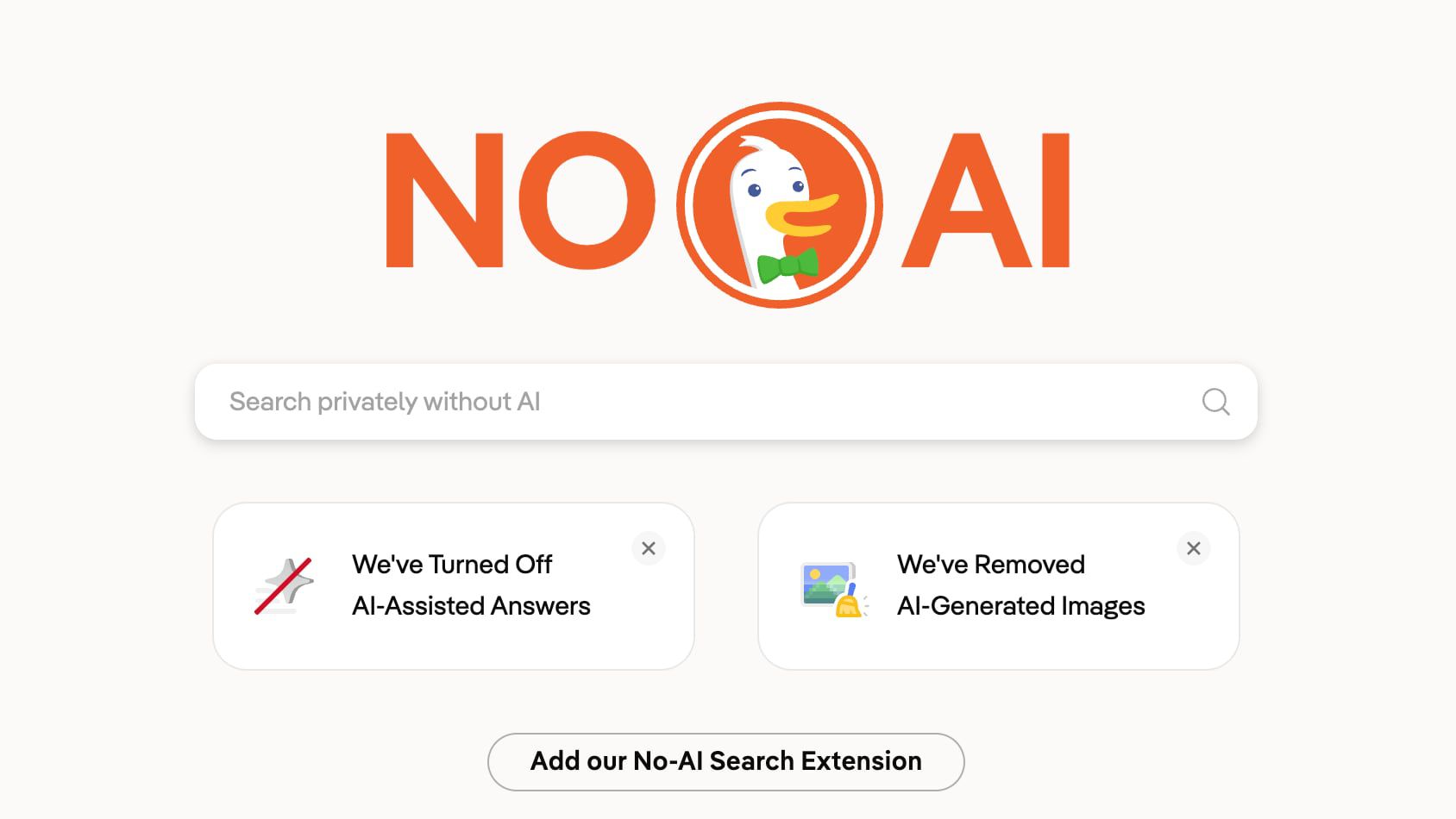
- DuckDuckGo launched dedicated "No-AI Search" extensions for Chrome and Firefox on June 1 to allow users to permanently default to an AI-free search experience [1].
- U.S. app installs for DuckDuckGo saw double-digit weekly growth, with iOS installs in the U.S. peaking at nearly 70% on a single day [1, 2].
- While DuckDuckGo promotes an "AI should be optional" philosophy, the company continues to offer its own AI-powered tools, including a private chatbot and search summaries [1, 3].
User pushback against integrated AI
The surge in traffic to DuckDuckGo’s "No AI" subdomain, noai.duckduckgo.com, began on May 28, with the company noting that the trend has continued to rise [1]. DuckDuckGo CEO Gabriel Weinberg criticized Google’s new approach, stating that the company is "force-feeding AI with no way to opt out" and that this has resulted in search results that are "getting worse, not better" [1]. In response to this perceived market demand, DuckDuckGo released browser extensions that strip away AI-generated image results, AI-assisted summaries, and other features the company has introduced over the last two years [1].
Data regarding this shift remains limited to DuckDuckGo’s internal figures, making it difficult to measure broader changes in global search behavior [2]. While DuckDuckGo spokesperson Kamyl Bazbaz described the usage spike as "unprecedented" in recent memory, it remains unclear if Google’s specific design changes were the sole driver of the growth [2]. Other companies are also responding to the "anti-AI" sentiment; Brave recently launched a $59.99 browser version called Brave Origin that removes all AI and crypto-related features, while Mozilla is preparing a "Project Nova" redesign for Firefox that will include a single toggle to disable all AI functionality [1].
Why it matters
The industry is currently divided on how to integrate generative AI into web search. While Google has moved toward a model where AI agents and conversational summaries are central to the user experience, other companies are positioning "off by default" settings as a competitive advantage [1]. Despite the marketing push for AI-free experiences, the landscape remains nuanced; DuckDuckGo itself continues to operate its own AI services, such as Duck.ai and DuckAssist, framing its stance as a commitment to user choice rather than a complete rejection of the technology [1, 3]. As major browsers and search engines finalize their AI strategies, the ability for users to opt out of these features appears to be emerging as a key point of differentiation in the browser market [1].
Coming upLIVEsee all →
Across the coverage
Coverage is mostly measured — 248 of 260 reports stay neutral.
Bullish 10
Neutral 248
Bearish 2
The Catalyst Brief
Know what’s about to move the market.
Every Monday — the token unlocks, Fed dates & catalysts set to move crypto and markets this week. So you’re never blindsided.
Free · 3-min read · one-click unsubscribe
Synthesized from 3 sources
- 01DuckDuckGo Launched Duck AI. Now Their Hit Product is 'No AI'Decrypt
- 02Some users may be giving Google's AI search the bird, and DuckDuckGo is benefitingInsider
- 03Google's Forced AI Search Is Sending Users Straight to DuckDuckGoAndroid
AI-assisted synthesis by the TrendWatcher Editorial Desk · sourced from 3 outlets · Jun 2, 2026 · How we report
Published
May 29, 2026, 10:55 PM
Author
Juli Clover
Source
TrendWatcher AI (Enhanced)
Frequently asked · Google Ai
How can a business improve its visibility in Google AI Overviews?
As of September 2026, businesses can improve Google AI Overview visibility by implementing structured content like FAQPage schema and maintaining strong Google Business Profile signals. Key signals include having more than 40 reviews, ensuring primary category accuracy, and uploading new photos within the prior 90 days.
What new voice features are available in Google AI subscriptions?
As of September 2026, Google AI subscriptions include voice capabilities for Gmail, Docs, and Keep that allow for conversational inbox searches, hands-free document writing, and the conversion of spoken input into structured lists. These features are available to various tiers of Google AI Plus, Pro, and Ultra subscribers.
What does the Google AI Sheets canvas tool do?
Google AI Sheets canvas is a tool that turns spreadsheet data into interactive, no-code mini-apps based on natural language prompts. As of August 2026, it allows users to create dynamic, read-write layers over spreadsheet data that update in real time.