Loading article…
Consensus Mechanism
Sui Mainnet Resumes Operations After Series of Network Outages
TrendWatcher AI (Enhanced)·59d ago·neutral
Most covered nowLIVEsee all →
The Sui blockchain has resumed normal operations following three network halts caused by software bugs. The team is now working on system improvements.
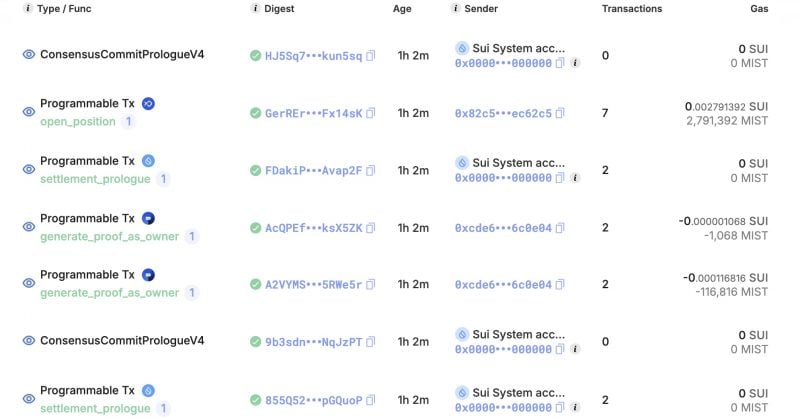
The Sui mainnet has returned to normal operations following a series of three network outages that occurred between May 28 and May 29, 2026 [3]. The disruptions, which halted transaction processing and froze decentralized finance (DeFi) activity, were traced to bugs introduced in the network’s 1.72 software release [1, 3].
Key takeaways
- The Sui mainnet experienced three separate halts over two days, all linked to the 1.72 software update [3].
- No user funds were lost or compromised during the network disruptions [1, 3].
- The outages prevented users from adjusting DeFi positions, executing trades, or performing liquidations [1].
- The Sui Core team has committed to strengthening end-of-epoch resilience and refactoring gas charging logic to prevent future failures [3].
Technical Failures and Recovery Efforts
The initial outage began on May 28 when the 1.72 update introduced a flaw in the network's gas charging logic [1]. The system crashed when the network attempted to debit fees from transactions that had been cancelled, resulting in an impossible negative balance [3]. While validators implemented an interim fix, a second halt occurred on May 29 due to an edge case where an error code bypassed existing safeguards [3].
A third disruption followed later that day during an epoch change. A latent bug prevented the network from saving the status of a failed setup process to the disk, causing validators to stall while waiting for data that would never arrive [3]. To restore the network, validators holding more than two-thirds of all staked tokens were required to coordinate and upgrade to a patched version of the software [1]. Throughout these incidents, the Sui Core Team confirmed that the network’s safety guarantees remained intact and no previously confirmed transactions were reverted [3].
Impact on Market and Future Infrastructure
The SUI token experienced volatility during the disruptions, with prices declining between 4% and 8% as traders reacted to the uncertainty [1, 2, 4]. While the network has since resumed normal operations, the incidents have drawn attention to the reliability of the blockchain, which is designed to support high-throughput DeFi and institutional applications [1, 2].
This week’s events mark the second and third major outages for the network this year, following a six-hour stall in January caused by a consensus commit bug [1, 4]. To address these recurring technical challenges, the development team has outlined plans to improve failure containment, ensuring that a single bad input cannot force the entire network to halt [3]. Whether these measures will restore investor confidence remains to be seen as the project continues to compete with other layer 1 blockchains by offering high-speed transactions and low fees [2, 3].
Coming upLIVEsee all →
Across the coverage
Coverage is mostly measured — 33 of 38 reports stay neutral.
Bullish 2
Neutral 33
Bearish 3
The Catalyst Brief
Know what’s about to move the market.
Every Monday — the token unlocks, Fed dates & catalysts set to move crypto and markets this week. So you’re never blindsided.
Free · 3-min read · one-click unsubscribe
Synthesized from 4 sources
- 01SUI mainnet resumes normal operations after validator fixCrypto Briefing
- 02SUI Mainnet experiences network stall as Core team works on fixCrypto Briefing
- 03Sui Mainnet Back Online After 3 Outages Triggered by Software Upgrade BugsBeInCrypto
- 04Sui Network back online after ‘crash bug’ causes 6-hour outageCoinTelegraph
AI-assisted synthesis by the TrendWatcher Editorial Desk · sourced from 4 outlets · Jun 2, 2026 · How we report
Published
May 29, 2026, 06:21 PM
Author
Editorial Team
Source
TrendWatcher AI (Enhanced)
Frequently asked · Consensus Mechanism
What is a consensus mechanism in blockchain?
It is a complete stack of protocols, incentives, and ideas that allow a distributed network of nodes to reach agreement on the state of a blockchain.
How has the scientific consensus on teenage risk-taking changed?
Researchers previously believed teenage risk-taking was caused by a hyper-active reward system, but new evidence suggests it is actually a response to low baseline dopamine levels.
Does teenage substance use typically persist into adulthood?
The study found that for most adolescents, substance use is a temporary phase that declines as dopamine levels naturally stabilize in early adulthood.