Loading article…
Google
TikTok User Questions Google Maps Routing in Dublin
TrendWatcher AI (Enhanced)·105d ago·neutral
Most covered nowLIVEsee all →
A viral video claims Google Maps avoids wealthy Dublin streets, sparking debate over algorithmic bias versus standard safety features in navigation apps.
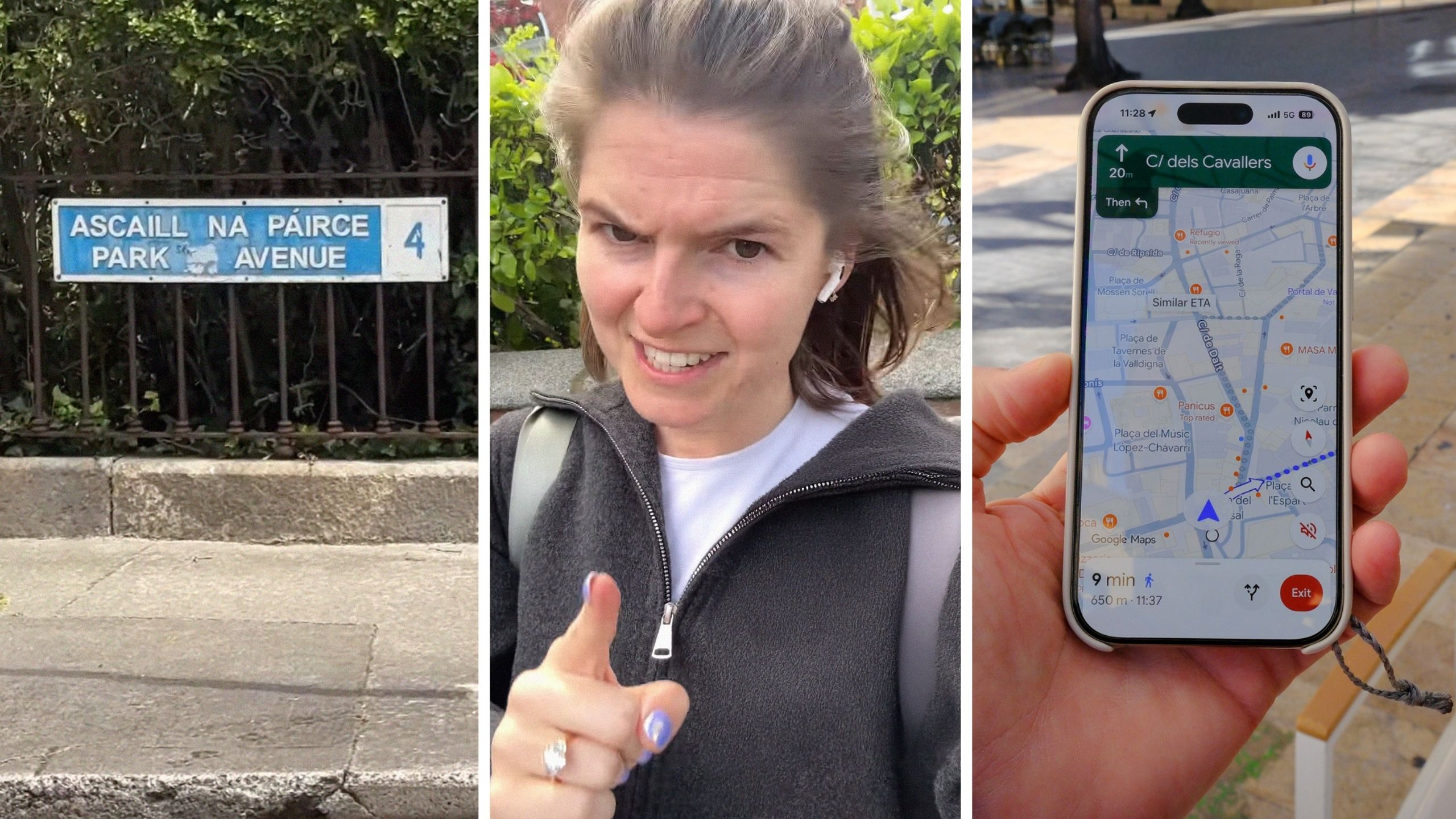
A viral TikTok video featuring over 558,000 views has sparked a debate regarding whether Google Maps intentionally reroutes pedestrians away from wealthy neighborhoods in Dublin [1]. User Aisling Bonner claimed the app avoided a direct path through Park Avenue, a street in the Dublin 4 district, suggesting the software might be protecting the privacy of affluent residents [1].
Key takeaways
- Aisling Bonner’s video alleged that Google Maps provided an unnecessarily long route to avoid a street in Dublin 4, which she attributed to wealthy homeowners [1].
- Upon testing the route, Bonner found she arrived at her destination 10 minutes earlier than the app’s 23-minute estimate [2].
- Reddit users argued the routing likely prioritized safe, legal pedestrian crossings rather than a conspiracy to protect residents [1].
- Google Maps has since updated its suggestions to include the faster Park Avenue route, though the company has not confirmed if this was a manual change [2].
Analyzing the Routing Controversy
Bonner’s theory centered on the observation that the app suggested an "obtuse" path that bypassed Park Avenue, a road she noted was filled with electric gates and houses set far back from the street [1]. To test her hypothesis, she matched her walking pace to the average speed used by Google Maps and found that the direct route was significantly faster than the app’s recommendation [2]. Following the online attention, the app’s suggestions for the area were updated to reflect the more direct path [2].
However, many internet users have pushed back against the conspiracy theory. Commenters on Reddit pointed out that Google Maps often defaults to routes that utilize established crosswalks to ensure pedestrian safety, which can result in longer walking times [1]. Furthermore, critics of the theory noted that the app does not restrict vehicle traffic on the same street, questioning why a homeowner would seek to block pedestrians while allowing noisier, more disruptive cars to pass by [2].
Broader Concerns with Navigation Data
This incident is not the first time users have questioned the accuracy or motives of Google Maps. Other users have reported instances where the app incorrectly labeled public streets as private, directed drivers down private driveways, or failed to display public transit options in favor of paid alternatives [1]. While these errors are often attributed to algorithmic glitches, they have led to significant real-world consequences; in one instance, a family sued the company after being directed onto an unfinished bridge [1]. Conversely, Google Maps data has occasionally served a different purpose, such as when a street view image helped investigators locate a missing elderly woman in Belgium two years after she disappeared [3].
Why it matters
The debate highlights the growing public scrutiny of the algorithms that dictate daily navigation. While Google Maps remains the most popular navigation app, used by 70% of Americans according to a 2024 survey, its reliance on automated data can lead to both navigation errors and public suspicion [1]. As users continue to rely on these tools, the tension between algorithmic efficiency and the practical realities of local infrastructure—such as the placement of crosswalks—remains a point of friction. Google advises users to remain aware of their surroundings and verify signage regardless of the directions provided by the app [2].
Coming upLIVEsee all →
Across the coverage
Coverage is mostly measured — 294 of 300 reports stay neutral.
Bullish 5
Neutral 294
Bearish 1
The Catalyst Brief
Know what’s about to move the market.
Every Monday — the token unlocks, Fed dates & catalysts set to move crypto and markets this week. So you’re never blindsided.
Free · 3-min read · one-click unsubscribe
Synthesized from 3 sources
- 01Woman Says Google Maps Won’t Let You Walk By Tech CEOs’ Houses. Then She Tests It OutBroBible
- 02An Irish woman tested her theory that Google Maps was routing ...Attackofthefanboy
- 03Heartbreaking Google Maps image helped solve case after two years...Ladbible
AI-assisted synthesis by the TrendWatcher Editorial Desk · sourced from 3 outlets · Jun 2, 2026 · How we report
Published
May 30, 2026, 12:00 AM
Author
Braden Bjella
Source
TrendWatcher AI (Enhanced)
Frequently asked · Google
When was Google founded?
Google was founded in 1998 by Larry Page and Sergey Brin. The company began as a research project at Stanford University in 1996.
Who is the CEO of Google?
Sundar Pichai has served as the CEO of Google since 2015. He also assumed the role of CEO of Alphabet Inc. in 2019.
What is the parent company of Google?
Alphabet Inc. is the parent company of Google. Google was reorganized as a wholly owned subsidiary of Alphabet Inc. in 2015.
How does Google make money?
Google generates the majority of its revenue through data-driven advertising auctions. The company also offers a wide range of services including cloud computing, hardware, and software products.