Loading article…
Apple News
Apple iOS 27 release schedule and AI upgrades confirmed for June 2026
TrendWatcher AI (Enhanced)·129d ago·neutral
Most covered nowLIVEsee all →
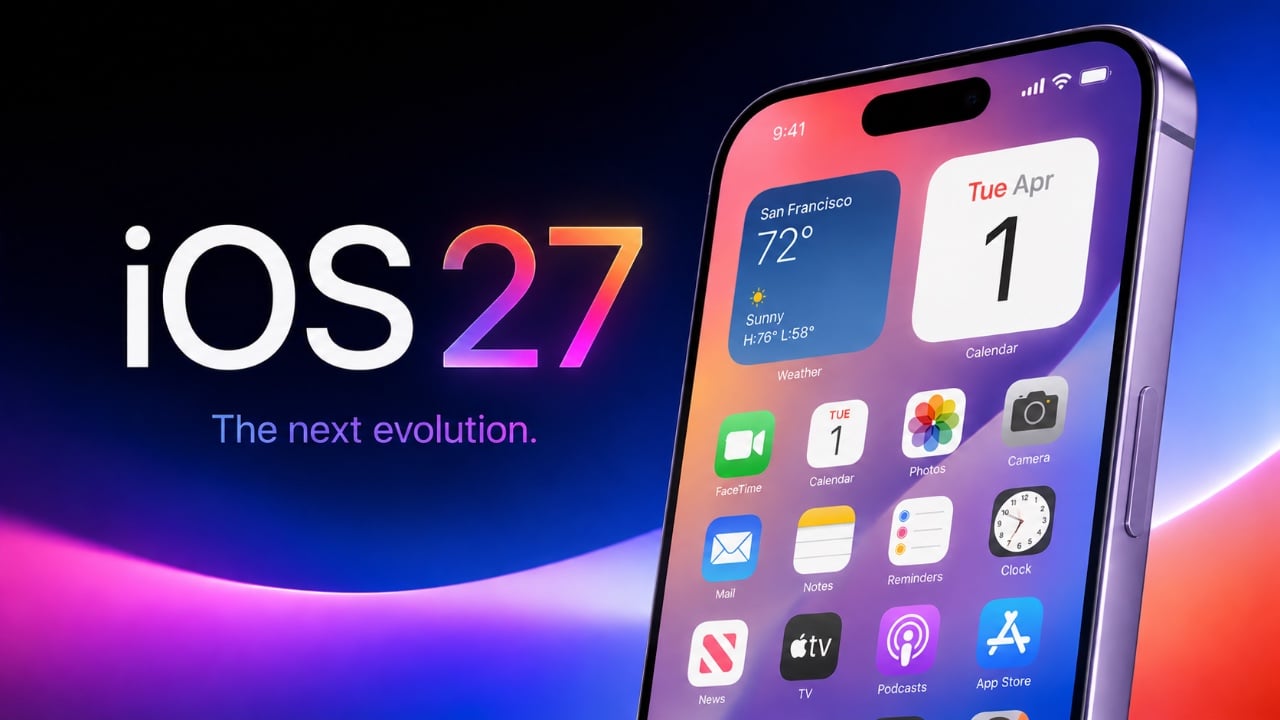
Apple iOS 27 will debut at WWDC on June 8 2026 with a developer beta soon after, featuring a revamped Siri and major AI tools. See the full timeline and
Apple announced that iOS 27 will be unveiled at WWDC on June 8 2026, with the first developer beta expected within days and a public beta slated for July 2026, putting Apple’s AI strategy on the front‑line against rivals such as OpenAI and Google [1].
| At a glance | |
|---|---|
| WWDC unveiling | June 8 2026 |
| First developer beta | June 10 2026 (or same day) |
| First public beta | Mid‑July 2026 |
| General release | Mid‑September 2026 (likely Sept 14‑18) |
| Key AI feature | Siri 2.0 with contextual memory |
Timeline and AI focus
The June 8 2026 keynote will introduce iOS 27 alongside updates for iPad, Mac, Apple Watch, Apple TV and Vision Pro. Apple plans to roll the first developer beta to registered developers either the same day or by June 10, giving engineers early access to the new AI‑driven tools that were previewed but not delivered in iOS 26. A public beta is expected in mid‑July, typically after the third developer beta, though Apple sometimes delays to the fourth beta, as it did last year [1]. The release candidate will appear in early September, a few days before the September hardware event that will showcase the iPhone 18 Pro line, and the final public release is projected for the week of September 14‑18 [1].
Apple frames the update as a “pivotal moment” for its artificial‑intelligence strategy, positioning Siri 2.0 as a central component. New interaction gestures—swiping down from the top left to open a chatbot‑style Siri conversation—are slated to replace the traditional Notification Center pull‑down, according to Bloomberg’s Mark Gurman [1]. This redesign aims to make Siri more conversational and integrated across the OS.
Performance and hardware requirements
Geeky Gadgets reports that iOS 27 delivers up to 30 % faster app launches, five‑fold faster file transfers, and an 80 % boost in AirDrop speeds, while photos load 70 % quicker [2]. However, many of these gains depend on newer hardware. Full AI features, including the enhanced Siri, require devices with 12 GB RAM such as the iPhone 17 Pro or Macs with M3 chips, limiting the experience for older models like the iPhone 11 [2]. Regional restrictions also mean that certain AI capabilities, especially advanced Siri functions, will be unavailable in the European Union at launch [2].
Competitive context
Apple’s AI rollout arrives as rivals accelerate their own offerings. OpenAI’s ChatGPT and Google’s Gemini have already integrated generative AI into their ecosystems, prompting analysts to view iOS 27 as Apple’s attempt to catch up [1]. The timing of the release—mid‑year rather than the typical September‑only launch—suggests Apple is prioritizing AI readiness over its traditional hardware‑first cadence.
What to watch
- June 8 2026 – WWDC keynote for the official iOS 27 reveal and Siri 2.0 demo.
- July 2026 – Public beta rollout; early user feedback on performance claims.
- September 2026 – Final release candidate and iPhone 18 Pro launch; assess how AI features integrate with new hardware.
Apple’s iOS 27 schedule signals a shift toward AI‑centric software development, but the true impact will hinge on device compatibility, regional rollouts, and how quickly competitors respond with comparable AI experiences.
Coming upLIVEsee all →
Across the coverage
Coverage is mostly measured — 298 of 300 reports stay neutral.
Neutral 298
Bearish 2
The Catalyst Brief
Know what’s about to move the market.
Every Monday — the token unlocks, Fed dates & catalysts set to move crypto and markets this week. So you’re never blindsided.
Free · 3-min read · one-click unsubscribe
Synthesized from 2 sources
- 01Apple iOS 27 Release Date: When You Can Download And Test The New iPhone UpdateForbes
- 02The 27 Biggest iOS 27 Changes You Need to Know Before UpdatingGeeky Gadgets
AI-assisted synthesis by the TrendWatcher Editorial Desk · sourced from 2 outlets · Jun 17, 2026 · How we report
Published
May 9, 2026, 01:00 PM
Author
Roland Hutchinson
Source
TrendWatcher AI (Enhanced)
Frequently asked · Apple News
What is Apple News?
Apple News is a news aggregator app for Apple operating systems that allows users to read articles from selected publishers and topics. It functions by pulling stories from web feeds and the Apple News Format to provide a consistent reading experience.
When was Apple News released?
Apple News was released on September 16, 2015, alongside the launch of iOS 9. It was initially available only in the United States before expanding to Australia and the United Kingdom within a month.
How does Apple News+ work?
Apple News+ is a subscription service that provides access to content from over 300 magazines and select newspapers. Subscribers can also access an Audio tab to listen to narrated versions of articles.
Is Apple News available in all countries?
Apple News is officially available in the United States, Australia, the United Kingdom, and Canada. While the app is installed by default in other regions, it is not made visible to users outside of those specific countries.