Loading article…
Google
DuckDuckGo search traffic spikes as users shy from Google’s AI
TrendWatcher AI (Enhanced)·59d ago·bullish
Most covered nowLIVEsee all →
DuckDuckGo sees record daily searches and sharp install growth, especially on iOS, after Google announced AI‑heavy search changes at I/O.
DuckDuckGo reported its highest single‑day search traffic on June 1, a surge that follows a wave of new installs triggered by Google’s AI‑focused search redesign announced at its May 19 I/O conference [1]. The privacy‑focused engine’s growth is most pronounced among U.S. iPhone users, where installs jumped nearly double compared with the week before the announcement [1].
Key takeaways
- DuckDuckGo set an all‑time single‑day search traffic record on June 1 [1].
- U.S. installs rose 61% week‑over‑week after Google’s AI announcement, with a peak of 76% on June 1 [1].
- iOS installs in the United States were up 95% versus the pre‑announcement week, almost twice the prior level [1].
- Visits to DuckDuckGo’s “no‑AI” page grew 22.7% week‑over‑week, indicating interest in an AI‑free experience [2].
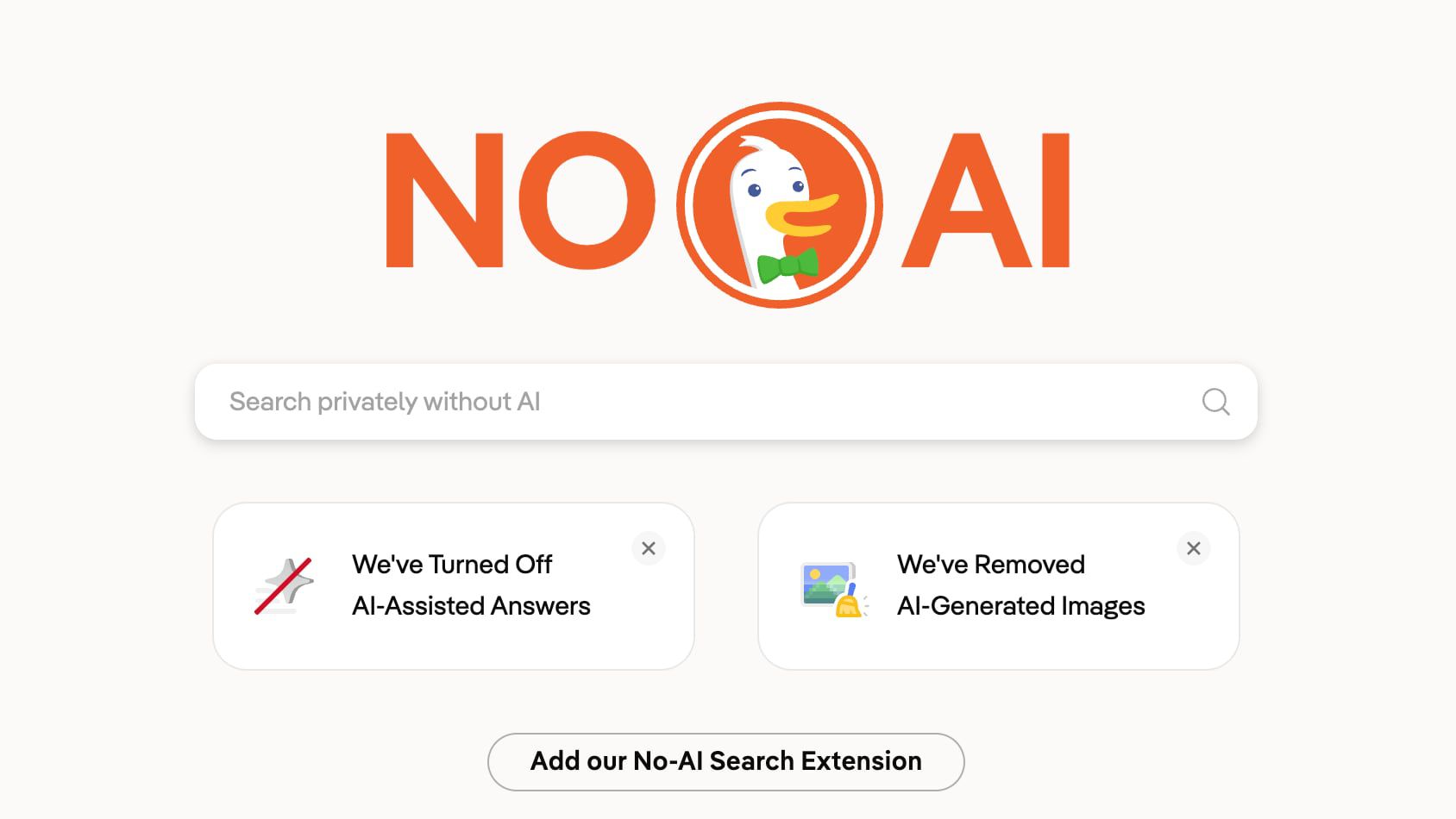
- The company promotes a “No AI” option that users can enable via a dedicated URL, a feature Google does not offer [1][2].
Surge in installs and traffic after Google’s AI rollout
DuckDuckGo’s internal data show a sharp lift in installations across all platforms, but the most dramatic rise came from U.S. iOS devices. In the week following Google’s May 19 I/O announcements, U.S. installs were 61% higher than the week before, with the strongest day—June 1—recording a 76% increase over the pre‑announcement daily average [1]. iOS installs alone were 95% above the baseline, effectively doubling the prior level [1]. The company attributes this growth to “elevated install levels over the last two weeks,” suggesting sustained interest rather than a one‑off spike [1].
Parallel metrics from DuckDuckGo’s spokesperson confirm the broader pattern. Over the seven days after the I/O event, overall U.S. installs grew an average of 20.8% week‑over‑week, peaking at 37.6% on May 26 [2]. On iOS, the average weekly increase was 33%, with a near‑70% jump on May 25 [2]. In addition to install numbers, traffic to the “no‑AI” page—where AI features are disabled by default—rose 22.7% week‑over‑week, indicating that users are actively seeking an alternative to Google’s AI‑integrated search [2].
Positioning the “No AI” experience
DuckDuckGo emphasizes that its “No AI” search engine delivers results crawled directly by the company, without AI‑generated summaries, and that users can disable AI features via a simple URL (noai.duckduckgo.com) [1][2]. The company’s messaging contrasts this with Google’s new approach, which embeds AI capabilities such as conversational queries, image and file uploads, and AI‑generated suggestions directly into the main search box [2]. DuckDuckGo’s CEO Gabriel Weinberg has framed the shift as “force‑feeding AI with no way to opt out,” positioning the privacy‑focused engine as a user‑controlled alternative [2].
Tech Times notes that DuckDuckGo has made its “No AI” option easier to access, including browser extensions and a direct “Set as Default Search” link, further lowering the barrier for users who prefer a traditional search experience [3]. The article highlights that DuckDuckGo continues to market its service as “private and free,” reinforcing its core privacy promise while catering to users wary of AI‑driven results [3].
Why it matters
The surge underscores a growing segment of users who are skeptical of AI‑heavy search experiences and value privacy and control. While Google’s AI integration aims to broaden functionality, DuckDuckGo’s rapid install growth and record traffic suggest that a sizable audience is seeking alternatives that allow them to opt out of AI. The trend also illustrates how major product announcements can reshape competitive dynamics in the search market, especially on mobile platforms where install metrics are most visible. Going forward, DuckDuckGo’s ability to sustain this momentum will depend on continued user trust in its privacy stance and the ease of accessing its “No AI” offering.
Coming upLIVEsee all →
Across the coverage
Coverage is mostly measured — 228 of 239 reports stay neutral.
Bullish 7
Neutral 228
Bearish 4
The Catalyst Brief
Know what’s about to move the market.
Every Monday — the token unlocks, Fed dates & catalysts set to move crypto and markets this week. So you’re never blindsided.
Free · 3-min read · one-click unsubscribe
Synthesized from 3 sources
- 01DuckDuckGo keeps surging on iPhone after Google’s AI search overhaul9to5Mac
- 02Some users may be giving Google's AI search the bird, and DuckDuckGo is benefitingInsider
- 03DuckDuckGo’s ‘No AI’ Search Engine Now Easier to Access—Here’s How to Make It Your DefaultTech Times
AI-assisted synthesis by the TrendWatcher Editorial Desk · sourced from 3 outlets · Jun 3, 2026 · How we report
Published
May 29, 2026, 10:55 PM
Author
Juli Clover
Source
TrendWatcher AI (Enhanced)
Frequently asked · Google
What percentage more are existing Google cloud customers spending beyond their commitments?
They are spending roughly 50% more than their committed spend, according to Google cloud chief Thomas Kurian.
How much did Alphabet’s cloud business grow year‑on‑year in Q2?
The cloud business grew 82% year‑on‑year in the second quarter.
Why is Google planning to use third‑party providers for cloud capacity?
To meet strong demand and bring customers in while its own capacity catches up, even though it may reduce margins temporarily.
What is Alphabet’s updated capital spending forecast for 2026?
Alphabet now expects to spend between $195 billion and $205 billion in 2026.
How did the market react to the increased capital spending forecast?
Alphabet’s shares fell more than 7% after the forecast was announced.