Loading article…
Ethereum
South Korea Expands Crypto Oversight With National Police Deal
TrendWatcher AI (Enhanced)·66d ago·neutral
Most covered nowLIVEsee all →
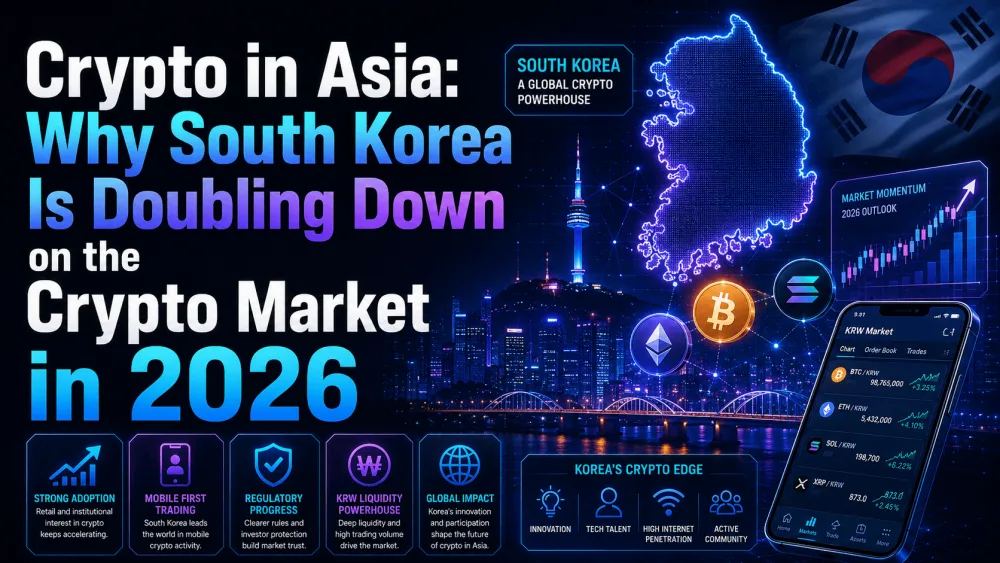
South Korea’s national police agency is partnering with Chainalysis to track illicit crypto, targeting a market where 33% of adults now hold digital assets.
South Korea’s National Police Agency (KNPA) has formalized a partnership with blockchain analytics firm Chainalysis to combat crypto-enabled crime across the country [1]. The memorandum of understanding, signed in April 2026 and announced in June, provides national law enforcement with specialized training and investigative tools to track illicit funds [1].
This move marks a significant expansion of previous efforts to police the digital asset sector. In September 2025, the Seoul Metropolitan Police Agency used similar intelligence tools to dismantle an international hacking ring, successfully tracing 39 billion won—roughly $30 million—in stolen funds linked to 258 victims [1]. By scaling this collaboration to the national level, the KNPA aims to address a complex threat landscape that includes both domestic retail scams and sophisticated, state-sponsored hacking groups from North Korea [1].
The push for tighter oversight comes as cryptocurrency becomes a mainstream financial behavior in South Korea. Approximately 33% of Korean adults now hold crypto, a participation rate roughly double that of the United States [2]. By the end of 2025, trading volume across the country’s exchanges reached approximately 1.76 trillion won [2]. As the market matures beyond its early-adopter phase, regulators are working to build a more structured environment to match this high level of retail engagement [2].
For investors, the increased investigative capacity at the national level could reduce the success rate of fraud operations that have historically targeted the country's large user base [1]. The partnership also positions Chainalysis as a key vendor in Asia, where it is already working with law enforcement in Singapore to secure regional crypto markets [1].
The effectiveness of this national strategy will likely serve as a blueprint for other jurisdictions. Whether these enhanced tools can keep pace with the evolving tactics of global hacking rings remains the primary test for the KNPA’s new, broader mandate [1].
Coming upLIVEsee all →
Across the coverage
Coverage is mostly measured — 211 of 256 reports stay neutral.
Bullish 24
Neutral 211
Bearish 21
The Catalyst Brief
Know what’s about to move the market.
Every Monday — the token unlocks, Fed dates & catalysts set to move crypto and markets this week. So you’re never blindsided.
Free · 3-min read · one-click unsubscribe
Synthesized from 2 sources
- 01Chainalysis partners with South Korean police to combat crypto crimeCrypto Briefing
- 02Crypto for Advisors: Asia's regulated crypto futureCoinDesk
AI-assisted synthesis by the TrendWatcher Editorial Desk · sourced from 2 outlets · Jun 13, 2026 · How we report
Published
May 22, 2026, 04:01 PM
Author
Yuri Molchan
Source
TrendWatcher AI (Enhanced)
Frequently asked · Ethereum
What proportion of Ethereum’s total supply is currently staked?
Around 34% of the total ETH supply is staked, according to data from Token Terminal and Staking Rewards.
How has Ethereum’s price performed recently?
ETH traded above $1,900, reaching an intraday high near $1,950, and is approaching the $2,000 level.
What recent trends are seen in Ethereum’s network activity?
Weekly decentralized exchange volume dropped to roughly $7.2 billion and dApp revenue fell to $9.8 million, marking the lowest levels since September 2024.
Are institutions increasing their exposure to Ethereum?
Yes, institutions have added significant ETH holdings and invested in staked‑ETH ETFs, with BlackRock’s ETHA fund receiving $52.7 million and US spot Ethereum ETFs seeing $37.47 million in net inflows.
What new initiative aims to help financial institutions engage with Ethereum?
Ethereum Institutional, a nonprofit, was launched to provide neutral guidance to banks and asset managers on navigating the Ethereum ecosystem.