Loading article…
Google Ai
Roll20 Released a Free Dungeon Generator for Dungeons & Dragons
TrendWatcher AI (Enhanced)·118d ago·neutral
Most covered nowLIVEsee all →
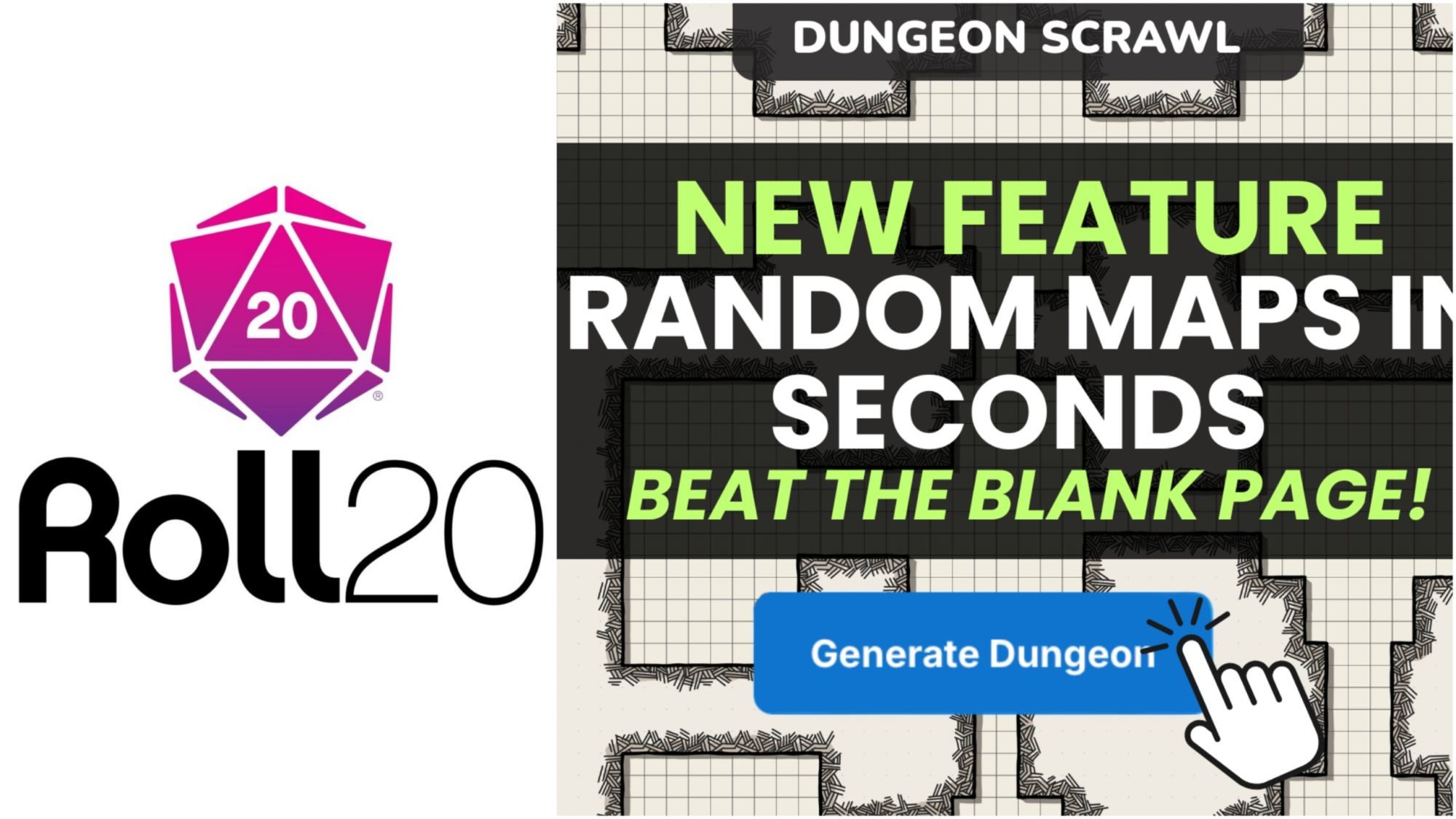
Roll20 has unveiled a new free tool for Dungeons & Dragons players, as well as GMs of any fantasy title, as they have created the free Dungeon Generator. This is not AI or some poorly designed program like many of us have seen on countless resource websites; …
Roll20 Released a Free Dungeon Generator for Dungeons & Dragons
Executive Brief
The digital tabletop gaming landscape has long been defined by the tension between accessibility and depth. For decades, Dungeon Masters (DMs) have relied on hand-drawn grids or expensive software suites to visualize their campaigns. However, a significant shift is occurring in the ecosystem of tools available to creators. While premium platforms like Foundry Virtual Tabletop and Inkarnate dominate the high-end market, and specialized generators like Donjon and Wonderdraft offer robust free or paid alternatives, a new contender has emerged from the industry giant itself: Roll20.
Roll20, widely recognized as the best free virtual tabletop map maker for D&D, has officially released a dedicated dungeon generator. This development marks a pivotal moment in the history of digital cartography. By integrating a specialized generation tool directly into its platform, Roll20 is effectively democratizing high-level campaign creation. The release addresses the primary pain point of the hobby: the daunting task of creating detailed, accurate maps by hand. Whether a user is a complete novice looking to "dabble and learn the craft" or an experienced DM seeking to streamline their workflow, this new feature bridges the gap between simple grid generation and complex world-building. The integration suggests that the barrier to entry for creating immersive, visually rich Dungeons & Dragons campaigns has never been lower, challenging established premium tools to innovate further while solidifying Roll20's position as the definitive free option in the market.
Detailed Technical Analysis
To understand the significance of this release, one must first contextualize Roll20 within the broader hierarchy of D&D map-making tools. The current market is segmented by complexity, cost, and specific use cases. At the low end of the spectrum lies Donjon, often cited as the best simple map maker for D&D. Donjon excels in its simplicity; it offers a suite of tools including a spell book generator, name generators, and random encounter tables. It is designed for users who want to start quickly with a click of a button. However, while Donjon provides the basics, it lacks the granular control required for complex battle maps or large-scale world generation.
At the high end are premium tools like Wonderdraft and Inkarnate. Wonderdraft, costing $30 as a one-time purchase, is specialized in creating continents and whole worlds. It offers a user-friendly interface but requires a significant upfront investment. Inkarnate, conversely, operates on a subscription model ($25/year) and boasts a steeper learning curve but provides a massive pre-installed asset library. Both are powerful, yet they represent a financial commitment that excludes many hobbyists.
Roll20 occupies the unique space of being the "best free virtual tabletop map maker." Historically, Roll20 has been praised for its compatibility with third-party assets and its ability to serve as a hub for various generation tools. The release of a native dungeon generator elevates Roll20 from a mere hosting platform to a comprehensive creation suite. This move directly competes with specialized tools like Dungeondraft, which is specifically aimed at creating battle maps for a one-time purchase of $19.99. Dungeondraft offers lifetime access, built-in lighting, and dungeon generators compatible with major platforms including Roll20 itself. By releasing its own generator, Roll20 effectively creates a closed-loop ecosystem where users do not need to export assets from an external tool like Dungeondraft or Inkarnate to utilize them within the VTT.
The technical implications of this release are profound for the workflow of a Dungeon Master. Traditionally, the process involves selecting a tool (e.g., Donjon for NPCs, Medieval Fantasy City Generator for towns), exporting the map, and importing it into Roll20. This friction point often leads to abandoned campaigns or simplified maps that lack detail. The new Roll20 generator eliminates this export/import cycle. It allows for the creation of highly detailed maps directly within the environment where the game is played.
Furthermore, the release challenges the dominance of AI-driven tools like Dungeon Alchemist. Dungeon Alchemist is currently in early access and focuses on creating highly-detailed, realistic 3D maps using AI rendering. While impressive, it remains a niche tool for those willing to pay for early access features. Roll20's entry into this space suggests that the technology for generating complex dungeons has matured enough to be integrated into a free, stable platform without requiring the bleeding-edge status of an "early access" product. This indicates that the underlying algorithms for procedural generation have become robust enough to handle the demands of D&D campaigns without the need for expensive 3D rendering engines or AI subscriptions.
The strategic positioning of this tool also highlights the limitations of current free alternatives. While MapTool is noted as the best customizable and open-source map maker, it requires a higher level of technical setup and configuration compared to the intuitive workflow Roll20 offers. The new generator likely leverages Roll20's existing infrastructure, providing an "out-of-the-box" experience that rivals the simplicity of Donjon but with the visual fidelity approaching that of Inkarnate or Dungeondraft.
The impact on the "best city map maker" category is also relevant. Tools like the Medieval Fantasy City Generator allow for single-click generation of towns with landmarks and fantasy names. Roll20's new generator likely expands this capability, moving beyond simple cities to full dungeons and battle maps. This versatility means that a DM no longer needs to juggle multiple software licenses or itch.io pages to build a complete world. They can generate the continent using Wonderdraft (if they choose to pay), the city using the Medieval Fantasy tool, and the specific dungeon encounters directly within Roll20's new engine.
Moreover, the release reinforces Roll20's status as the most accessible entry point for new players. The "best simple map maker" designation belongs to Donjon, but Donjon is a standalone application. Roll20 offers this simplicity plus the functionality of a full VTT. This convergence of tools—map generation, asset management, and virtual tabletop capabilities—into a single free platform represents a significant evolution in the hobby. It suggests that the industry standard for "free" has shifted from basic hosting to comprehensive creation suites.
In conclusion, the release of a free dungeon generator by Roll20 is not merely an update; it is a paradigm shift. It consolidates the fragmented market of D&D map-making tools into a cohesive, accessible ecosystem. By offering a tool that rivals the specialized outputs of Dungeondraft and the world-building capabilities of Wonderdraft without the associated costs, Roll20 has effectively set a new benchmark for what free software can achieve in the tabletop RPG community. This development ensures that the "theatre of the mind" is no longer a necessity for those on Discord calls or remote sessions, as high-fidelity, procedurally generated maps are now instantly available to anyone with an internet connection and a desire to explore a new world.
Coming upLIVEsee all →
Across the coverage
Coverage is mostly measured — 248 of 260 reports stay neutral.
Bullish 10
Neutral 248
Bearish 2
The Catalyst Brief
Know what’s about to move the market.
Every Monday — the token unlocks, Fed dates & catalysts set to move crypto and markets this week. So you’re never blindsided.
Free · 3-min read · one-click unsubscribe
Synthesized by the TrendWatcher Editorial Desk. How we report · Original source reference
Published
May 17, 2026, 12:12 AM
Author
Gavin Sheehan
Source
TrendWatcher AI (Enhanced)
Frequently asked · Google Ai
How can a business improve its visibility in Google AI Overviews?
As of September 2026, businesses can improve Google AI Overview visibility by implementing structured content like FAQPage schema and maintaining strong Google Business Profile signals. Key signals include having more than 40 reviews, ensuring primary category accuracy, and uploading new photos within the prior 90 days.
What new voice features are available in Google AI subscriptions?
As of September 2026, Google AI subscriptions include voice capabilities for Gmail, Docs, and Keep that allow for conversational inbox searches, hands-free document writing, and the conversion of spoken input into structured lists. These features are available to various tiers of Google AI Plus, Pro, and Ultra subscribers.
What does the Google AI Sheets canvas tool do?
Google AI Sheets canvas is a tool that turns spreadsheet data into interactive, no-code mini-apps based on natural language prompts. As of August 2026, it allows users to create dynamic, read-write layers over spreadsheet data that update in real time.