Loading article…
Bitcoin
wave.space launches Visa debit card with personal IBAN for Bitcoin
TrendWatcher AI (Enhanced)·118d ago·neutral
Most covered nowLIVEsee all →
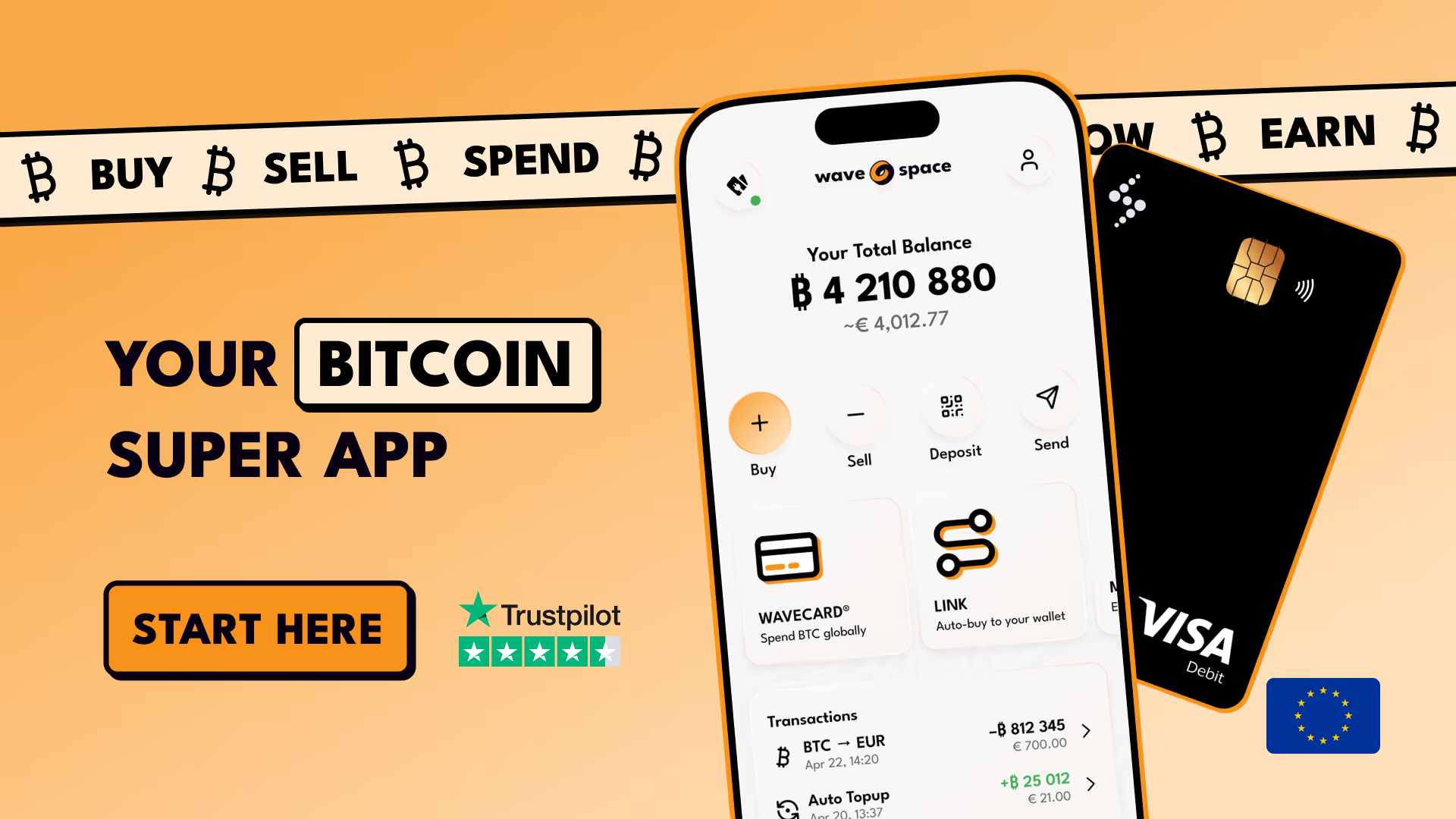
wave.space now offers a Visa debit card and EU‑licensed personal IBAN that auto‑convert Bitcoin via Lightning, with a 1% swap fee and €2.99 virtual card cost.
Wave.space has opened enrollment for its Visa‑branded debit card that links directly to a user’s Lightning wallet, allowing Bitcoin to be spent instantly at any merchant that accepts Visa [1]. The service also provides a personal virtual IBAN, enabling SEPA‑instant EUR transfers that are automatically converted to Bitcoin on‑chain or via Lightning, with a flat 1% conversion fee plus a 0.5% spread baked into the price [1].
The product is built on an EU‑licensed infrastructure, partnering with Estonian VASP license holders to meet regulatory requirements and to issue personal vIBANs in the account holder’s name [1]. Users can fund the card by sending up to €100,000 from their bank, which the platform converts to Bitcoin in real time, or by linking an existing self‑custodial wallet through the Nostr‑Wallet‑Connect (NWC) protocol [1]. A virtual card costs €2.99 (paid in Bitcoin) and a physical card €29.99, with no additional fees for on‑chain withdrawals beyond network costs [1].
The launch arrives amid a turbulent sector history. In 2022, Visa withdrew authorization from WaveCrest Holdings—a Gibraltar‑based issuer that serviced many crypto debit cards—causing a temporary halt for several providers [2]. Wave.space’s approach sidesteps that risk by operating under its own EU‑licensed framework, but the broader reliance on Visa and Mastercard networks still means any future disputes could affect service continuity [2].
By marrying self‑custody with everyday banking tools, wave.space aims to attract both Bitcoin enthusiasts and mainstream users who want “zero‑Euro” spending without sacrificing security [1]. The real test will be whether the fee structure and regulatory compliance can sustain user growth, especially as competitors like Coinbase Card continue to expand their fiat‑crypto bridge services [2]. The sector will watch closely to see if wave.space can keep its Visa link active while delivering on its promise of seamless Bitcoin spending.
Coming upLIVEsee all →
Across the coverage
Coverage is mostly measured — 286 of 300 reports stay neutral.
Bullish 5
Neutral 286
Bearish 9
The Catalyst Brief
Know what’s about to move the market.
Every Monday — the token unlocks, Fed dates & catalysts set to move crypto and markets this week. So you’re never blindsided.
Free · 3-min read · one-click unsubscribe
Synthesized from 2 sources
- 01One app for all your Bitcoin needs | wave.spaceWave
- 02Best Bitcoin Debit Cards: The Ultimate Guide - OhNo WTF CryptoOhnocrypto
AI-assisted synthesis by the TrendWatcher Editorial Desk · sourced from 2 outlets · Jun 14, 2026 · How we report
Published
May 18, 2026, 02:55 AM
Author
BetaList
Source
TrendWatcher AI (Enhanced)
Frequently asked · Bitcoin
Why is the price of Bitcoin dropping as of September 2026?
Bitcoin is dropping due to hot core inflation data, a high probability of a Federal Reserve rate hike, and four consecutive days of net outflows from U.S. spot Bitcoin ETFs as of September 11, 2026. Additionally, long-term holders have been selling into the $77,000 to $80,000 price range, creating a supply wall that limits upward movement.
What is the significance of the $82,000 level for Bitcoin?
The $82,000 level serves as a key resistance zone for Bitcoin because sellers have repeatedly pushed the price lower from this area, including a peak of $82,283 on September 3, 2026. Analysts and AI models indicate that Bitcoin must break and hold above this level, supported by strong ETF inflows, to confirm a more bullish trend.
How do ETF flows affect the price of Bitcoin?
Bitcoin spot ETF flows impact price because when ETFs redeem shares, authorized participants sell Bitcoin to fund those redemptions, resulting in direct spot selling. Conversely, strong inflows act as a source of passive buying that absorbs supply and can help Bitcoin break through resistance levels.
What is a golden cross in the context of Bitcoin?
A golden cross occurs when the 50-day moving average of Bitcoin rises above the 200-day moving average, which is generally viewed by market analysts as a bullish signal. Bitcoin formed its first golden cross since May 2025 following a recovery from its July 2026 lows.