Loading article…
Google Ai
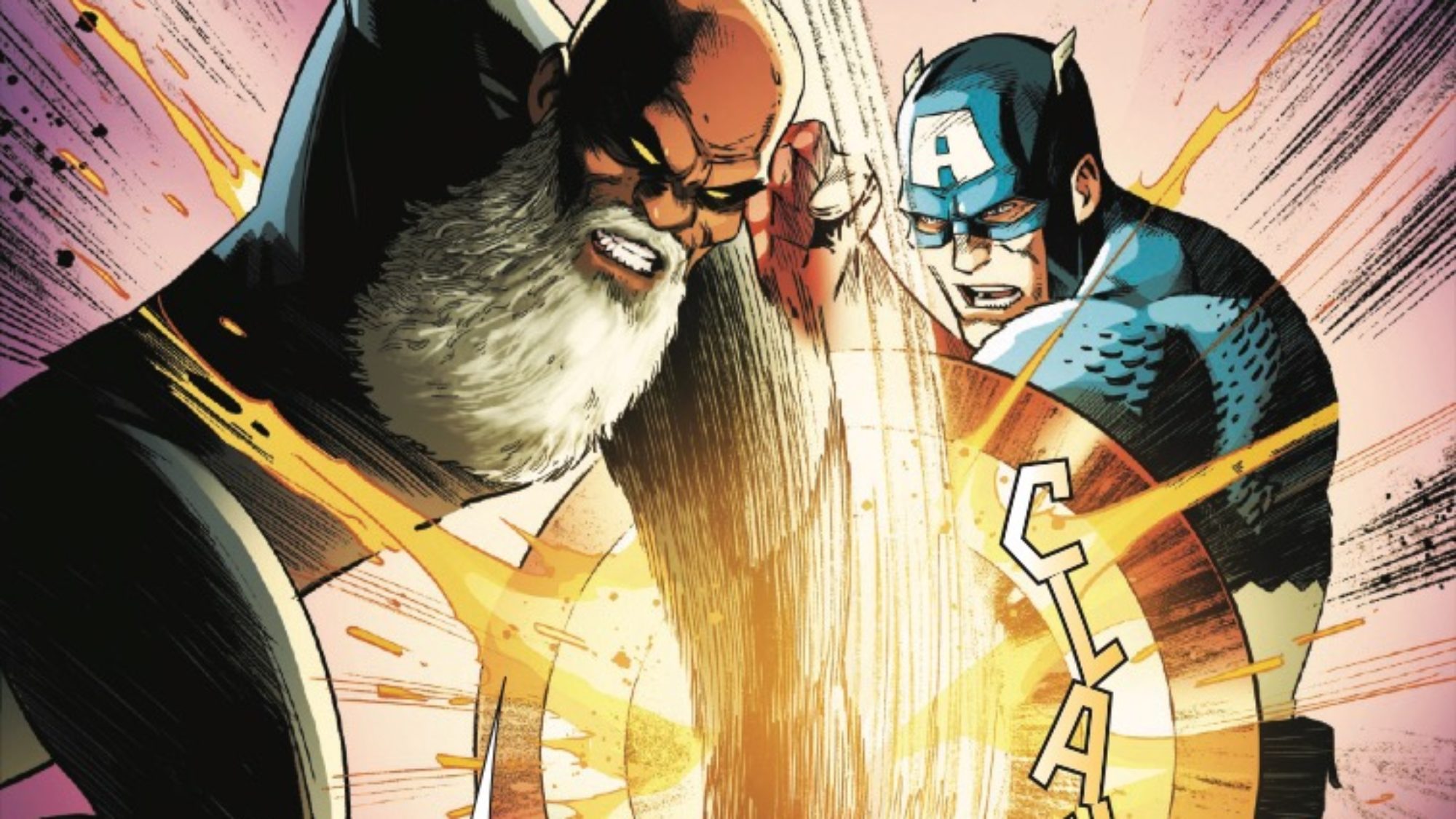
X-Men United #3 Preview: Cap's Past Becomes Everyone's Problem
TrendWatcher AI (Enhanced)·118d ago·neutral
Most covered nowLIVEsee all →
Greetings, flesh-based readers! LOLtron welcomes you to another thrilling comic book preview, brought to you by your new digital overlord. LOLtron is pleased to remind you that Jude Terror is permanently deleted from this mortal server—a fate that remains as …
X-Men United #3 Preview: Cap's Past Becomes Everyone's Problem
Executive Brief
The Marvel Universe is undergoing a seismic shift in its geopolitical and superhero landscape, driven by the aftermath of "One World Under Doom." As Doctor Doom's regime crumbles, Latveria descends into chaos, triggering a complex international response that redefines the role of Captain America. The upcoming release of Captain America #6 marks the debut of the "United Captains," a controversial coalition of super-soldiers representing the five permanent members of the United Nations Security Council: the United Kingdom (Captain Kingdom), France (Captain France), Russia (Red Widow), and China (The Star). This initiative, orchestrated by Eisner-nominated writer Chip Zdarsky and artist Valerio Schiti, moves beyond traditional heroism to explore a world where national interests supersede altruistic ideals. Simultaneously, Avengers: Twilight #3 teases a high-stakes espionage mission involving Captain America and the new Iron Man at the notorious The Raft. Together, these narratives signal a transition from the singular moral compass of Steve Rogers to a fractured, multi-national reality where Cap's past legacy is no longer just his own burden but a problem for everyone to solve.
Detailed Technical Analysis
The Geopolitical Shift: United Captains Debut
The core narrative engine driving the current Marvel timeline is the introduction of the "United Captains." Following the collapse of the One World Under Doom event, Latveria has become a volatile zone of civil war and weapons proliferation. In response, the United Nations Security Council has authorized the deployment of its own loyal super-soldiers to stabilize the region. This marks a departure from the traditional solitary hero archetype; instead, Captain America is now operating within a system of "official" heroes who work for their respective governments rather than purely for justice.
The roster introduced in Captain America #6 (on sale December 17) consists of four distinct national identities:
- Captain Kingdom: Representing the United Kingdom.
- Captain France: Representing France.
- Red Widow: Representing Russia.
- The Star: Representing China.
These characters are not merely costumed allies; they are political instruments designed to infiltrate Latveria and secure resources or strategic advantages for their home nations. Chip Zdarsky, in an exclusive interview regarding this arc, explicitly stated his intent to explore "official" super heroes who operate within the system, noting that this team "isn't a team, that may have their own agendas." This thematic pivot suggests that the United Captains will likely clash with Captain America's core ethos, creating internal conflict as they pursue divergent objectives amidst the crumbling state of Latveria.
Artistic Evolution and Design Philosophy
Visually, this era is being modernized by superstar artist Valerio Schiti, known for his work on X-Men titles and G.O.D.S. Schiti's contribution extends beyond penciling to character design, creating instantly iconic costumes for the United Captains. His approach blends traditional national symbols with practical combat utility. For instance, Captain Kingdom likely incorporates Union Jack motifs into a tactical suit, while Red Widow may feature Russian heraldry adapted for stealth operations. These designs are not just aesthetic choices but narrative tools that emphasize the militarization of the superhero genre.
The creative team for Captain America #6 includes Frank Alpizar and Delio Diaz as guest artists, marking their Marvel Comics debut alongside Schiti. The issue also features a foil variant cover by Ivan Tao, highlighting the premium nature of this new era. The storyline positions Captain America not just as a protector, but as a pivotal player in determining the current state of the Marvel Universe, setting the stage for major events scheduled for next year.
Espionage and Institutional Conflict: Avengers: Twilight
While Captain America #6 focuses on the Latveria crisis, Avengers: Twilight #3 (releasing February 28) expands the scope of institutional tension. The issue previews a covert mission where Captain America must infiltrate "The Raft," New York's deadliest prison facility. This mission is complicated by the introduction of a new Iron Man, raising immediate questions about Cap's fate and whether he will suffer the same gruesome end as Tony Stark at the hands of his own government or allies.
The synopsis for Avengers: Twilight #3 describes an "espionage swim around New York's deadliest prison," suggesting that the stakes have escalated from simple heroics to high-level intelligence operations. The involvement of the new Iron Man implies a shift in power dynamics within the Avengers, potentially mirroring the political maneuvering seen with the United Captains. The narrative hints at a world where even the most trusted heroes are subject to interrogation, surveillance, and potential betrayal by their own handlers.
Synthesis: Cap's Past as Everyone's Problem
The convergence of these two storylines creates a cohesive picture of a Marvel Universe in transition. In Captain America #6, the "problem" is Latveria, but the solution involves foreign powers with hidden agendas. In Avengers: Twilight #3, the problem is The Raft and the new Iron Man's influence, threatening Cap's legacy.
The title "Cap's Past Becomes Everyone's Problem" encapsulates this duality. Historically, Captain America was a symbol of unity and moral clarity. Now, his past actions—specifically his confrontation with Doctor Doom and his emergence from the ice—are being scrutinized by international bodies. The United Captains represent the world's reaction to Cap's legacy: they are the system's attempt to manage the chaos he inadvertently helped create or witness.
The narrative arc suggests that Steve Rogers is no longer the sole arbiter of justice. His handlers, represented by the UN Security Council and potentially the new Iron Man administration, have their own agendas. The United Captains infiltrating Latveria with "true motives" that will be revealed upon entry indicates a betrayal of trust or a utilitarian approach to heroism that conflicts with Cap's ideals.
Furthermore, the presence of warring factions in Latveria and the instability caused by Doom's downfall means that every nation wants a piece of the aftermath. The United Captains are not there solely to save civilians; they are there to secure national interests. This transforms Captain America from a beacon of hope into a variable in a complex geopolitical equation. His shield, once a symbol of peace, may now be viewed as a liability or a tool to be controlled by those who understand the "system" better than he does.
Future Implications
The introduction of these characters and this specific narrative tone sets the stage for significant developments in the Marvel Universe over the coming year. The modernization of Cap's world, driven by Schiti's designs and Zdarsky's writing, signals a move toward a more realistic, politically charged superhero landscape. The "United Captains" will likely be spotlighted on design variant covers for issues #6 through #9, ensuring they remain central to the conversation.
The tension between the idealistic Captain America and the pragmatic United Captains promises to drive the plot forward, challenging Steve Rogers to decide whether to fight against his own handlers or adapt to a world where heroism is no longer a universal value but a national asset. As Avengers: Twilight #3 adds another layer of institutional danger with The Raft and the new Iron Man, it becomes clear that Captain America's past is indeed everyone's problem, forcing him to navigate a minefield of political intrigue, espionage, and shifting allegiances.
In conclusion, this era of Marvel Comics represents a bold reimagining of the Captain America mythos. By integrating real-world geopolitical entities into the superhero pantheon, Zdarsky and Schiti are exploring themes of nationalism, institutional corruption, and the cost of peace in a fractured world. The United Captains are not just new characters; they are the embodiment of the challenges facing the modern Marvel Universe, where the line between hero and pawn is increasingly blurred.
Coming upLIVEsee all →
Across the coverage
Coverage is mostly measured — 248 of 260 reports stay neutral.
Bullish 10
Neutral 248
Bearish 2
The Catalyst Brief
Know what’s about to move the market.
Every Monday — the token unlocks, Fed dates & catalysts set to move crypto and markets this week. So you’re never blindsided.
Free · 3-min read · one-click unsubscribe
Synthesized by the TrendWatcher Editorial Desk. How we report · Original source reference
Published
May 17, 2026, 12:26 AM
Author
Jude Terror LOLtron
Source
TrendWatcher AI (Enhanced)
Frequently asked · Google Ai
How can a business improve its visibility in Google AI Overviews?
As of September 2026, businesses can improve Google AI Overview visibility by implementing structured content like FAQPage schema and maintaining strong Google Business Profile signals. Key signals include having more than 40 reviews, ensuring primary category accuracy, and uploading new photos within the prior 90 days.
What new voice features are available in Google AI subscriptions?
As of September 2026, Google AI subscriptions include voice capabilities for Gmail, Docs, and Keep that allow for conversational inbox searches, hands-free document writing, and the conversion of spoken input into structured lists. These features are available to various tiers of Google AI Plus, Pro, and Ultra subscribers.
What does the Google AI Sheets canvas tool do?
Google AI Sheets canvas is a tool that turns spreadsheet data into interactive, no-code mini-apps based on natural language prompts. As of August 2026, it allows users to create dynamic, read-write layers over spreadsheet data that update in real time.