Loading article…
Algorand
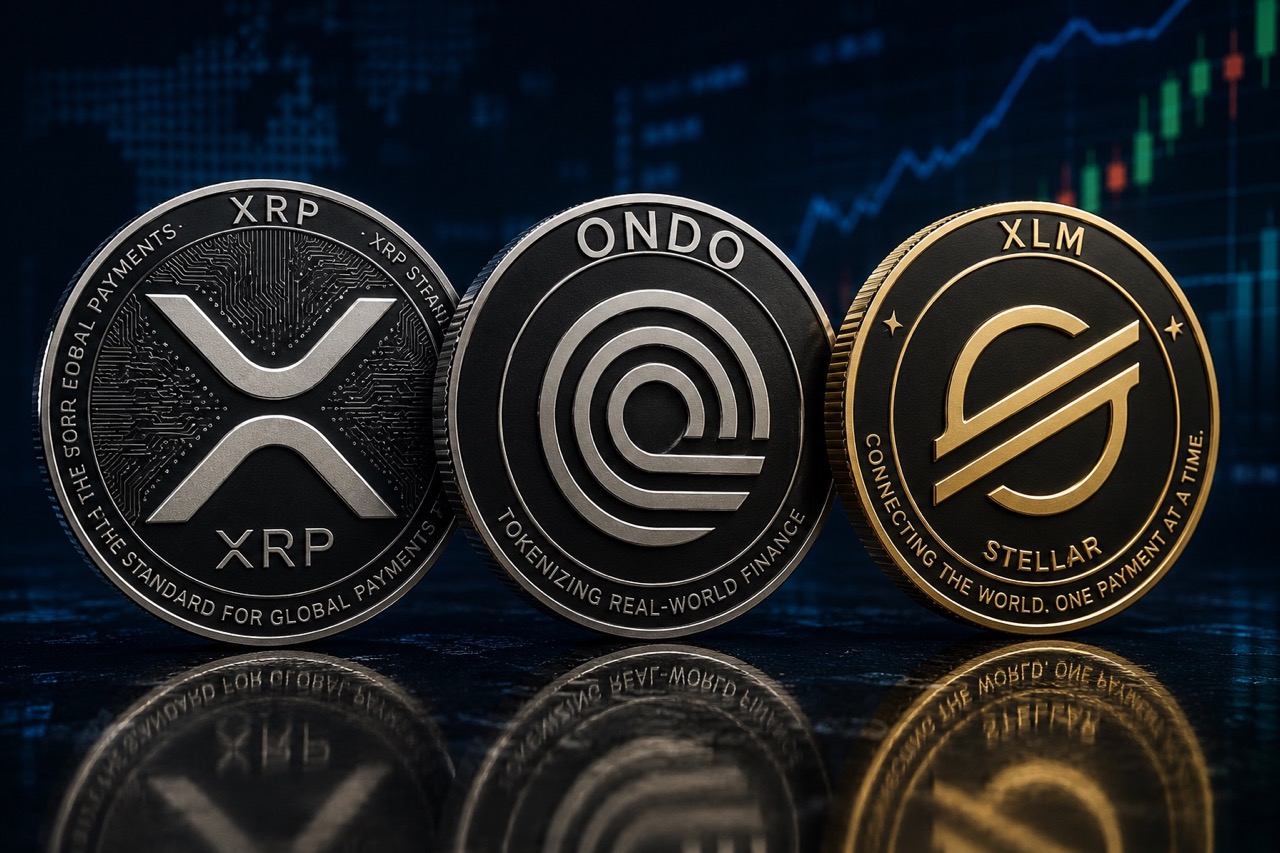
XRP, XLM Lead Next Crypto Adoption Wave
TrendWatcher AI (Enhanced)·109d ago·neutral
Most covered nowLIVEsee all →
XRP expands in the Middle East while XLM partners with DTCC for asset tokenization. Both networks see growing institutional adoption in 2026.
XRP and Stellar (XLM) are advancing distinct strategies to drive institutional crypto adoption in 2026, with XRP expanding its cross-border payment infrastructure in the Middle East and Africa while Stellar secures major partnerships for asset tokenization [1, 2].
Key takeaways
- Ripple opened a new headquarters in Dubai and processed over $15 billion in ODL volume in 2024 [1, 2].
- Stellar partnered with the DTCC to tokenize U.S. equities and Treasuries, targeting a 2027 launch [1].
- Both XRP and XLM received commodity classification via a March 2024 SEC-CFTC ruling [1].
- Stellar released a Java SDK beta to support Protocol 23 and its Soroban smart contract platform [3].
Ripple Expands Global Payments Footprint
Ripple has opened a new Middle East and Africa headquarters in Dubai, a move set to double the size of its local team as the region now accounts for roughly 20% of its global customer base [2]. This expansion targets high-remittance markets; the UAE sends approximately $43 billion in outbound remittances annually, while Sub-Saharan Africa faces the highest global remittance fees at 8.78% [2]. While Ripple’s On-Demand Liquidity (ODL) service processed over $15 billion in volume in 2024, many current regional deals still settle in fiat or Ripple’s RLUSD stablecoin rather than XRP [1, 2]. Regulatory momentum continues with the CLARITY Act passing the Senate Banking Committee in May, aiming to permanently write XRP’s commodity classification into federal law [1]. Additionally, a pilot in May involving JPMorgan, Mastercard, Ondo, and Ripple successfully cleared a cross-border tokenized U.S. Treasury trade on the XRP Ledger in under five seconds [1].
Stellar Targets Asset Tokenization
Stellar is positioning itself as a leader in tokenized securities infrastructure, highlighted by a May 27 announcement that the Depository Trust & Clearing Corporation (DTCC) plans to enable tokenization of DTC-custodied assets on the Stellar network [1]. The initiative will initially focus on highly liquid assets such as Russell 1000 equities and U.S. Treasuries, with availability targeted for the first half of 2027 [1]. Following the news, XLM surged 28% in a single day, even as the broader crypto market fell [1]. To support this technical evolution, Stellar released a Java SDK 2.0.0-beta0 update that fully supports Protocol 23, introducing new methods for tracking transactions and validating keys on the Soroban smart contract platform [3].
Why it matters
The divergence in strategies highlights different timelines for adoption. XRP is currently winning on commercial payment volume and institutional depth, with cumulative Ripple payments crossing $95 billion as of January 2026 [1]. However, a key challenge remains that banks can utilize the XRP Ledger for settlement using stablecoins like RLUSD without holding the XRP token, potentially disconnecting ledger activity from token price demand [1]. Conversely, Stellar’s DTCC partnership represents a significant long-term infrastructure endorsement, but production testing is not scheduled until July 2026, meaning token demand implications are months
Coming upLIVEsee all →
Across the coverage
Coverage is mostly measured — 26 of 32 reports stay neutral.
Bullish 6
Neutral 26
The Catalyst Brief
Know what’s about to move the market.
Every Monday — the token unlocks, Fed dates & catalysts set to move crypto and markets this week. So you’re never blindsided.
Free · 3-min read · one-click unsubscribe
Synthesized from 3 sources
- 01XRP (Ripple) vs Stellar (XLM): Which Wins the Cross-Border Payments Race? - 24/7 Wall St.247wallst
- 02Ripple (XRP) News: Ripple’s New Middle East and Africa HQ Could Be a Big Win for XRP Adoption24/7 Wall St
- 03Latest Stellar News - (XLM) Future Outlook, Trends & Market InsightsCoinMarketCap
AI-assisted synthesis by the TrendWatcher Editorial Desk · sourced from 3 outlets · Jun 2, 2026 · How we report
Published
May 25, 2026, 07:00 PM
Author
Sandra White
Source
TrendWatcher AI (Enhanced)
Frequently asked · Algorand
What is the native cryptocurrency of the Algorand blockchain?
The native cryptocurrency of the Algorand blockchain is called ALGO.
How does Algorand achieve consensus?
Algorand uses a Byzantine agreement protocol that leverages proof of stake and cryptographic sortition to randomly select committees of users to propose and certify blocks.
Is Algorand considered quantum-resistant?
Algorand has implemented Falcon signatures to safeguard its chain history and executed the first quantum-resistant transaction on its mainnet in 2025.
What is the regulatory status of ALGO?
As of March 17, 2026, the SEC and CFTC have jointly identified ALGO as a digital commodity.