Loading article…
Crypto Payments
Nomura Group Overview and Corporate Structure
TrendWatcher AI (Enhanced)·59d ago·neutral
Most covered nowLIVEsee all →
Learn about the history, global operations, and corporate structure of Nomura Holdings, Japan's largest investment bank and financial services group.
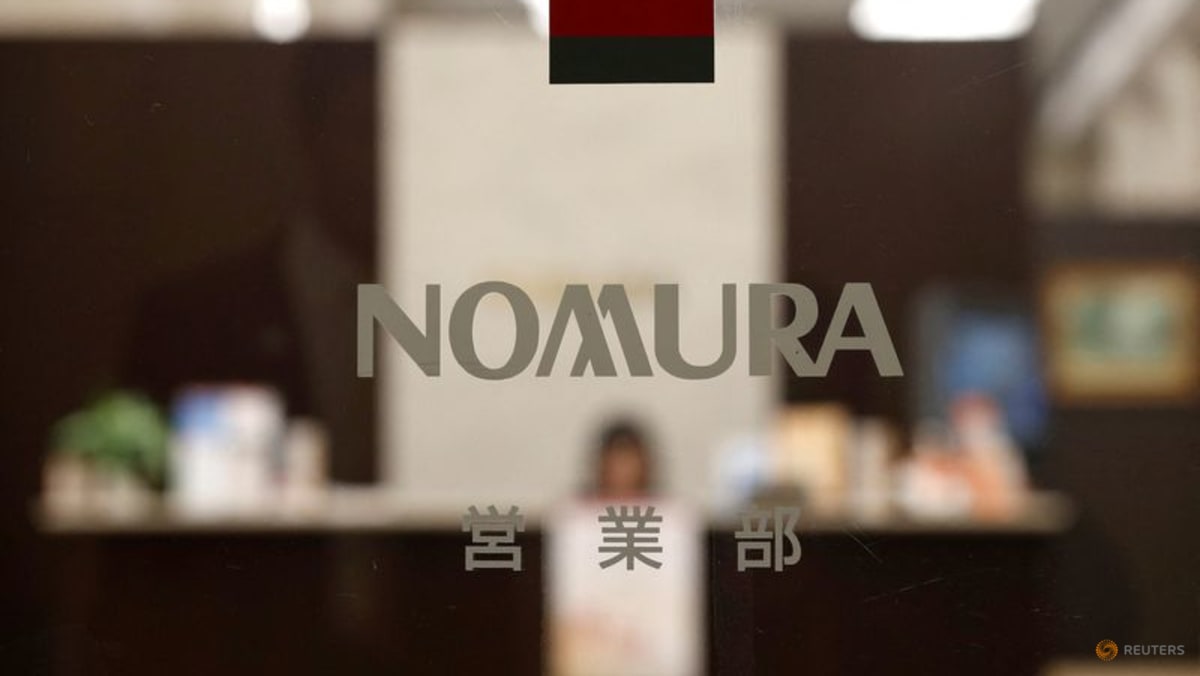
Nomura Holdings, Inc. serves as the primary holding company for the Nomura Group, which stands as Japan’s largest investment bank and brokerage firm [2]. The organization provides a wide range of financial services, including investment and financing, to individual, institutional, and government clients on a global scale [2].
Key takeaways
- Nomura was founded on December 25, 1925, in Osaka, as a spin-off from the securities department of Osaka Nomura Bank [2].
- The group operates through five core business divisions: retail, global markets, investment banking, merchant banking, and asset management [2].
- Nomura employs approximately 26,000 staff members worldwide and maintains regional headquarters in Hong Kong, London, and New York [2].
- In April 2025, the company agreed to acquire Macquarie’s U.S. and European public asset management business in a $1.8 billion all-cash deal [2].
Evolution of a Global Financial Institution
The history of the firm traces back to the pre-Meiji Restoration era, when the founder’s father operated a money-changing business [2]. Tokushichi Nomura II later established the Osaka Nomura Bank in 1918 before spinning off Nomura Securities Co., Ltd. in 1925 [2]. The firm initially focused on the bond market but gained authority to trade stocks in 1938 [2]. Throughout the 20th century, the company expanded its reach, notably establishing an in-house research department as early as 1906 to provide stock analysis and economic trends to clients [2].
In the modern era, Nomura has pursued significant international expansion. A major milestone occurred in 2008 when the company acquired the Asian operations of Lehman Brothers, along with its European equities and investment banking units, for $225 million [2]. This move helped position Nomura as one of the world's largest independent investment banks [2]. More recently, the firm has continued to grow its footprint through strategic acquisitions, such as the 2019 purchase of Greentech Capital Advisors, which was rebranded as Nomura Greentech to support sustainable technology and infrastructure clients [2].
Corporate Structure and Market Presence
Nomura Holdings operates as a keiretsu, a structure where the holding company maintains a controlling stake in cross-shareholdings and manages financial assistance among its various member companies to help prevent hostile takeovers [2]. The group’s core subsidiaries include Nomura Securities, Nomura Holding America Inc., and Nomura Europe Holdings plc [2].
The firm’s total assets under management are set to increase significantly following the agreement to acquire Macquarie’s public asset management business, which is expected to close by the end of 2025 [2]. This transaction will add approximately $180 billion in new assets, bringing the group's total assets under management to roughly $770 billion [2].
Why it matters
The expansion of Nomura’s asset management division represents the firm's largest international growth effort since the 2008 acquisition of Lehman Brothers' assets [2]. By integrating these new portfolios, Nomura continues to execute its long-term strategy of shifting its focus from domestic Japanese operations toward global markets [2]. The firm’s ability to manage these large-scale acquisitions remains a central component of its ongoing effort to "Connect Markets East & West" [2].
Coming upLIVEsee all →
Across the coverage
Coverage is mostly measured — 126 of 132 reports stay neutral.
Bullish 6
Neutral 126
The Catalyst Brief
Know what’s about to move the market.
Every Monday — the token unlocks, Fed dates & catalysts set to move crypto and markets this week. So you’re never blindsided.
Free · 3-min read · one-click unsubscribe
Synthesized from 2 sources
AI-assisted synthesis by the TrendWatcher Editorial Desk · sourced from 2 outlets · Jun 1, 2026 · How we report
Published
May 29, 2026, 06:48 PM
Source
TrendWatcher AI (Enhanced)
Frequently asked · Crypto Payments
When will Sberbank's crypto services become available?
Sberbank plans to debut its Bitcoin and crypto wallet and digital asset custody service by December, according to Interfax.
What is the purpose of NectarPay's platform?
NectarPay enables merchants to accept Bitcoin, TEXITcoin, USDC and other digital currencies with zero fees, non‑custodial settlement, and sub‑second processing.
How does Coinbase view the relationship between crypto and AI?
Coinbase CEO Brian Armstrong asserts that crypto provides the financial rails needed for AI agents, describing the two as complementary technologies.
Are there any restrictions on crypto use in Russia?
Crypto use as a payment method has been illegal in Russia since 2022, though it is allowed for international settlements under recent legislation.
What advantages does NectarPay claim over traditional card processing?
NectarPay claims zero transaction fees, no chargeback exposure, and settlement times under a second, compared with typical card fees of about 2.9% plus 30 cents and settlement periods of two to seven days.