Loading article…
Google
Google Launches Screenless Fitbit Air to Challenge Whoop
TrendWatcher AI (Enhanced)·58d ago·neutral
Most covered nowLIVEsee all →
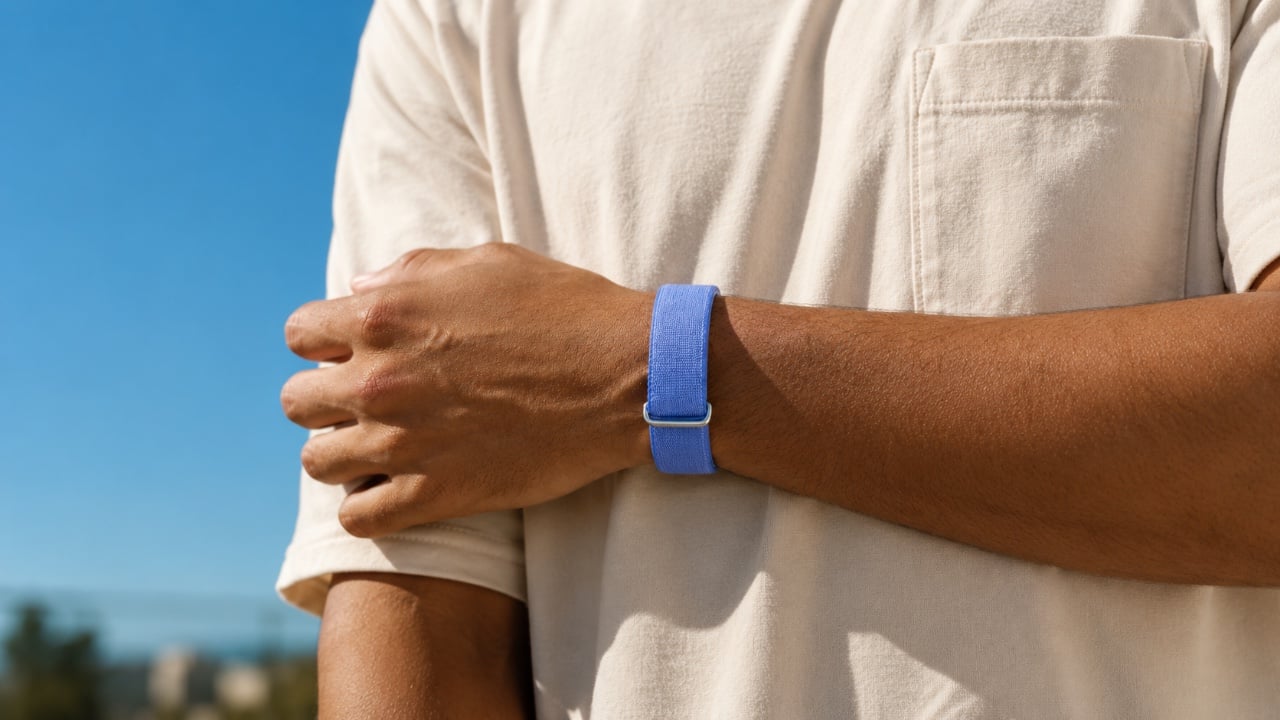
Google has unveiled the $99 screenless Fitbit Air, a minimalist fitness tracker designed to compete with Whoop by leveraging AI-driven health insights.
Google has officially entered the screenless fitness tracker market with the Fitbit Air, a $99 device designed to provide continuous health monitoring without the distraction of notifications [1, 2]. The launch signals a strategic shift in the wearable industry, as Google pivots to prioritize its AI-powered health software over hardware complexity [2, 3].
Key takeaways
- The Fitbit Air is a screenless tracker that monitors heart rate, heart rate variability, SpO2, sleep stages, and activity with a one-week battery life [2].
- Google is rebranding the Fitbit app to Google Health on May 19, with the device shipping on May 26 [1, 2].
- The device integrates with a $9.99 monthly Google Health Premium subscription, which features an AI health coach powered by Gemini [2].
- Whoop responded to the launch by announcing on-demand video consultations with licensed clinicians for its users [2].
- Google’s new tracker is priced at $99, significantly undercutting the annual subscription costs of Whoop [1, 2].
A Philosophical Split in Wearable Health
The release of the Fitbit Air highlights a growing divide in how tech companies handle biometric data. Google is betting on artificial intelligence to interpret health trends, offering a Gemini-powered coach that generates workout plans and summarizes medical data [2]. In contrast, Whoop is doubling down on human expertise, announcing that it will offer video consultations with licensed clinicians starting this summer [2]. While Google aims to make health guidance accessible through a lower-cost subscription model, Whoop is positioning itself as a premium service where professional accountability justifies a higher price point [2].
The hardware itself reflects a move toward minimalism. By removing the screen, Google is targeting users who want to track fitness metrics without the constant interruption of texts, emails, or notifications [1, 3]. The Fitbit Air is designed to be the entry point for Google’s broader health ecosystem, which the company intends to make wearable-agnostic by eventually supporting devices from Apple, Oura, and Garmin [2].
Why it matters
The competition between Google and Whoop represents a broader industry trend where the value of a wearable is increasingly defined by the software intelligence behind the sensor rather than the hardware itself [2]. With the FDA having recently relaxed oversight for both AI health tools and consumer wellness devices, companies have more freedom to deploy automated health advice [2]. As major players like Microsoft, OpenAI, and Amazon also integrate health data into their AI platforms, the market is moving toward a future where continuous biometric monitoring serves as the primary input for personalized medical guidance [2]. Whether users will ultimately trust an AI chatbot or a human clinician to interpret their health data remains the central, untested question for the industry [2].
Coming upLIVEsee all →
Across the coverage
Coverage is mostly measured — 228 of 239 reports stay neutral.
Bullish 7
Neutral 228
Bearish 4
The Catalyst Brief
Know what’s about to move the market.
Every Monday — the token unlocks, Fed dates & catalysts set to move crypto and markets this week. So you’re never blindsided.
Free · 3-min read · one-click unsubscribe
Synthesized from 3 sources
- 01Google Fitbit Air ColorsAndroid
- 02Google built a 99 dollar AI health coach. Whoop responded with real doctors.The Next Web
- 03Google Finally Made the Fitness Tracker Apple and Whoop Wouldn’tgearpatrol
AI-assisted synthesis by the TrendWatcher Editorial Desk · sourced from 3 outlets · Jun 1, 2026 · How we report
Published
May 30, 2026, 05:00 AM
Author
Roland Hutchinson
Source
TrendWatcher AI (Enhanced)
Frequently asked · Google
What percentage more are existing Google cloud customers spending beyond their commitments?
They are spending roughly 50% more than their committed spend, according to Google cloud chief Thomas Kurian.
How much did Alphabet’s cloud business grow year‑on‑year in Q2?
The cloud business grew 82% year‑on‑year in the second quarter.
Why is Google planning to use third‑party providers for cloud capacity?
To meet strong demand and bring customers in while its own capacity catches up, even though it may reduce margins temporarily.
What is Alphabet’s updated capital spending forecast for 2026?
Alphabet now expects to spend between $195 billion and $205 billion in 2026.
How did the market react to the increased capital spending forecast?
Alphabet’s shares fell more than 7% after the forecast was announced.