Loading article…
Tesla
Tesla’s battery cost cut and Shanghai plant efficiency hint at
TrendWatcher AI (Enhanced)·108d ago·neutral
Most covered nowLIVEsee all →
Tesla’s new dry‑process 4680 battery halves electrode costs and its Shanghai factory can output a car every 45 seconds, fueling speculation on a lower‑priced
Tesla has announced a breakthrough in battery manufacturing that could lower vehicle costs, while its Shanghai super‑factory continues to set production speed records. The combination of cheaper 4680 cells and ultra‑efficient assembly has sparked speculation that a more affordable model may be in development, though details remain unclear【1】.
Key takeaways
- Tesla’s new dry‑process cathode reduces electrode production cost by roughly 50%【1】.
- The Texas Gigafactory already mass‑produces 4680 cells using this dry‑process, and plans to extend the technology to future vehicles such as the Cybertruck and Semi【1】.
- Shanghai’s assembly line can finish a vehicle in about 45 seconds, far faster than the industry norm of 60‑70 seconds【2】.
- The Shanghai plant accounts for about half of Tesla’s global output and has shipped more than 400 000 vehicles, with a high local supply chain integration rate【3】.
- No official confirmation exists that a new lower‑priced model is being prepared; the reports focus on battery cost cuts and production efficiency【1】【2】.
Battery technology breakthrough lowers cell cost
Tesla filed patents describing a dry‑process cathode that replaces the solvent‑intensive wet method traditionally used for lithium‑ion batteries. By using a composite binder of PTFE and PVDF and a high‑shear gas‑flow grinding step, the new process creates a self‑supporting electrode film without solvents, cutting raw material handling and drying steps. Tesla claims this reduces electrode‑related capital and operating expenses by more than 40% and halves the overall electrode cost【1】. Early performance tests show the dry‑process cells retain about 90% of their initial capacity after 2 000 charge‑discharge cycles, indicating that cost savings do not compromise durability【1】. The Texas Gigafactory has already begun volume production of these 4680 cells, and Tesla plans to roll the technology into upcoming models such as the Cybertruck, Cybercab and Semi between 2026 and 2027【1】.
Shanghai factory’s record production speed
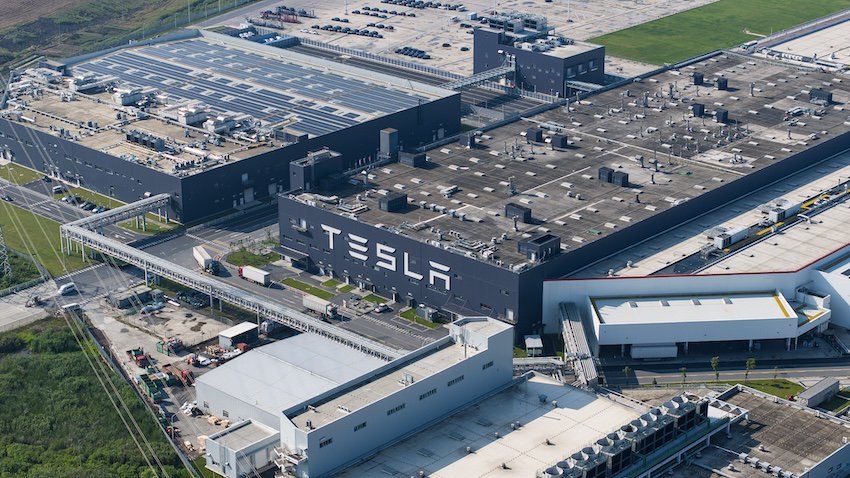
The Shanghai Gigafactory, covering roughly 860 000 m², produces up to 75 000 vehicles per year, with a recent output of 71 000 cars in the past year【2】. Its second‑phase assembly line can output a finished vehicle every 45 seconds, a speed that surpasses the typical 60‑70 seconds seen elsewhere in the auto industry【2】. This efficiency stems from a highly integrated plant layout, “warehouse on wheels” logistics that eliminate fixed storage space, and extensive automation—including multiple robotic arms per workstation and a real‑time factory execution system that monitors every assembly step【2】. The plant’s land‑use efficiency is notable: about 580 cars per mu (≈ 130 000 m²), compared with 100‑200 cars per mu at many domestic manufacturers【2】. By the end of 2025 the Shanghai site had produced its 4 millionth vehicle, representing roughly half of Tesla’s global deliveries and supporting both domestic demand and exports to Europe and North America【3】.
Why it matters
The cost reduction in battery electrodes directly addresses one of the biggest expense items in electric vehicles, potentially enabling Tesla to price future models lower without sacrificing range or performance. Coupled with the Shanghai plant’s ability to assemble cars at unprecedented speed, Tesla gains both a cost and a scalability advantage. However, none of the cited sources confirm a specific “cheaper new car” program or detail any planned reduction in battery size or range. The speculation about a smaller‑battery, shorter‑range model therefore remains unverified. Going forward, observers will watch for official announcements on new vehicle platforms and for further rollout of the dry‑process 4680 cells across Tesla’s model lineup.
Coming upLIVEsee all →
Across the coverage
Coverage is mostly measured — 120 of 123 reports stay neutral.
Neutral 120
Bearish 3
The Catalyst Brief
Know what’s about to move the market.
Every Monday — the token unlocks, Fed dates & catalysts set to move crypto and markets this week. So you’re never blindsided.
Free · 3-min read · one-click unsubscribe
Synthesized from 5 sources
- 01特斯拉攻克干法正极技术难题:4680电池生产成本对半砍了_新浪财经_新浪网
- 02走进特斯拉上海工厂:45秒生产一辆车的秘密|36氪独家-36氪
- 03第400万辆整车下线,特斯拉上海工厂贡献特斯拉全球一半产量 - 21经济网
- 04特斯拉上海储能超级工厂正式投产:本季度开始产能爬坡,上海速度再刷新_10%公司_澎湃新闻-The Paper
- 05特斯拉的定价策略,为什么让所有人都觉得亏?-36氪
AI-assisted synthesis by the TrendWatcher Editorial Desk · sourced from 5 outlets · Jun 4, 2026 · How we report
Published
Apr 10, 2026, 12:00 AM
Source
TrendWatcher AI (Enhanced)
Frequently asked · Tesla
How many vehicles did Tesla deliver in Q2 2026?
Tesla delivered a record 480,126 vehicles worldwide in the second quarter.
What is the purpose of Tesla’s Pet Mode?
Pet Mode keeps the climate system running and displays a message for pets, and Tesla warns it should not be relied upon for child safety.
Has production of the Tesla Semi started?
Yes, Tesla announced that production of the Semi truck has started at its Nevada facility, with full production expected later in the year.
What safety risk does the viral Charlotte video illustrate?
The video highlights the risk of leaving a child unattended in a vehicle, which federal officials say can lead to heat‑stroke deaths.