Loading article…
Artificial Intelligence
Stanford Researchers Develop Room-Temperature Quantum Device
TrendWatcher AI (Enhanced)·58d ago·bullish
Most covered nowLIVEsee all →
Stanford scientists have created a nanoscale device that uses twisted light to enable quantum communication at room temperature, bypassing extreme cooling.
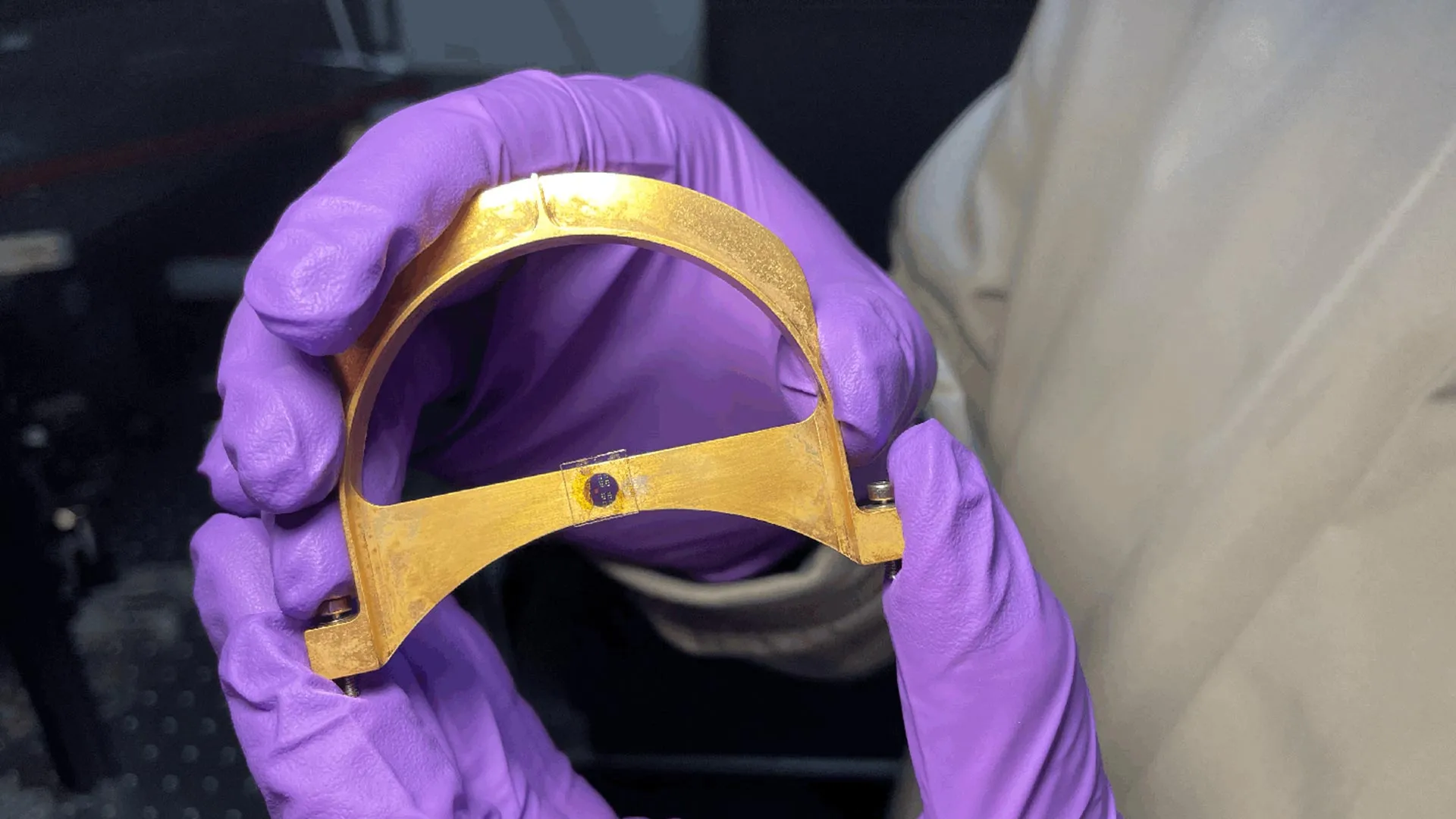
Materials scientists at Stanford University have developed a nanoscale optical device capable of operating at room temperature, a significant departure from current quantum systems that require cooling to near absolute zero [1]. By utilizing "twisted light" to entangle photons and electrons, the researchers have created a more practical, low-energy approach to quantum communication and computation [2].
Key takeaways
- The device functions at room temperature, potentially eliminating the need for expensive, bulky cooling systems that operate near -459 degrees Fahrenheit [1].
- Researchers use a combination of molybdenum diselenide (MoSe2) and a nanopatterned silicon substrate to manipulate light into a corkscrew, or "twisted," fashion [2].
- This twisted light imparts spin onto electrons, creating qubits, which are the fundamental units of quantum information [1].
- The technology could eventually support advancements in cryptography, artificial intelligence, and high-performance computing [2].
Engineering Quantum States with Twisted Light
The core of the breakthrough lies in the interaction between light and matter at the nanoscale. The device consists of a thin, patterned layer of molybdenum diselenide—a transition metal dichalcogenide (TMDC)—placed atop a silicon substrate [1]. While TMDCs are known for their favorable optical properties, the researchers found that the silicon nanostructures are essential for generating the "twisted" light necessary to stabilize quantum states [2].
According to Feng Pan, a postdoctoral scholar and the paper's first author, these silicon structures allow photons to spin in a corkscrew fashion, which in turn imparts spin on electrons [1]. This coupling of spin between photons and electrons is the theoretical basis for quantum communication [2]. Senior author Jennifer Dionne notes that while the materials themselves are not new, the specific way they are used to create a stable, versatile spin connection overcomes the traditional problem of electrons losing their spin too quickly to be useful [1].
Why it matters
The current requirement for extreme cooling makes existing quantum computers large, costly, and difficult to deploy [2]. By enabling quantum operations at room temperature, this device offers a path toward smaller and more accessible quantum components [1]. However, the researchers emphasize that this is a long-term development. Integrating these devices into larger quantum networks will require further advancements in light sources, modulators, and detectors [2]. While the team envisions a future where quantum computing could be embedded in everyday devices like cell phones, they estimate that such a goal remains at least a decade away [1]. The team is currently working to refine the device and explore other material combinations to achieve even greater quantum performance [2].
Coming upLIVEsee all →
Across the coverage
Coverage is mostly measured — 22 of 30 reports stay neutral.
Bullish 6
Neutral 22
Bearish 2
The Catalyst Brief
Know what’s about to move the market.
Every Monday — the token unlocks, Fed dates & catalysts set to move crypto and markets this week. So you’re never blindsided.
Free · 3-min read · one-click unsubscribe
Synthesized from 2 sources
- 01Scientists advance quantum signaling with twisted light
- 02Stanford quantum computing breakthrough uses twisted light to work without extreme coolingScience Daily
AI-assisted synthesis by the TrendWatcher Editorial Desk · sourced from 2 outlets · Jun 1, 2026 · How we report
Published
May 30, 2026, 05:08 AM
Source
TrendWatcher AI (Enhanced)
Frequently asked · Artificial Intelligence
What is Artificial Intelligence?
Artificial Intelligence is a trending topic in the news. Recent coverage of Artificial Intelligence includes: As students protest artificial intelligence, Pitt professor cautions: ‘We cannot delay the AI adoption’ - Pittsburgh Post-Gazette.
Why is Artificial Intelligence trending today?
20 news sources analyzed
What is the current sentiment on Artificial Intelligence?
Based on our analysis of recent news articles, Artificial Intelligence has mixed coverage. Check the sentiment score above for detailed analysis.
Where can I get the latest Artificial Intelligence news?
TrendWatcher aggregates Artificial Intelligence news from 100+ trusted sources and provides AI-powered sentiment analysis updated in real-time.