Loading article…
Crypto Options
CME Group to Launch 24/7 Crypto Futures Trading
TrendWatcher AI (Enhanced)·105d ago·neutral
Most covered nowLIVEsee all →
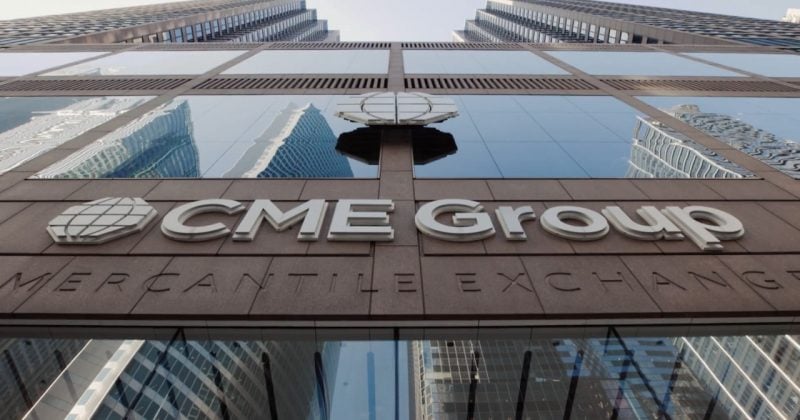
CME Group is transitioning its cryptocurrency futures and options to 24/7 trading on May 29, aiming to align its market structure with digital asset trends.
CME Group is preparing to transition its suite of cryptocurrency futures and options to 24/7 trading starting May 29, pending regulatory review [1]. This move is designed to align the exchange’s market structure with the continuous nature of digital asset trading [2].
Key takeaways
- CME Group will shift its crypto futures and options to a 24/7 trading schedule beginning May 29, subject to regulatory approval [2].
- The exchange is launching new Nasdaq CME Crypto Index futures on June 8, which will track seven major digital assets [1].
- CME reported that its average daily trading volume for crypto contracts reached 407,200 in early 2026, a 46% increase from the previous year [1].
- Derivatives currently account for approximately three-quarters of all cryptocurrency trading volume [2].
Expanding the regulated crypto derivatives landscape
The shift to 24/7 operations follows a period of significant growth for CME’s digital asset offerings. In 2025, the exchange’s crypto complex averaged 270,900 contracts per day, representing roughly $12 billion in daily notional value [1]. This volume marked a 132% increase compared to the prior year [1]. Giovanni Vicioso, who leads crypto products at CME, noted that demand for regulated futures remains on the rise as the exchange continues to expand its product lineup to capture market interest [1].
In addition to the shift in trading hours, CME and Nasdaq are collaborating on a new index-based futures product scheduled for launch on June 8, pending regulatory approval [1]. These contracts will be market-cap weighted and track a basket of seven digital assets, including Bitcoin, Ether, XRP, Solana, Cardano, Chainlink, and Stellar Lumens [1]. Unlike direct ownership, these contracts are financially settled in cash based on the Nasdaq CME Crypto Settlement Price Index [1]. The exchange also recently announced plans to launch regulated Bitcoin volatility futures, distinguishing them from existing volatility products offered on non-US-regulated platforms [2].
Why it matters
The move toward 24/7 trading reflects the broader dominance of derivatives in the digital asset space, where volume reached an estimated $85.7 trillion in 2025 [2]. By aligning its hours with the always-on nature of crypto markets, CME aims to provide institutional investors with a more convenient and regulated environment for hedging or gaining broad-based exposure [1]. As the exchange continues to evolve its infrastructure, CEO Terry Duffy has indicated that the company is even considering the issuance of its own digital token as part of a broader review of tokenized collateral [1]. These developments underscore a strategic effort to bridge the gap between traditional exchange governance and the continuous, high-volume activity characteristic of the global cryptocurrency market [1].
Coming upLIVEsee all →
Across the coverage
Coverage is mostly measured — 25 of 30 reports stay neutral.
Bullish 4
Neutral 25
Bearish 1
The Catalyst Brief
Know what’s about to move the market.
Every Monday — the token unlocks, Fed dates & catalysts set to move crypto and markets this week. So you’re never blindsided.
Free · 3-min read · one-click unsubscribe
Synthesized from 2 sources
- 01CME Group to launch Nasdaq crypto index futures covering Bitcoin, Ether, XRP as daily volumes surge 43% this yearCrypto Briefing
- 02CME Group to launch regulated Bitcoin volatility futuresCoinTelegraph
AI-assisted synthesis by the TrendWatcher Editorial Desk · sourced from 2 outlets · Jun 1, 2026 · How we report
Published
May 29, 2026, 09:47 PM
Author
Editorial Team
Source
TrendWatcher AI (Enhanced)
Frequently asked · Crypto Options
How do perpetual futures differ from traditional equity options?
Unlike equity options, perpetual futures have no expiration date, allowing positions to be held indefinitely provided the trader manages funding payments and liquidation risks.
Do crypto-based synthetic contracts provide ownership in the underlying company?
No, these contracts do not grant ownership, voting rights, or any legal claim on the underlying shares of the company.
What are the primary ways to perform instant crypto swaps?
Users can perform instant swaps through centralized exchange conversion tools, decentralized exchanges, or non-custodial aggregators.
Why do some investors use synthetic markets for IPOs?
Investors use these markets to gain exposure when they are shut out of heavily oversubscribed official IPO allocations.