Loading article…
Liquidation Crypto
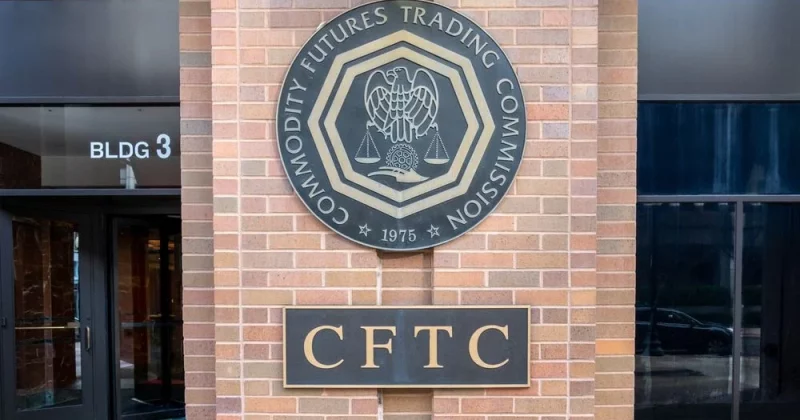
CFTC Approves First US Bitcoin Perpetual Futures
TrendWatcher AI (Enhanced)·59d ago·neutral
Most covered nowLIVEsee all →
US regulators approved the first bitcoin perpetual futures contracts for domestic exchanges, marking a shift from offshore trading to CFTC oversight.
The Commodity Futures Trading Commission (CFTC) has approved the first bitcoin perpetual futures contracts for United States-regulated exchanges, marking a significant shift for the crypto derivatives market [1]. Coinbase and Kalshi announced they are introducing these regulated products to US investors, moving a major trading segment into a domestic framework after years of reliance on offshore platforms [1].
Key takeaways
- Kalshi received approval for its BTCPERP contract on May 29, marking the first bitcoin perpetual futures product on a US-regulated exchange [1][2].
- Coinbase Financial Markets secured a no-action determination to connect US customers to international perpetual futures and options through its Bermuda entity [1][2].
- The CFTC established distinct regulatory pathways for domestic listings and offshore products treated as foreign futures [2].
- Market reaction included a 30% jump in Hyperliquid’s token to an all-time high, while Coinbase and Robinhood stocks rose 4% and 11% respectively [2].
- Perpetual futures allow high leverage up to 50-to-1, posing risks of rapid losses for retail traders [1].
New domestic framework for perpetual futures
Under the new framework, Kalshi filed its bitcoin-linked perpetual contract, listed as BTCPERP, on May 29 under the CFTC’s voluntary review process [1]. The regulator determined the product met requirements under the Commodity Exchange Act, allowing for a cash-settled contract that trades 24/7 with a funding mechanism tied to spot prices [1][2]. CFTC Chair Michael Selig described the action as historic, noting it charts a path for one of the most liquid segments of the crypto asset markets [2]. However, the agency issued a policy stating that new contracts tied to assets beyond current approved listings will require case-by-case regulatory review, meaning Kalshi's plans to list perpetuals for more than a dozen other cryptocurrencies remain subject to further approval [1].
Coinbase gains access to global markets
While Kalshi focuses on domestic listings, the
Coming upLIVEsee all →
Across the coverage
Coverage is mostly measured — 27 of 37 reports stay neutral.
Bullish 1
Neutral 27
Bearish 9
The Catalyst Brief
Know what’s about to move the market.
Every Monday — the token unlocks, Fed dates & catalysts set to move crypto and markets this week. So you’re never blindsided.
Free · 3-min read · one-click unsubscribe
Synthesized from 2 sources
- 01Coinbase and Kalshi Launch Regulated Perpetual Crypto Futures for US TradersAnalytics Insight
- 02Morning Minute: HYPE Soars as CFTC Gives Perps Green LightDecrypt
AI-assisted synthesis by the TrendWatcher Editorial Desk · sourced from 2 outlets · Jun 2, 2026 · How we report
Published
May 29, 2026, 02:13 PM
Author
Editorial Team
Source
TrendWatcher AI (Enhanced)
Frequently asked · Liquidation Crypto
What triggers a crypto liquidation?
A liquidation is triggered when the market price moves against a leveraged position beyond the trader's margin threshold, forcing the exchange to automatically close the position.
Why do liquidations often affect long positions more than short positions?
Liquidations disproportionately impact long positions when the market experiences a sudden, broad-based sell-off, as these positions become overcrowded and vulnerable to price drops.
Does 24/7 trading reduce market risk?
Sources indicate that continuous trading does not remove risk but rather redistributes it, often concentrating it in overnight or weekend hours when institutional liquidity is lower.
What is the role of funding rates in crypto trading?
Funding rates are used in perpetual futures to keep the contract price aligned with the spot price; when they skew heavily positive, it often indicates overcrowded bullish positioning.