Loading article…
Series Macs
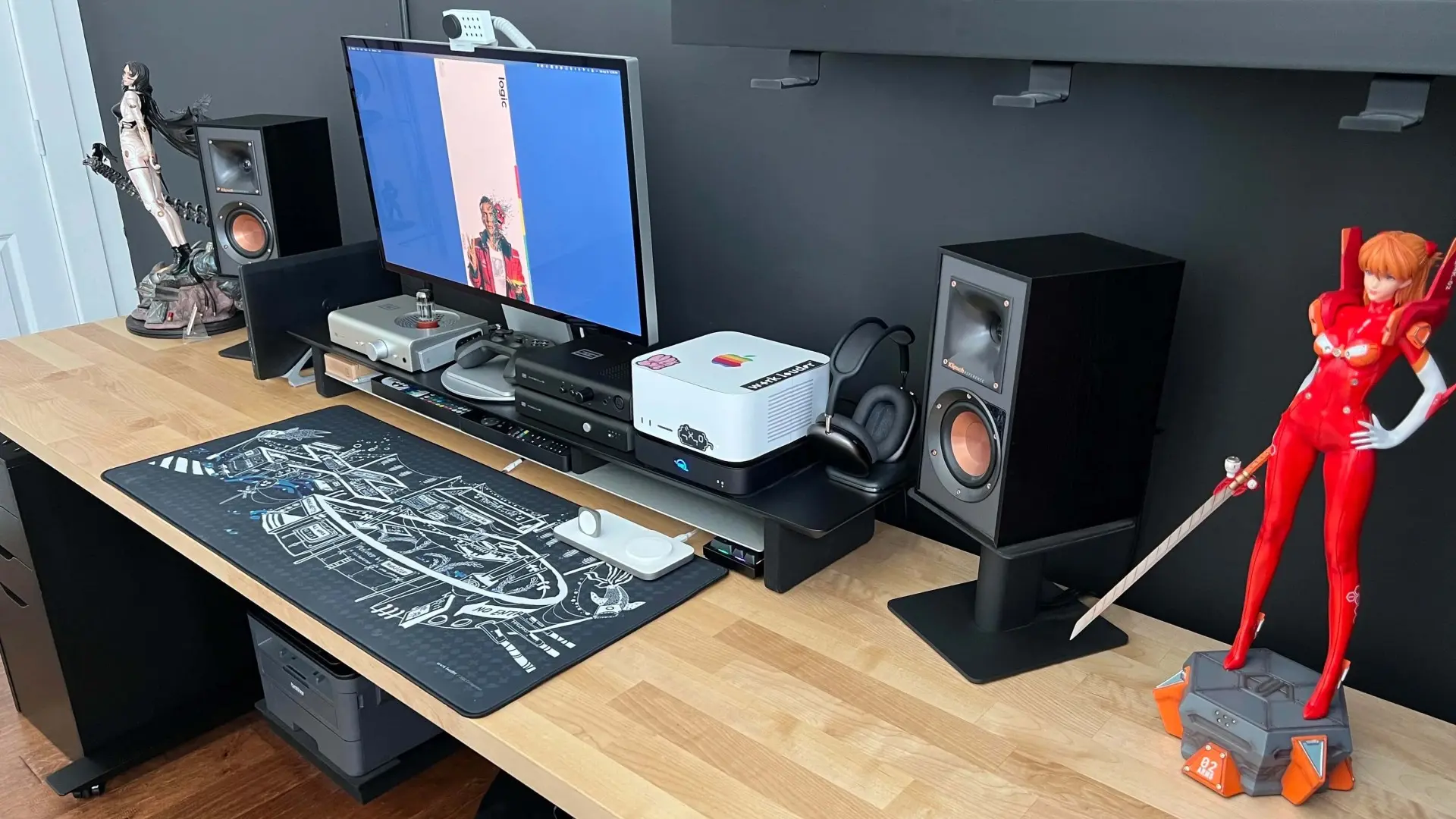
Best Mac gaming setups: From budget laptops to high‑end Macs
TrendWatcher AI (Enhanced)·59d ago·bullish
Most covered nowLIVEsee all →
Explore how the MacBook Neo, M2, and M3 Max Macs perform for gaming, their strengths, limits, and what users should consider when building a Mac gaming setup.
The Mac gaming landscape now spans budget‑friendly laptops like the MacBook Neo to powerful M3 Max‑based MacBook Pro workstations, each offering a different balance of performance, portability, and price [1]. While the Neo shows surprising capability in lighter titles, the high‑end Pro delivers desktop‑class graphics for demanding AAA games [2].
Key takeaways
- The MacBook Neo’s A18 Pro chip and 8 GB unified memory handle older or mobile‑optimized games at 30‑60 fps with MetalFX upscaling [1].
- Modern AAA titles such as Cyberpunk 2077 and Assassin’s Creed Shadows quickly exceed the Neo’s memory and GPU limits, leading to poor frame rates or crashes [1].
- The MacBook Pro 16‑inch (M3 Max) provides desktop‑level GPU power, supporting high‑settings gameplay in titles like Red Dead Redemption 2 and GTA 5 on a high‑refresh Liquid Retina XDR display [2].
- Budget M2 Macs can run most indie and mainstream games natively and rely on cloud‑gaming services for heavier titles, offering a cost‑effective entry point [2].
- Effective thermal management, sufficient RAM (ideally 16 GB+), and display quality are critical factors across all Mac gaming setups [2].
Budget‑friendly entry point: MacBook Neo performance
The MacBook Neo, marketed as Apple’s low‑cost laptop, uses the phone‑class A18 Pro chip and 8 GB of unified memory. Benchmarks show it can sustain around 90 % of its peak performance during extended sessions, thanks to efficient cooling and macOS optimizations [1]. In practice, titles that are less demanding or designed for mobile hardware—such as Death Stranding and Control—reach 45‑60 fps at 1080p when MetalFX upscaling is enabled [1]. Older cross‑generation games like Grid Legends and Resident Evil 4 also stay within the 40‑60 fps range, though image quality drops due to aggressive upscaling.
However, the Neo’s 8 GB memory quickly becomes a bottleneck. Modern AAA releases that require more VRAM cause the system to swap to storage, resulting in stutter and lower frame rates. Cyberpunk 2077 fails to run smoothly even on the lowest settings, and Assassin’s Creed Shadows can run out of memory before gameplay begins [1]. Ray‑tracing features further degrade performance, with Control dropping to 20‑30 fps when enabled [1]. Consequently, the Neo is best suited for casual gamers who prioritize portability and a premium build over high‑end performance.
High‑end gaming with the MacBook Pro 16‑inch (M3 Max)
At the opposite end of the spectrum, the 16‑inch MacBook Pro equipped with the M3 Max chip delivers desktop‑class GPU capability. According to testing, it runs demanding AAA titles such as Red Dead Redemption 2 and GTA 5 at high settings while maintaining smooth frame rates [2]. The machine’s Liquid Retina XDR display offers high refresh rates and accurate colors, enhancing immersion for fast‑paced games. Larger chassis and advanced thermal design allow the Pro to sustain performance longer without throttling, a key advantage for extended gaming sessions [2].
While the M3 Max model provides the most robust native gaming experience on macOS, Apple recommends considering additional factors: at least 16 GB of RAM for newer titles, sufficient storage (many games exceed 50 GB), and proper cooling to avoid throttling [2]. For users who cannot justify the premium price, the M2‑based Macs present a viable alternative. They handle most indie and mainstream games natively, and cloud‑gaming services can bridge the gap for heavier AAA titles [2].
Why it matters
Understanding the performance envelope of each Mac model helps gamers choose a setup that aligns with their expectations and budget. The MacBook Neo demonstrates that even a budget laptop can deliver playable experiences for lighter or older games, expanding the appeal of macOS gaming beyond the traditional high‑end niche. Conversely, the MacBook Pro 16‑inch (M3 Max) confirms that Apple’s silicon can now rival dedicated Windows gaming rigs for many AAA titles, provided users invest in sufficient RAM and manage thermals. As more games receive native macOS support and cloud‑gaming services grow, the range of viable Mac gaming configurations will continue to broaden, giving consumers clearer options from casual companions to full‑scale battle stations.
Coming upLIVEsee all →
Across the coverage
Coverage is mostly measured — 37 of 41 reports stay neutral.
Bullish 2
Neutral 37
Bearish 2
The Catalyst Brief
Know what’s about to move the market.
Every Monday — the token unlocks, Fed dates & catalysts set to move crypto and markets this week. So you’re never blindsided.
Free · 3-min read · one-click unsubscribe
Synthesized from 2 sources
- 01Is the MacBook Neo Worth It for Gaming? Apple’s Budget Laptop Tested in Gaming BenchmarksTech Times
- 02Top Mac for Gaming 2026: Best MacBooks and optimization tips
AI-assisted synthesis by the TrendWatcher Editorial Desk · sourced from 2 outlets · Jun 3, 2026 · How we report
Published
May 29, 2026, 12:45 PM
Author
David Snow
Source
TrendWatcher AI (Enhanced)
Frequently asked · Series Macs
How many displays can an M-series Mac support?
Support ranges from a single 6K display on base models to triple 6K displays on M5 Pro or Max configurations.
Are Thunderbolt 5 docks compatible with older Macs?
Yes, Thunderbolt 5 is backwards compatible with USB-C, allowing it to function with most older Mac models.
Does the Satechi CubeDock include built-in HDMI ports?
No, the CubeDock relies on its Thunderbolt 5 ports for display output, requiring adapter cables for HDMI or DisplayPort monitors.