Loading article…
Ethereum
Solana and XRP On-Chain Activity and Price Outlook
TrendWatcher AI (Enhanced)·113d ago·neutral
Most covered nowLIVEsee all →
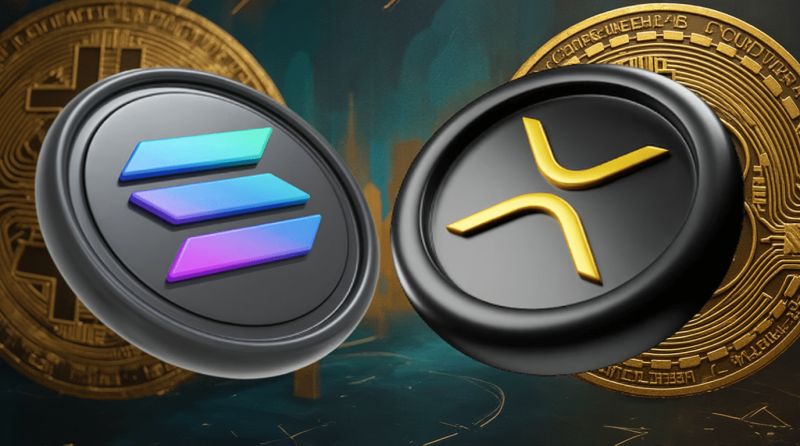
Solana leads in network scale while XRP eyes legislative gains. See how on-chain metrics and the CLARITY Act impact these assets heading into 2027.
Solana and XRP are facing significant bearish pressure as their market prices struggle to hold key support levels, with Solana slipping below $90 and XRP failing to maintain its $1.50 threshold [1]. While price performance has faltered, investors are increasingly shifting their focus toward on-chain activity to gauge the underlying health of these networks [1].
Solana currently maintains the strongest overall network scale and user participation among major blockchains, despite a sharp cooling in fee generation [1]. After hitting daily network fees of $638,000 on May 14, Solana’s fees collapsed to $4,990 by May 16 as the price of SOL trended toward $86 [1]. Despite this volatility, the network continues to support high user activity through meme coin trading and institutional real-world asset integrations, with over 78 million active addresses recorded in May alone [1]. Looking ahead, the upcoming Alpenglow upgrade, expected in Q3 2026, aims to replace the current proof-of-history system to reduce finality times to 150 milliseconds, a move analysts suggest could help SOL reclaim the $100 level [1].
XRP has seen a different trajectory, characterized by a surge in network usage following the Senate Banking Committee’s approval of the CLARITY Act on May 14 [1]. The legislation, which would codify XRP’s commodity status, triggered a spike in activity that saw 3,317 new wallets created in a single 24-hour period [1]. Total transactions on the XRP Ledger reached 2.7 million in May, nearly doubling the volume seen in December 2025 [1]. Standard Chartered analysts have projected a potential price of $7 for XRP by the end of 2027, though this forecast is heavily contingent on the bill securing a full Senate vote and presidential approval before the July 4 deadline [2].
Cardano remains a third point of interest, though its network usage has lagged behind its peers, with daily active addresses falling to a range of 9,000 to 16,000 from a 2024 peak of 135,000 [1]. Despite this, data shows that whales holding at least 1 million ADA have increased their concentration to 67% of the circulating supply, the highest level since July 2020 [1]. The network is pinning its recovery hopes on the Ouroboros Leios upgrade, which is scheduled for a mainnet launch in Q4 2026 and aims to increase transaction capacity to over 1,000 per second [1].
Whether these networks can translate their technical roadmaps and legislative catalysts into sustained growth remains the central question for investors. The market is now waiting to see if the promised upgrades and policy shifts can overcome the current trend of declining fees and stagnant price action.
Coming upLIVEsee all →
Across the coverage
Coverage is mostly measured — 278 of 300 reports stay neutral.
Bullish 12
Neutral 278
Bearish 10
The Catalyst Brief
Know what’s about to move the market.
Every Monday — the token unlocks, Fed dates & catalysts set to move crypto and markets this week. So you’re never blindsided.
Free · 3-min read · one-click unsubscribe
Synthesized from 2 sources
- 01Which Crypto Has the Strongest On-Chain Activity Between XRP, Solana, and Cardano?AOL
- 02Bitcoin vs Ethereum vs Solana vs XRP: $1,000 In Each for 2027AOL
AI-assisted synthesis by the TrendWatcher Editorial Desk · sourced from 2 outlets · Jun 14, 2026 · How we report
Published
May 21, 2026, 03:30 PM
Author
Scott Matherson
Source
TrendWatcher AI (Enhanced)
Frequently asked · Ethereum
What caused the Ethereum price to rise above $2,600 on September 11, 2026?
The Ethereum price increase was supported by consistent inflows into spot Ethereum ETFs and the liquidation of approximately $250 million in short positions. Broader cryptocurrency market gains and institutional capital shifts also contributed to the upward movement.
How much has BlackRock's Ethereum ETF (ETHA) attracted in inflows?
As of September 11, 2026, BlackRock’s Ethereum ETF (ETHA) attracted $251.4 million in net inflows over 20 consecutive trading days. This streak represents an uninterrupted period of demand for the investment product.
Is Ethereum considered a bullish or bearish asset right now?
Market sentiment for Ethereum is mixed as of September 12, 2026. While recent price action and ETF demand indicate bullish momentum, technical indicators like the ADX show limited trend strength and some metrics suggest the asset has reached oversold conditions.
What is the relationship between Bitmine Immersion Technologies and Ethereum?
Bitmine Immersion Technologies holds 5.93 million Ethereum tokens in its corporate treasury, causing its stock price to function as a leveraged proxy for Ethereum. Consequently, the stock price of Bitmine Immersion Technologies often moves in sympathy with the market performance of Ethereum.