Loading article…
Ethereum
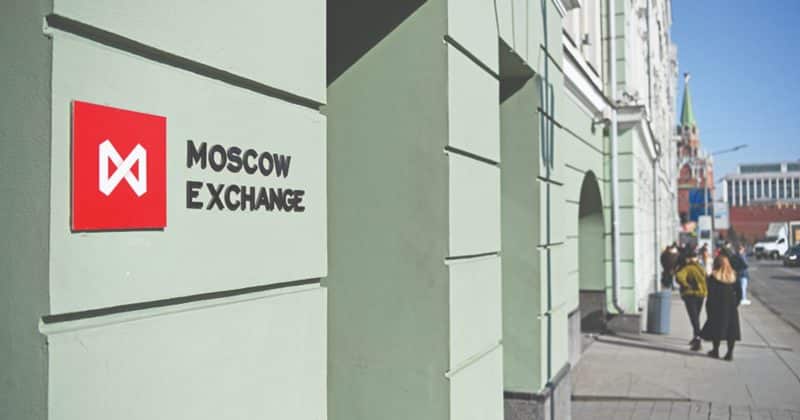
Moscow Exchange plans 24/7 crypto trading to lure domestic investors
TrendWatcher AI (Enhanced)·123d ago·neutral
Most covered nowLIVEsee all →
Moscow Exchange aims for round‑the‑clock crypto trading, testing deposits and rolling out new XRP, BNB and Solana indices as Russia readies a stricter digital
Moscow Exchange (MOEX) is moving to launch continuous crypto trading, matching the nonstop pace of overseas platforms, according to brokerage sources cited by RBC Investments. The exchange is already holding talks with brokers about operating hours, account structures and deposit mechanics, and has begun limited testing of crypto deposits and withdrawals that would mirror Russia’s National Settlement Depository rather than giving users direct wallet control [1].
MOEX unveiled four new crypto indices—XRP, BNB, Solana and TRON—on the same week it announced the 24/7 ambition, raising its total benchmarks to six and signalling a roadmap toward ten digital assets. The indices are intended as the foundation for futures contracts slated for late 2026, which will initially be offered only to qualified investors under Russian regulations [1]. This rollout dovetails with a pending “Digital Currency and Digital Rights” law that passed its first reading in the State Duma and is set to take effect on July 1, imposing stringent listing requirements such as a two‑year average market cap above 5 trillion rubles and daily trading volume over 1 trillion rubles [1].
The push comes as Russia seeks to pull domestic traders back from foreign exchanges. By allowing regulated, ruble‑settled exposure to assets like XRP, MOEX gives Russian institutions a way to trade without the currency conversion and custodial risks of offshore platforms. The move follows the May 13 launch of an official MOEX XRP index and ruble‑settled futures, which immediately gave qualified investors a domestic avenue for XRP exposure and sparked a noticeable uptick in on‑chain accumulation, including new wallets and whale purchases [2].
If MOEX succeeds, the continuous market could reshape risk dynamics in Russia’s crypto space. While 24/7 trading eliminates weekend price gaps, it also shifts liquidity risk to off‑hours when market makers are scarce, a pattern observed in other regulated venues that have adopted nonstop trading [3]. How MOEX will manage those risks—and whether the new regulatory framework will attract enough volume to justify round‑the‑clock operations—remains the key question for Russia’s emerging digital asset ecosystem.
Coming upLIVEsee all →
Across the coverage
Coverage is mostly measured — 283 of 300 reports stay neutral.
Bullish 10
Neutral 283
Bearish 7
The Catalyst Brief
Know what’s about to move the market.
Every Monday — the token unlocks, Fed dates & catalysts set to move crypto and markets this week. So you’re never blindsided.
Free · 3-min read · one-click unsubscribe
Synthesized from 3 sources
- 01Moscow Exchange eyes 24/7 crypto trading in push to rival foreign platformsCrypto Briefing
- 02Ripple News: Russian Investors Accumulate XRP After Moscow Exchange Launched an Official XRP Index24/7 Wall St.
- 0324/7 Markets: How Always-On Crypto Changes Risk Management and Customer ExpectationsFinanceFeeds
AI-assisted synthesis by the TrendWatcher Editorial Desk · sourced from 3 outlets · Jun 16, 2026 · How we report
Published
May 15, 2026, 12:26 PM
Author
Vivian Nguyen
Source
TrendWatcher AI (Enhanced)
Frequently asked · Ethereum
How much Ethereum does Bitmine Immersion Technologies own?
Bitmine Immersion Technologies held 5,956,378 Ethereum tokens as of late August 2026. These holdings are valued at approximately $14.89 billion.
What percentage of the total Ethereum supply does Bitmine hold?
Bitmine Immersion Technologies holds approximately 4.9% of the total Ethereum supply as of late August 2026. The company is approaching a stated goal of owning 5% of the total supply.
Is Bitmine staking its Ethereum holdings?
Yes, approximately 85% of the Ethereum held by Bitmine Immersion Technologies is currently staked. This staking activity is projected to generate $334 million in annualized revenue for the company.
How has Ethereum performed compared to other assets in 2026?
Ethereum is described as the best-performing macro asset during the third quarter of 2026, according to statements from Bitmine Chairman Tom Lee. As of late August 2026, Ethereum outperformed the S&P 500 by 5,866 basis points.