Loading article…
Apple
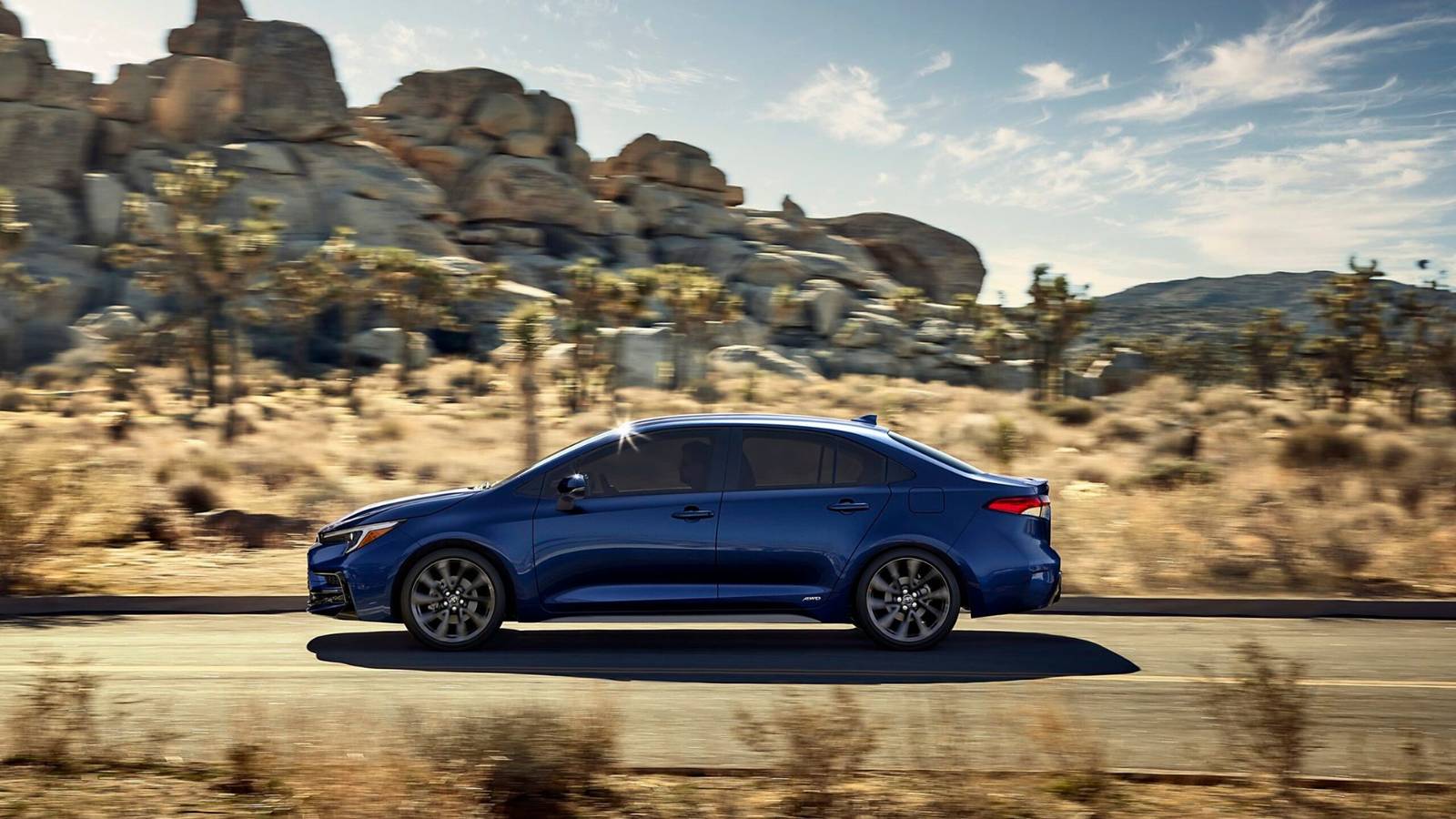
Why the Corolla Hybrid is a smarter buy than the Civic Hybrid
TrendWatcher AI (Enhanced)·71d ago·neutral
Most covered nowLIVEsee all →
If you’re considering the Civic Hybrid, the Corolla Hybrid might actually be the better pick—and here’s why.
Why the Corolla Hybrid is a Smarter Buy Than the Civic Hybrid
Executive Brief
In the evolving landscape of 2026 automotive economics, where fuel prices continue to rise and consumer demand shifts toward efficiency, the debate between Toyota's Corolla Hybrid and Honda's Civic Hybrid has intensified. While the Toyota Prius remains the undisputed king of raw fuel economy with a staggering 57 MPG combined, and the Hyundai Elantra Hybrid offers a compelling highway-focused alternative at a lower price point, the choice often comes down to a battle of titans in the compact sedan segment: the Corolla versus the Civic. Despite the Honda Civic Hybrid's reputation for driver-assistance technology and practical full-sized sedan packaging, a deep dive into 2026 market data reveals that the Toyota Corolla Hybrid is the superior financial and operational investment. By analyzing EPA ratings, pricing structures, warranty coverage, and real-world driving dynamics, it becomes evident that the Corolla Hybrid offers a more balanced equation of cost-per-mile, reliability assurance, and urban efficiency that the Civic simply cannot match.
Detailed Technical Analysis
The Efficiency Paradox: City vs. Highway
The primary metric for any hybrid vehicle is fuel economy, yet the 2026 data reveals a nuanced performance gap between the two contenders. The Honda Civic Hybrid posts a combined EPA rating of 49 MPG, which, while respectable, places it at the bottom of the efficiency list among mainstream hybrids. Breaking this down further exposes its Achilles' heel: urban driving. In city conditions, where regenerative braking systems are most effective, the Civic Hybrid manages only 50 MPG. This is the lowest city rating on the entire list of top economical cars for 2026.
In stark contrast, the Toyota Corolla Hybrid achieves a combined 50 MPG but excels significantly in stop-and-go traffic. The Corolla Hybrid delivers an impressive 53 MPG in the city. This three-MPG advantage in urban environments is not merely a statistical footnote; it translates directly to substantial savings for the average commuter who spends the majority of their driving time navigating metropolitan areas, school zones, and congested highways. While the Civic does edge out the Corolla on the highway with 47 MPG compared to the Corolla's 46 MPG, this marginal gain is negligible when weighed against the significant deficit in city performance. For a vehicle designed for daily commuting, the ability to maximize fuel recovery during frequent braking cycles makes the Corolla the more efficient choice for real-world usage patterns.
The Cost of Ownership: MSRP and Value Proposition
When evaluating "smartness" in a purchase, the initial price tag is often the first filter applied by consumers. Here, the Toyota Corolla Hybrid establishes an immediate advantage over its Honda rival. A brand-new 2026 Toyota Corolla Hybrid can be acquired for slightly less than $25,000. This pricing strategy positions it as the most affordable option on the list of top economical cars, undercutting even the Hyundai Elantra Hybrid and the Toyota Camry Hybrid.
Conversely, the Honda Civic Hybrid presents a significantly higher barrier to entry. The Sport Sedan version, which represents the flagship offering for this model year, carries an MSRP of $29,295. This makes the Civic Hybrid the most expensive option on the comprehensive list of efficient vehicles discussed. Furthermore, when comparing the Corolla directly to the Honda, the price differential is stark. A buyer can secure a new Corolla Hybrid for roughly $4,000 to $4,300 less than a comparable Civic Hybrid. In an era where gas prices are rising and hitting every aspect of consumer life, from groceries to commutes, reducing the upfront capital expenditure allows buyers to allocate funds toward other necessities or savings. The Corolla effectively offers a lower cost-per-mile not just through fuel economy, but through a drastically reduced acquisition cost.
Reliability, Warranty, and Long-Term Viability
Beyond the sticker price and fuel gauge, the long-term viability of a vehicle is dictated by reliability and warranty coverage. Toyota has spent decades refining its hybrid powertrain technology, resulting in a reputation for near-invincible durability. The 2026 Corolla Hybrid comes with a robust 5-year/60,000-mile powertrain warranty. This coverage provides peace of mind that is particularly valuable given the high cost of hybrid battery replacements if they were to fail outside the warranty period.
The narrative surrounding Toyota hybrids in 2026 suggests that the company has peaked in terms of raw efficiency with the Prius at 57 MPG, but this plateauing performance extends to a consistent reliability across their lineup. The Corolla Hybrid represents the culmination of this engineering focus. While Honda is known for packing its vehicles with advanced driver-assistance tech, which may make it one of the easiest sedans to drive in 2026, technology alone does not guarantee longevity or fuel savings. The Corolla's design philosophy prioritizes mechanical simplicity and proven components over feature bloat, ensuring that the vehicle remains a "budget option" that only needs to get the driver through the winter—or rather, for years to come—without leaking oil or requiring expensive repairs.
Market Context and Strategic Positioning
The automotive landscape of 2026 is dominated by Japanese and Korean OEMs when it comes to true efficiency. American manufacturers like Ford have largely exited the small car segment, focusing on large SUVs and trucks, leaving a void that Toyota has filled with dominance. The Corolla Hybrid sits at number four in the list of most economical cars, trailing only the Prius, Elantra, and Camry. However, its position is strategic. It offers the best balance of price and city efficiency.
The Civic Hybrid, while offering a full-sized sedan experience and advanced tech, suffers from being the most expensive option on the list. When combined with its lower city MPG rating, the Civic fails to deliver the "smart buy" verdict required for the average consumer. The Corolla Hybrid's ability to achieve 53 MPG in the city while costing significantly less than the Civic makes it the logical choice for budget-conscious buyers who prioritize urban commuting.
Conclusion
The decision between the Toyota Corolla Hybrid and the Honda Civic Hybrid in 2026 is not a close call when viewed through the lens of financial prudence and operational efficiency. The Civic Hybrid, despite its technological advancements and highway prowess, is penalized by a high MSRP ($29,295) and subpar city fuel economy (50 MPG). The Corolla Hybrid, priced under $25,000, delivers superior urban mileage (53 MPG) and aligns with Toyota's legacy of reliability. For the millions of Americans feeling the pinch of rising gas prices, the Corolla Hybrid offers a smarter path forward: maximizing fuel savings in the most common driving environment while minimizing the initial investment. It is not just a car; it is an economic strategy that outperforms the Civic on every metric that matters to the average driver.
Coming upLIVEsee all →
Across the coverage
Coverage is mostly measured — 41 of 42 reports stay neutral.
Bullish 1
Neutral 41
The Catalyst Brief
Know what’s about to move the market.
Every Monday — the token unlocks, Fed dates & catalysts set to move crypto and markets this week. So you’re never blindsided.
Free · 3-min read · one-click unsubscribe
Synthesized by the TrendWatcher Editorial Desk. How we report · Original source reference
Published
May 16, 2026, 08:57 PM
Author
Adam Gray
Source
TrendWatcher AI (Enhanced)
Frequently asked · Apple
What is Apple?
Apple is a trending topic in the news. Recent coverage of Apple includes: How long does an Apple TV last ? .
Why is Apple trending today?
20 news sources analyzed
What is the current sentiment on Apple?
Based on our analysis of recent news articles, Apple has mixed coverage. Check the sentiment score above for detailed analysis.
Where can I get the latest Apple news?
TrendWatcher aggregates Apple news from 100+ trusted sources and provides AI-powered sentiment analysis updated in real-time.