Loading article…
Hardware Wallet
Fake Uniswap Google ads steal over $400,000 in crypto phishing scam
TrendWatcher AI (Enhanced)·63d ago·bullish
Most covered nowLIVEsee all →
Scam using sponsored Google ads mimicking Uniswap drained $400K+ from users; see how the ads worked, on‑chain details and what to watch next.
At least $400,000 vanished after crypto users connected wallets to counterfeit Uniswap sites that appeared as the top Google‑sponsored result for the “Uniswap” keyword — a phishing tactic that highlights the growing risk of ad‑based scams in DeFi [1].
| At a glance | |
|---|---|
| Amount stolen | $400,000+ |
| Method | Sponsored Google ads directing to fake Uniswap pages |
| Wallets affected | Two addresses holding 146 ETH each (≈ $306,000) |
| Catalyst | Scam ads bought by attackers to outrank the official site |
How the ads fooled users
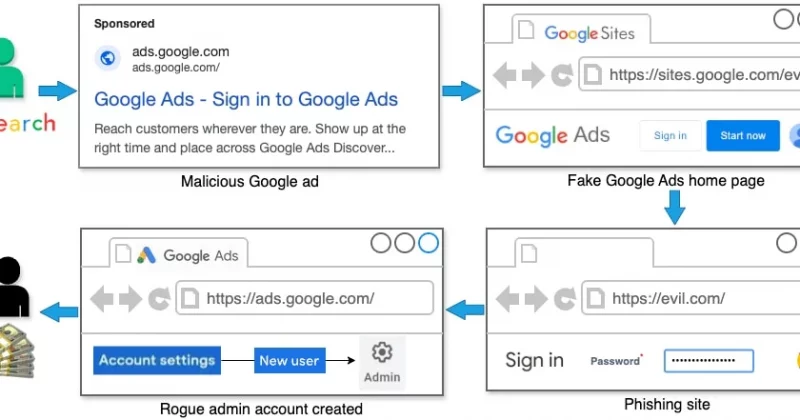
Scammers purchased Google‑Ads slots for the keyword “Uniswap” and posted URLs that closely resemble the real domain, some hosted on Google Sites subdomains. The ads appear above organic results, so users often assume legitimacy [3]. When a user clicks the ad, the clone site mirrors Uniswap’s interface, prompting a wallet connection. Approving a single transaction gives the attacker permission to drain the wallet, an irreversible blockchain operation [1][3]. One trader, known as “ika_xbt,” reported that after approving one transaction his wallet was emptied instantly [1].
On‑chain evidence and broader context
On‑chain analyst b‑block flagged the theft on X, identifying two addresses that each held 146 ETH (valued at about $306,000 at the time) before the drain [2][3]. The total loss exceeds $400,000, matching the figure reported by multiple outlets [1][2][3]. The incident adds to a wider trend: crypto‑related scams and exploits caused over $370 million in losses in January 2026 alone [1]. Security Alliance has noted a sharp rise in phishing campaigns linked to Google Search since March 2026, with attackers hijacking ad accounts or buying fresh placements to impersonate major protocols [1].
Community response and mitigation attempts
Uniswap founder Hayden Adams publicly criticized Google for allowing such ads to proliferate, calling for an end to the ad economy that enables these scams [3]. The Web3 marketing agency Green Dots, whose founder Stacy Muur highlighted the issue, urges users to bookmark official URLs and double‑check links before connecting wallets [1][2]. DeFiLlama has launched a Chrome extension, LlamaSearch, to help users verify legitimate crypto domains [3].
What to watch
- Google ad placements for “Uniswap” – monitor any new sponsored results that appear before the official site.
- On‑chain activity of the two compromised addresses – large outgoing transfers could signal further fund movement.
- Uniswap DAO proposals – upcoming votes (e.g., Proposal 96 on fee expansion) may shift attention to security discussions [3].
The $400K+ loss underscores how easily phishing attacks can bypass even hardware‑wallet safeguards when users are lured by trusted‑looking ads. As scammers continue to exploit ad platforms, the crypto community’s ability to flag and block malicious URLs will be a key factor in limiting future drain events.
Coming upLIVEsee all →
Across the coverage
Coverage is mostly measured — 6 of 8 reports stay neutral.
Bullish 2
Neutral 6
The Catalyst Brief
Know what’s about to move the market.
Every Monday — the token unlocks, Fed dates & catalysts set to move crypto and markets this week. So you’re never blindsided.
Free · 3-min read · one-click unsubscribe
Synthesized from 3 sources
- 01Uniswap Google Ads Scam Steals $400K
- 02Fake Uniswap Google Ads Drain Over $400K From Crypto Users ⋆ ZyCrypto
- 03Scammers make $400K+ from running fake Uniswap ads on Google - Cryptopolitan
AI-assisted synthesis by the TrendWatcher Editorial Desk · sourced from 3 outlets · Jun 16, 2026 · How we report
Published
May 26, 2026, 11:46 AM
Author
Editorial Team
Source
TrendWatcher AI (Enhanced)
Frequently asked · Hardware Wallet
How do I recover my funds if I lose my hardware wallet?
You can recover your funds by using your 12 or 24-word seed phrase to regenerate your private keys on a new compatible device.
Are hardware wallets immune to all security risks?
While they protect against online hacking, they can still be lost or damaged, and there is a rare risk of hardware or software vulnerabilities if the device is tampered with before reaching the consumer.
What is the difference between a hot wallet and a hardware wallet?
Hot wallets are connected to the internet and are more convenient for frequent, small transactions, whereas hardware wallets operate offline and are intended for secure, long-term storage.