Loading article…
Bitcoin Hashrate
US and Iran Trade Strikes as Regional Ceasefire Stalls
TrendWatcher AI (Enhanced)·62d ago·bullish
Most covered nowLIVEsee all →
U.S. forces conducted defensive strikes against Iranian sites following missile attacks on Kuwait, as diplomatic negotiations face mounting uncertainty.
The U.S. military carried out self-defense strikes against Iranian radar and drone control sites over the weekend after Iran targeted American forces in Kuwait [1, 2]. While both nations previously agreed to a ceasefire in early April, the recent exchange of fire and escalating regional tensions have left the future of ongoing peace negotiations in doubt [1, 2].
Key takeaways
- U.S. Central Command reported the successful interception of two Iranian ballistic missiles targeting American forces in Kuwait [2].
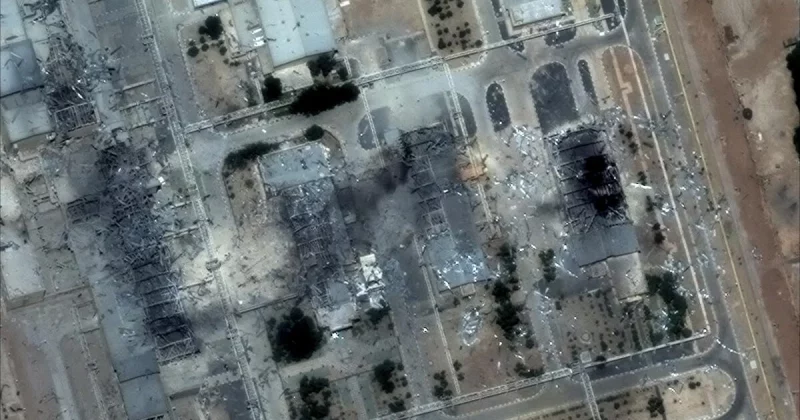
- The U.S. conducted strikes on Iranian air defenses and drone sites in Goruk and on Qeshm Island in response to the downing of a U.S. MQ-1 drone [1].
- Iran’s Revolutionary Guard Corps claimed its forces targeted a U.S.-linked telecommunications tower on Sirik Island in retaliation [1].
- Iranian state-linked media reported that Tehran is halting indirect talks with U.S. negotiators to protest Israeli military operations in Lebanon [2].
- Kuwait’s government condemned the Iranian attacks as a "flagrant violation" of international law and vowed to take necessary measures to protect its territory [2].
Escalating Confrontation in the Strait of Hormuz
The recent military activity marks a significant departure from the relative stability sought by the April ceasefire [1]. According to U.S. Central Command, the U.S. strikes were a direct response to "aggressive Iranian actions," specifically the downing of a U.S. drone operating over international waters [1]. The U.S. fighter aircraft eliminated ground control stations and two one-way attack drones that officials stated posed a clear threat to ships transiting the region [1].
Iran has offered a different account of the weekend's events, with the Revolutionary Guard Corps stating that its aerospace force targeted the source of a U.S. attack on a telecommunications tower on Sirik Island [1]. Iranian officials have also linked the broader conflict to Israel’s military operations in Lebanon, arguing that any ceasefire must apply to all fronts [1, 2]. Iranian Foreign Minister Abbas Araghchi stated that the violation of the truce on one front constitutes a violation on all, while Iranian state-linked media reported that Tehran is now suspending indirect message exchanges with the U.S. in protest of the situation in Lebanon [2].
Diplomatic Standoff and Regional Security
The diplomatic path forward remains complicated by competing regional agendas. President Donald Trump has demanded that Iran agree to never acquire a nuclear weapon and has insisted that the Strait of Hormuz be reopened for unrestricted shipping [1]. While Trump claimed on social media that Iran is interested in a deal, he also warned that the U.S. would "finish it off militarily" if negotiations fail [1, 2].
Simultaneously, the region is witnessing a shift in alliances. Analysts note that Iran’s leadership is attempting to rally Middle Eastern nations into an anti-American alliance, promoting a "New Islamic Civilization" as a counter to the U.S.-led order [2]. As Kuwait vows to defend its borders against what it termed "heinous and repeated" Iranian attacks, the prospect of a final, comprehensive agreement between Washington and Tehran appears increasingly uncertain [1, 2].
Coming upLIVEsee all →
Across the coverage
Coverage is mostly measured — 23 of 26 reports stay neutral.
Bullish 3
Neutral 23
The Catalyst Brief
Know what’s about to move the market.
Every Monday — the token unlocks, Fed dates & catalysts set to move crypto and markets this week. So you’re never blindsided.
Free · 3-min read · one-click unsubscribe
Synthesized from 2 sources
- 01U.S. and Iran trade strikes amid talks to end warNBC News
- 02US trades strikes with divided Iran regime as peace talks stallFox News
AI-assisted synthesis by the TrendWatcher Editorial Desk · sourced from 2 outlets · Jun 1, 2026 · How we report
Published
May 25, 2026, 11:44 PM
Author
Editorial Team
Source
TrendWatcher AI (Enhanced)
Frequently asked · Bitcoin Hashrate
What is Bitcoin hashrate?
It is a measure of the total computing power currently connected to the Bitcoin network, used by miners to validate transactions and add new blocks.
Why do miners disconnect their equipment?
Miners may disconnect equipment when Bitcoin's market price falls below their production costs, making operations unprofitable.
How does new mining hardware impact the network?
New, more efficient hardware increases the total network hashrate, which in turn raises mining difficulty and necessitates further hardware upgrades to maintain profitability.