Loading article…
Google
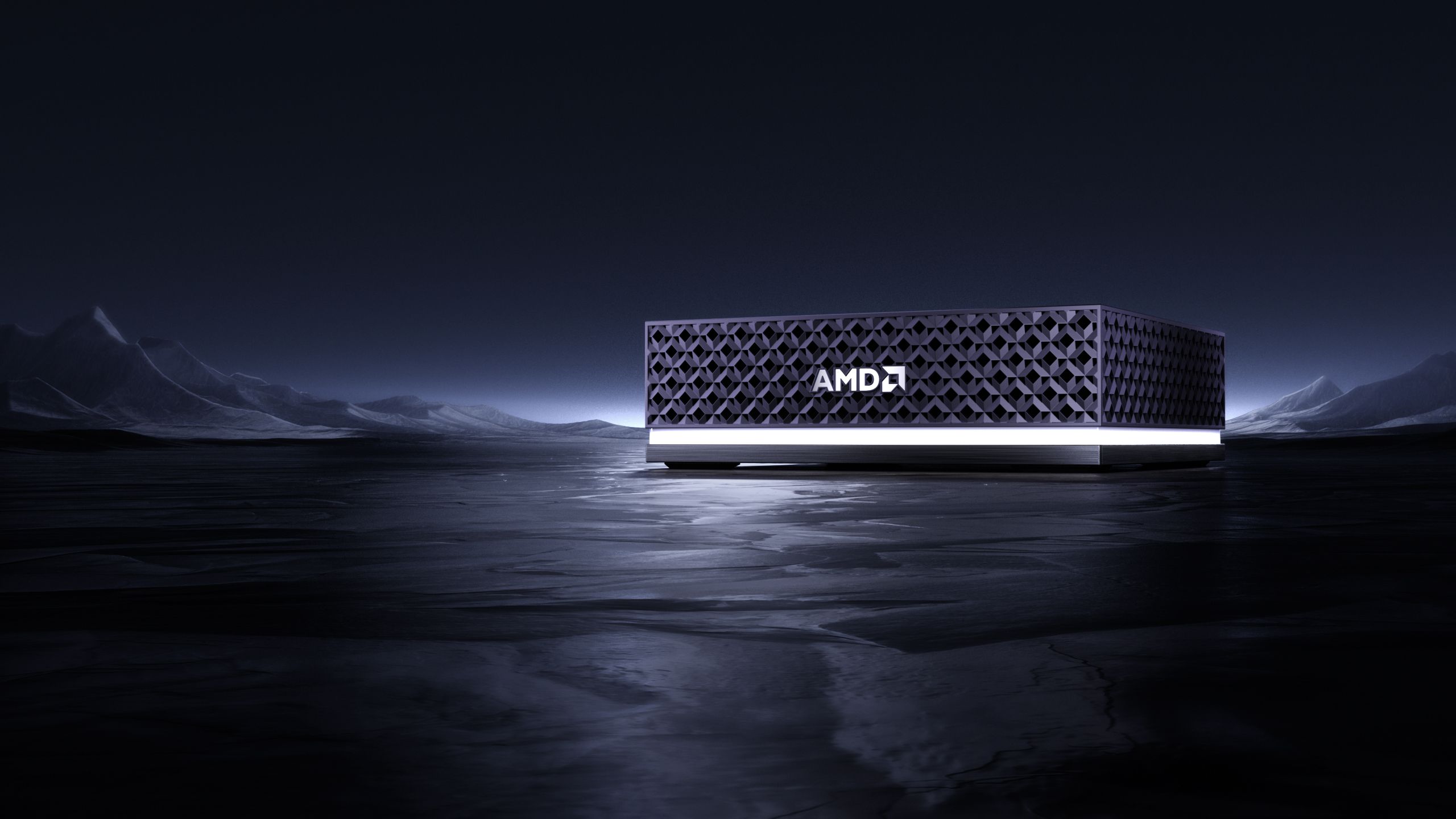
AMD readies AI workstation to challenge Nvidia’s GB10, preorder
TrendWatcher AI (Enhanced)·105d ago·neutral
Most covered nowLIVEsee all →
AMD’s new AI workstation, positioned as a competitor to Nvidia’s GB10, will open for preorder in days. Analysts weigh its specs, market timing and the broader
AMD is set to open pre‑orders for its latest AI‑focused workstation, aimed at rivaling Nvidia’s GB10 platform, within the next few days [1]. The move comes as AMD pushes its Instinct GPU line, which it claims can deliver higher memory capacity and lower inference costs than Nvidia’s current offerings [1].
Key takeaways
- AMD’s Instinct MI325X GPU offers up to 432 GB of HBM4 memory, nearly double Nvidia’s Rubin‑based memory capacity [1].
- Data‑center revenue rose 39 % YoY to a record $5.4 billion in the last quarter, underscoring growing demand for AMD’s AI chips [1].
- Analysts note that hyperscalers are still evaluating custom silicon alternatives, which could limit the immediate impact of AMD’s new workstation [1].
- Export‑control limits on sales to China reduce the Instinct MI308’s contribution to AMD’s upcoming quarter, highlighting supply‑chain constraints [2].
- The market’s view of AMD’s AI prospects is mixed; while some see a structural shift, others warn Nvidia’s CUDA ecosystem remains dominant [1][3].
AMD’s hardware push and market backdrop
AMD’s latest AI workstation leverages the Instinct MI325X GPU, which the company says provides 432 GB of HBM4 memory—about twice the capacity of Nvidia’s newest Rubin architecture [1]. The larger memory pool is intended to let massive models such as Llama‑4 run on a single chip, reducing latency and simplifying system design. AMD also argues that its GPUs lower the cost per token for inference, a claim that has attracted bulk purchases from firms like Meta and Microsoft [1].
The hardware announcement arrives amid a broader shift in the AI hardware market. AMD’s data‑center segment posted a record $5.38 billion in revenue, up 39 % year over year, and the company projects a 60 % YoY increase in data‑center revenue over the next several years [1]. Analysts point to these figures as evidence that hyperscalers are seeking alternatives to Nvidia’s single‑vendor dominance [2]. However, they also caution that major cloud providers are increasingly moving inference workloads onto in‑house chips such as Amazon’s Trainium 3 and Google’s Maia 200, which can be up to 60 % cheaper than third‑party GPUs [1].
Timing, supply constraints and outlook
Pre‑order availability for AMD’s workstation is slated for early May, just ahead of the company’s Q1 2026 earnings call on May 5 [2]. The earnings release will be a key barometer for whether the new AI hardware can translate into revenue growth. Analysts note that the guidance includes only $100 million of Instinct MI308 sales to China, reflecting ongoing export‑control restrictions that have already trimmed prior quarters’ top lines [2].
Supply‑chain considerations also loom large. AMD relies on TSMC’s 3 nm process, competing with Nvidia and Apple for limited capacity, which could affect the ability to meet demand for the new workstation [1]. If AMD can secure sufficient fab allocation, the product could help the company capture a larger share of the AI accelerator market; if not, Nvidia’s entrenched CUDA ecosystem and its own custom silicon may keep AMD in a secondary role [3].
Why it matters
The upcoming preorder signals AMD’s intent to broaden its AI hardware portfolio beyond data‑center GPUs and into workstation‑class systems, directly challenging Nvidia’s GB10 offering. Success will depend on whether the MI325X’s memory advantage and cost‑per‑token claims resonate with developers and enterprises, and on AMD’s ability to navigate supply constraints and export‑control limits. The next earnings report will provide the first concrete data on how the new workstation impacts AMD’s revenue trajectory and whether the company can sustain its momentum in a market still heavily weighted toward Nvidia.
Coming upLIVEsee all →
Across the coverage
Coverage is mostly measured — 294 of 300 reports stay neutral.
Bullish 5
Neutral 294
Bearish 1
The Catalyst Brief
Know what’s about to move the market.
Every Monday — the token unlocks, Fed dates & catalysts set to move crypto and markets this week. So you’re never blindsided.
Free · 3-min read · one-click unsubscribe
Synthesized from 3 sources
- 01AMD’s AI Coup: Breaking The Nvidia MonopolyForbes
- 02AMD Gains 6% Ahead of May Earnings: Is the AI Chip Challenger Finally Ready to Rival NVIDIA?24/7 Wall St
- 03Nvidia vs. AMD: The Better AI Chip Stock for 2026The Motley Fool
AI-assisted synthesis by the TrendWatcher Editorial Desk · sourced from 3 outlets · Jun 3, 2026 · How we report
Published
May 29, 2026, 10:55 PM
Author
[email protected] (Rahim Amir) , Rahim Amir
Source
TrendWatcher AI (Enhanced)
Frequently asked · Google
When was Google founded?
Google was founded in 1998 by Larry Page and Sergey Brin. The company began as a research project at Stanford University in 1996.
Who is the CEO of Google?
Sundar Pichai has served as the CEO of Google since 2015. He also assumed the role of CEO of Alphabet Inc. in 2019.
What is the parent company of Google?
Alphabet Inc. is the parent company of Google. Google was reorganized as a wholly owned subsidiary of Alphabet Inc. in 2015.
How does Google make money?
Google generates the majority of its revenue through data-driven advertising auctions. The company also offers a wide range of services including cloud computing, hardware, and software products.